Livestock Feed Production Line In Tanzania
Tanzania has a sound livestock industry foundation, with a continuously growing demand for stable and economical feed. Based on the actual needs of local livestock farming, RICHI has successfully implemented three livestock feed production line projects in Tanzania. If you are also planning to invest in a livestock feed production line in Tanzania, the following information should be helpful.


Number of Livestock Feed Production Line In Tanzania
3
Types of Animal Feed
Cattle, Sheep…
Particle Size
4-8mm
Project Dates
Last Three Years
Overview of Three Livestock Feed Production Line in Tanzania
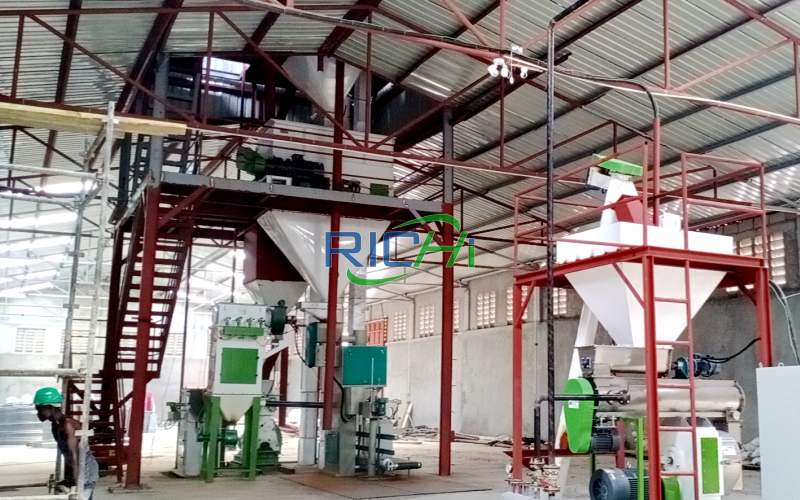
In fact,RICHI Machinery has completed far more than just three feed production lines in Tanzania;we also have many poultry feed production line projects. The three livestock feed production lines successfully delivered below are projects that RICHI has completed in Tanzania in the past three years. They utilize very mature technology,have extremely high customer satisfaction,and have capacities ranging from 2 tons/hour to 5 tons/hour,covering various types including cattle feed,sheep feed,and combined livestock and poultry feed lines. We hope this will be helpful for your upcoming feed project.
2 t/h Cattle+Poultry Feed Production Line in Tanzania
Customer Inquiry:“I need a production line that can produce both cattle feed and chicken feed. The capacity doesn’t need to be very large,but the feed quality must be good.”
- Date:August 2022
- Feed Type:Cattle Feed+Chicken Feed
- Capacity:2 tons/hour
- Raw Materials:Corn,soybean meal,wheat bran,cottonseed meal,fish meal,bone meal,limestone powder,salt,premix
- Pellet Size:Cattle feed 6-8mm,Chicken feed 3-5mm
- Site Area:220 square meters
- Installation Period:5 days (from equipment arrival to commissioning)
- Required Workers:3 operators
- Investment Amount:Approximately US$70,000
- Customization:Yes,considering the unstable local voltage,a voltage stabilizer was included,and two sets of pelletizing dies were provided (6mm and 4mm).

3 t/h sheep feed production line in Tanzania
- Date:May 2023
- Feed Type:Finishing sheep feed+breeding sheep feed
- Output:3 tons/hour,daily output 24 tons,monthly output approximately 600 tons
- Raw Materials:Corn,wheat bran,soybean meal,cottonseed meal,hay meal,molasses,urea,limestone powder,salt,premix
- Particle Size:6-8mm (Sheep feed customers require coarser pellets for easier chewing and full digestion.)
- Main Equipment List:Raw material receiving system,SFSP66×40 hammer mill,automatic batching system,SSHJ-1.5 twin-shaft mixer,SZLH350 ring die pellet mill,counter-current cooler,vibrating screen,50kg automatic packaging scale,complete conveying system,etc.
- Site Area:300 square meters
- Installation Period:1 week
- Boiler Included:No
- Required Workers:2 operators
- Investment Amount:Approximately US$100,000
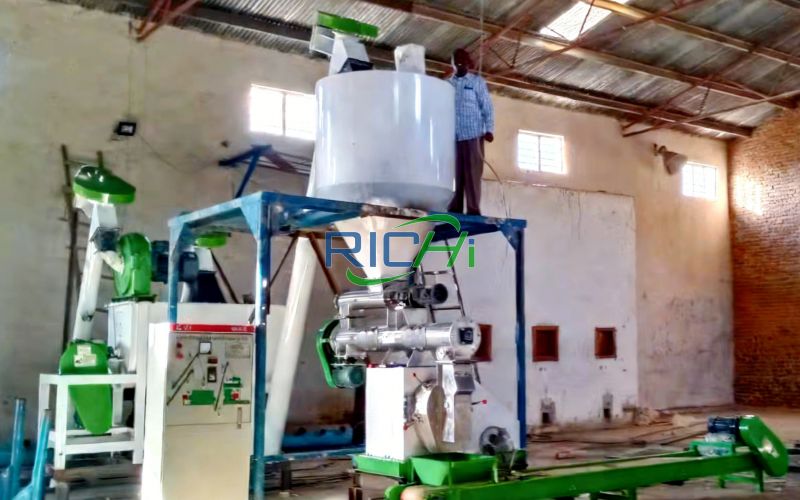
5 t/h Integrated Livestock Feed Production Line in Tanzania
Customer Inquiry:“I want to build a large feed mill to produce feed for various livestock such as cattle,sheep,and pigs.”
- Date:March 2024
- Feed Types:Cattle feed+Sheep feed+Pig feed+Rabbit feed,etc.
- Output:5 tons/hour
- Raw Materials:Corn,wheat,soybean meal,wheat bran,cottonseed meal,fishmeal,bone meal,grass meal,molasses,oils,various additives
- Particle Size:Adjustable from 2-8mm depending on animal species and growth stage
- Site area:800 square meters
- Installation period:2 weeks
- Customization:Yes The client requested a highly automated design. Multiple mold configurations are required (2mm,3mm,4mm,6mm,8mm);12 different formulas have been developed,covering different growth stages of various livestock.
- Required Workers:2-3 operators
- Investment Amount:Approximately US$220,000
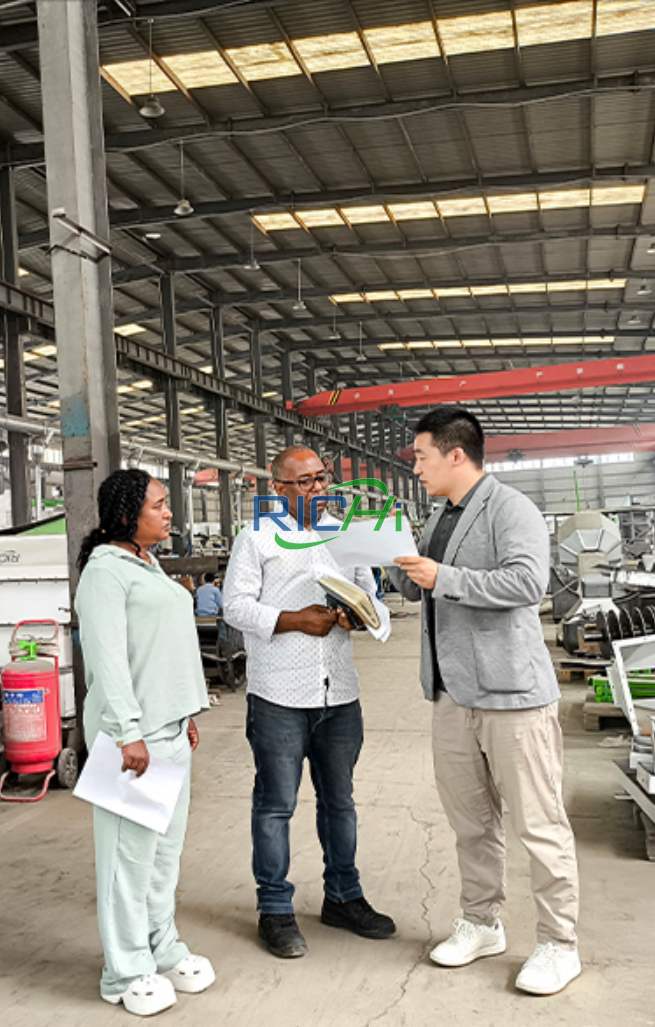
Customer feedback on the livestock feed production line in Tanzania
Mr. John Mwamba,Dar es Salaamcustomer

“This production line perfectly meets our needs. It can produce cattle feed for our own cattle farm and also chicken feed for sale to other customers. Changing the molds is very convenient. Now our feed has a great reputation locally,and we’re getting more and more orders. We plan to expand with a second production line next year.”
Mr. Hassan Kikwete,Arushacustomer
“Many sheep farmers in our area used to mix their own feed or buy expensive imported feed. The forage processing system designed for us by RICHI is very practical. It can process local,inexpensive forage into hay meal and add it to the feed,greatly reducing costs.”
Mr. Joseph Mbogo,Moshicustomer
“This is the most advanced feed production line in our region. RICHI designed a highly automated line for us,requiring only two workers to manage the entire line. The feed pellets are of excellent quality and sell very well in our market. The equipment has been running very stably for over a year,and RICHI’s technical support has been timely.”
Services for Livestock Feed Production Line in Tanzania
Below are some free services we offer to our Tanzanian customers. Even if you are a complete novice in the field of feed machinery, don’t worry. We will explain everything in detail, teach your workers step by step, and provide perfect solutions for all kinds of other problems.
Free Solution Design and Investment Analysis
100% Performance Testing Before Equipment Shipment
Sea Freight Customs Clearance Assistance
On-site Equipment Installation and Commissioning
Systematic Training for Operators (Theory + Hands-on Practice)
Multiple Livestock Feed Formulas Available
Bilingual Operation Manuals in Swahili and English
Operation Video Tutorials
One-Year Free Warranty Service
24/7 Technical Hotline Support
Fast Parts Delivery Within 3 Days
Regular Phone and On-site Follow-ups
RICHI MACHINE
Advantages and Value of Livestock Feed Production Line in Tanzania
As Tanzania’s livestock industry continues to expand, farmers’ demand for stable, high-quality feed is also growing. Compared to long-term reliance on imported feed, more and more ranches in Tanzania are choosing local production. Combining local raw material conditions and the operating environment, RICHI livestock feed production lines have demonstrated significant advantages in practical applications.

- Using RICHI feed production lines to produce feed can significantly reduce dependence on imported feed, lowering overall costs by approximately 50%. For farms, these savings translate into real profits each year.
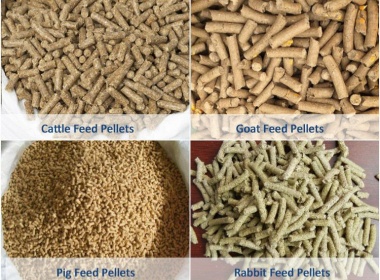
- Pelleted feed is nutritionally uniform and palatable, leading to increased livestock consumption, better digestion, faster growth, and fewer diseases, resulting in higher slaughter rates and better selling prices.
- Pelleted feed is less prone to scattering and less likely to be picked over, resulting in less waste compared to powdered feed. With the same amount of feed, higher returns can be achieved, making it particularly suitable for large-scale farming.
- Pelleted feed has a low moisture content, making it more resistant to storage in Tanzania’s hot and humid environment. It is also easier to package and transport, reducing warehousing and logistical burdens.
- The equipment is configured according to local power and raw material conditions, operates stably, and with continuous technical support, the payback period is short and the long-term returns are stable.
RICHI MACHINE
Development Potential of Livestock Feed Production Line In Tanzania
Tanzania boasts a solid livestock foundation with a large livestock and poultry population. With population growth and urbanization, meat and egg consumption continues to increase, leading to a growing demand for compound feed.
Currently, local feed production capacity is significantly insufficient, and the market relies heavily on imports, resulting in high prices and unstable supply. Establishing local feed production lines would not only offer cost advantages but also facilitate access to surrounding markets.
In terms of development trends, poultry feed is experiencing the fastest growth. While poultry farming is expanding rapidly, the adoption rate of commercial feed remains low, and the next few years will see a concentrated growth phase.
Simultaneously, livestock feed demand is steadily increasing, and farming methods are shifting from traditional grazing to supplementary feeding and standardized farming, providing a foundation for long-term development.

Case of livestock feed production line
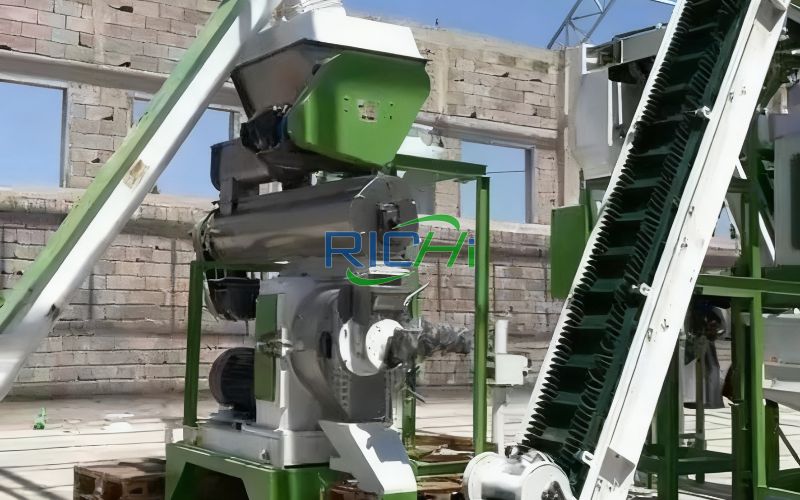
4 T/H Livestock Feed Production Line in Kenya
- Country: Kenya
- Project Time: 2023
- Capacity: 4 tons/hour
- Pellet Size: 4–8 mm
- Main Products: Dairy cow feed, fattening cattle feed, sheep feed, etc.

8 T/H Livestock Feed Production Line in South Africa
- Country: South Africa
- Project Time: 2024
- Capacity: 8 tons/hour
- Pellet Size: 4–10 mm
- Main Products: High-end cattle feed, organic feed, etc.
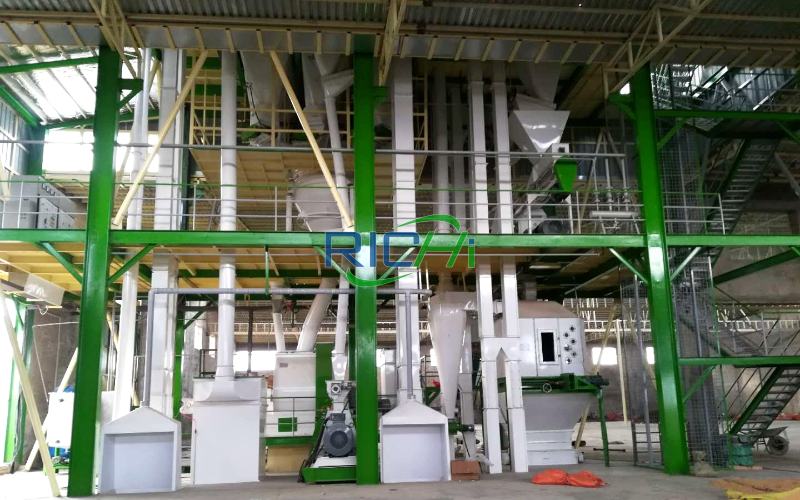
10 T/H Cattle Feed Production Line in Brazil
- Country: Brazil
- Project Time: 2023
- Capacity: 10 tons/hour
- Pellet Size: 4–8 mm
- Main Products: Beef cattle fattening feed, dairy cattle feed, etc.
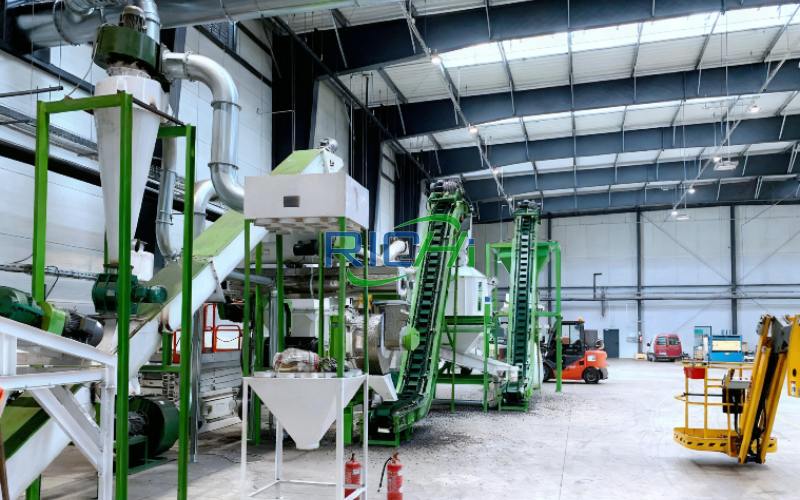
6 T/H Cattle Feed Production Line in Ethiopia
- Country: Ethiopia
- Project Time: 2024
- Capacity: 6 tons/hour
- Pellet Size: 4–8 mm
- Main Products: Fattening cattle feed, breeding cattle feed, etc.
Frequently Asked Questions about Livestock Feed Production Line in Tanzania
1. What is the raw material supply situation in Tanzania?
+
Overall, conditions are good, suitable for localized production.
The supply of raw materials such as corn, bran, and cottonseed meal is stable locally at relatively affordable prices, and forage resources are also abundant. While some protein raw materials require imports, a large proportion can be sourced locally through proper formulation, effectively controlling costs.
We have assisted several clients in establishing stable local procurement channels and continuously optimize our formulations based on local market conditions.
2. How long does it take to ship the equipment to Tanzania? Is customs clearance complicated?
+
The process is mature and highly controllable. The overall timeline from Qingdao port in China to the port in Tanzania, and then to the factory site, is quite clear. Regarding customs clearance, feed processing equipment is an encouraged product category, and we will assist in preparing complete documentation and provide customs clearance guidance. In actual projects, we have encountered virtually no obstacles.
3. My worker’s skill level is average, can they operate the equipment?
+
Yes, the equipment is designed to be easy to use. The interface is intuitive, and there are complete Swahili and English documentation. We will provide systematic training and video tutorials, so even beginners can quickly operate the equipment independently.
4. Can livestock feed and poultry feed be produced simultaneously?
+
Absolutely, and it’s very common in real-world projects.
By configuring molds with different aperture sizes and pre-setting multiple formulas in the system, livestock and poultry feeds can be flexibly produced on the same production line. Once proficient, switching between molds and formulas is very convenient and requires no complex modifications.
This method is particularly suitable for customers who have both internal needs and wish to sell their products. On the one hand, it meets their own farming needs; on the other hand, it allows them to adjust their product structure according to market changes. For example, if poultry feed demand is higher at a certain stage, poultry feed production can be prioritized, thereby improving equipment utilization and overall profitability.
In actual operation, simply following the specifications for cleaning and parameter adjustments before changing feeds ensures that different feeds do not interfere with each other. We also provide detailed switching procedures and operating instructions to ensure stable production and consistent quality.
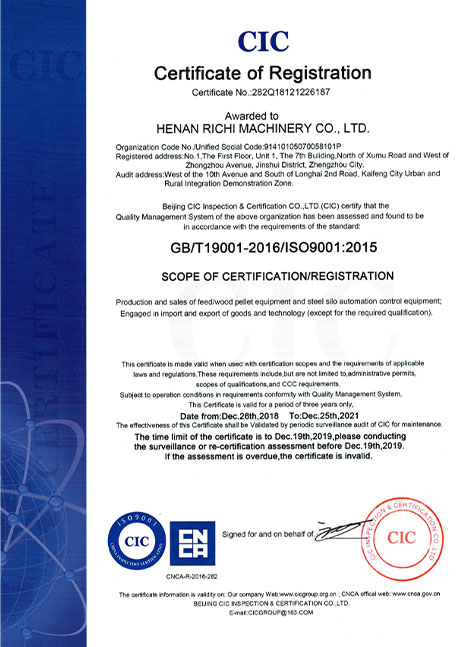
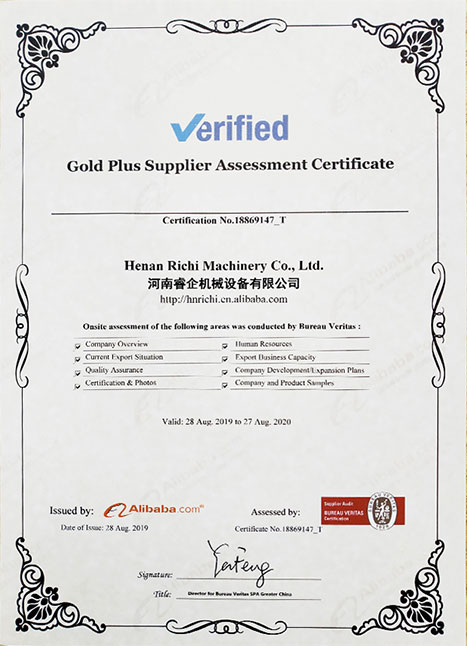
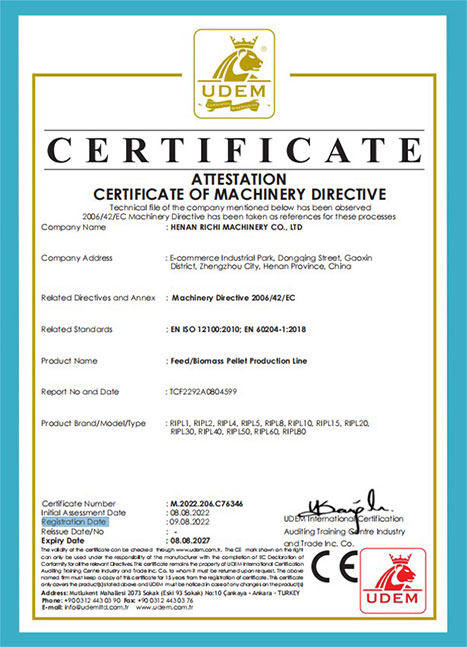
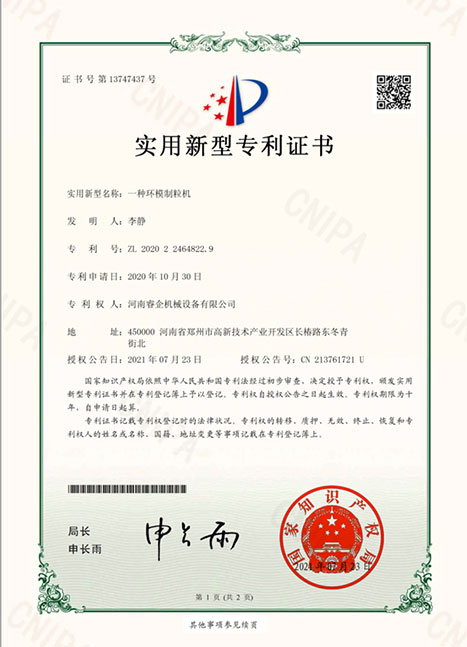
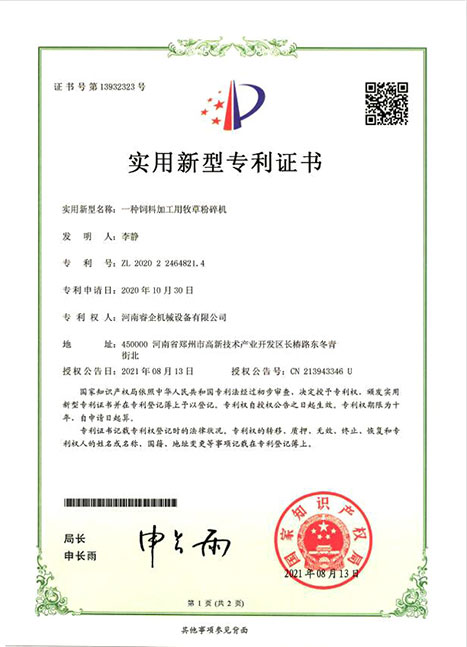
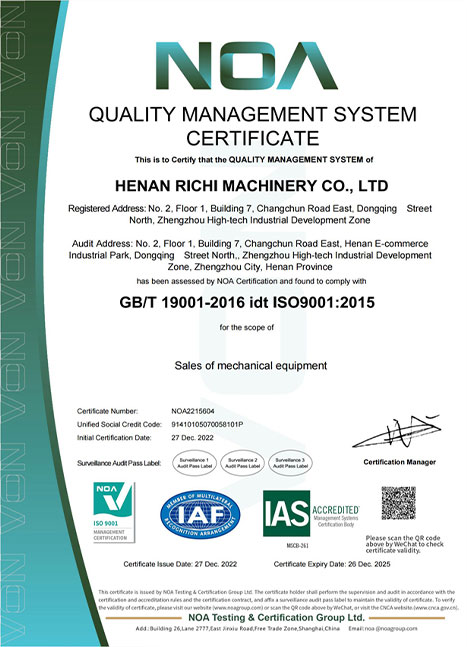
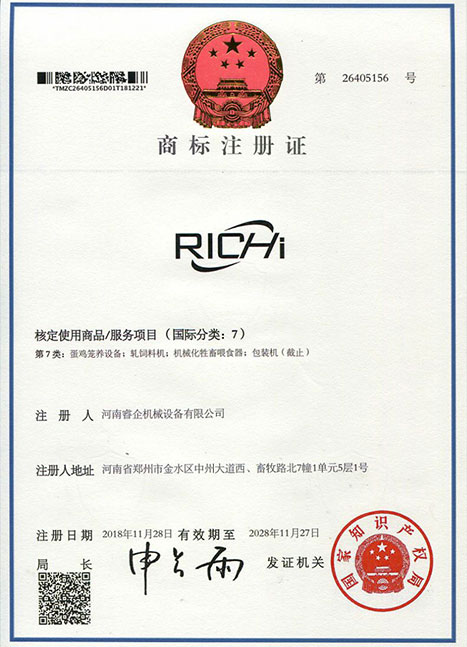
Our Honors & Certifications
At RICHI Machinery, quality and innovation go hand in hand. Over the years, we have earned numerous international certifications and national patents, covering product design, manufacturing excellence, and quality control. These certificates reflect our strong R&D capabilities and global trust in our feed and biomass machinery solutions. We remain committed to delivering reliable technology and long-term value to our customers worldwide. You can find us on YouTube.