Dry Type Fish Feed Extruder

Equipment Applications
A dry-type fish feed extruder is suitable for the small-scale production of standard floating fish feed or pet food. While it can also produce sinking feed, it cannot guarantee that 100% of the pellets will sink; furthermore, the water resistance of the pellets is relatively poor. If you intend to produce high-end aquatic feed, a wet-type feed extruder is recommended.

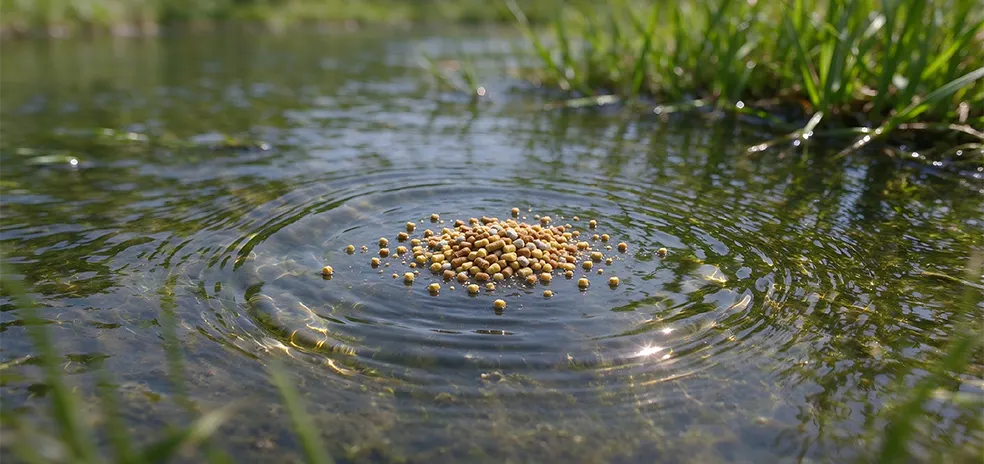
Floating Fish Feed
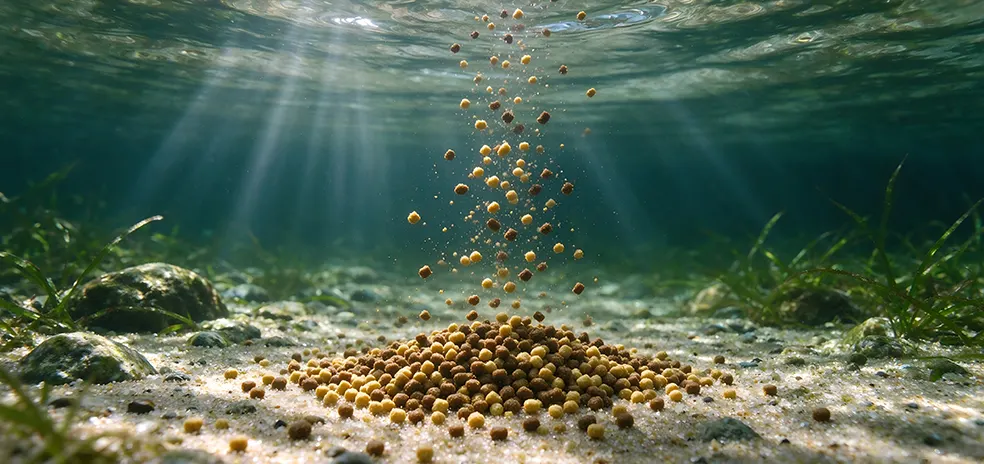
Sinking Fish Feed
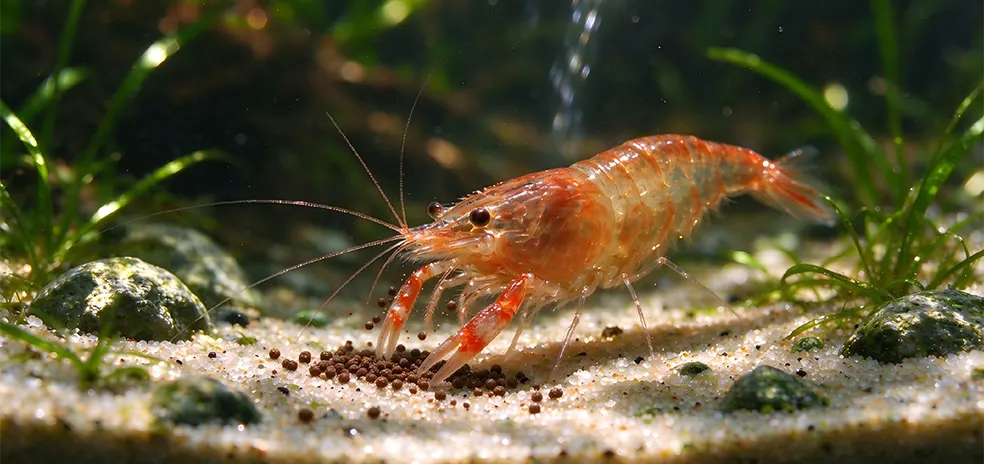
Shrimp & Crab Feed
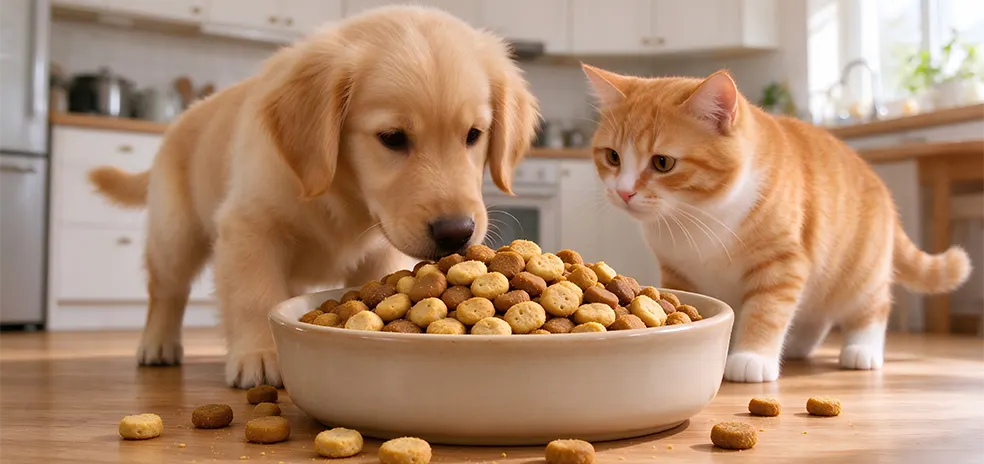
Pet Food
Our Projects Across the Globe
Dry fish food extruder machine are well-suited for scenarios involving low production volumes, limited investment, and relatively simple formulations, making them the preferred choice for small-scale fish farms and start-up feed producers. Below are a few selected customer case studies, which provide a clearer insight into the applications of dry-type extruders and demonstrate RICHI’s capability to develop customized solutions for a diverse range of clients.
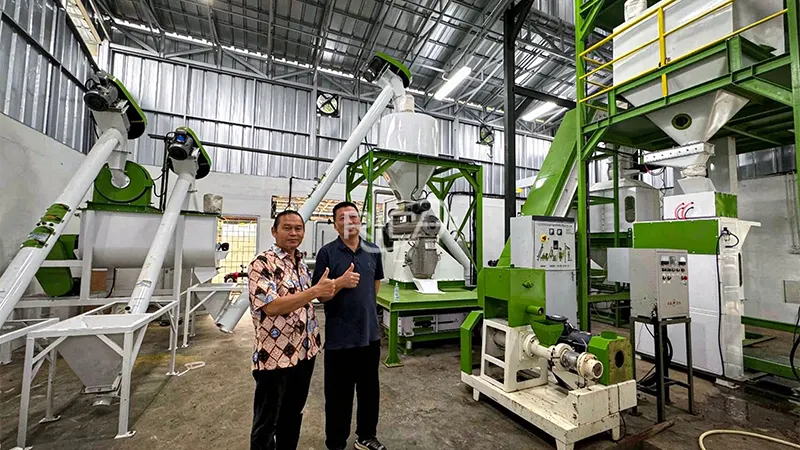

Indonesia 0.2-0.4 т/H Dry Type Fish Food Extruder
This client faced constraints in terms of both factory space and budget, while also requiring the ability to produce both chicken feed and floating fish feed.
To address this, we configured a solution featuring a chicken feed pellet mill and a dry-type extruder. Furthermore, the equipment for pre-processing (grinding, mixing) and post-processing (cooling, screening, packaging) can be shared, resulting in additional savings on both space and investment.
Bangladesh 0.5-0.6 T/H Dry Type Fish Feed Pellet Extruder
For this client’s requirement of small-scale fish feed production, a dry-type fish feed pellet extruder is the superior choice. It features a compact footprint and low cost, while also being capable of producing floating feed.
The complete production line includes a grinder, mixer, dryer, coating machine, cooler, screener, and packaging machine.
Additionally, the client has incorporated a chicken feed pellet mill, which operates alongside the extruder, allowing for flexible switching between the production of fish feed and chicken feed.
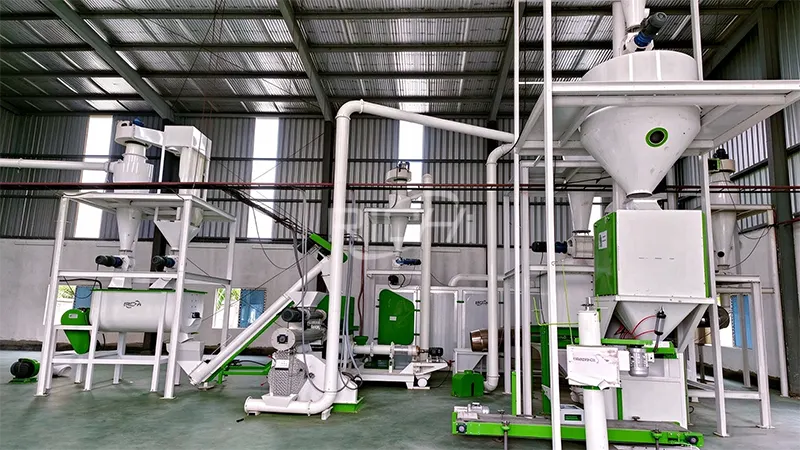
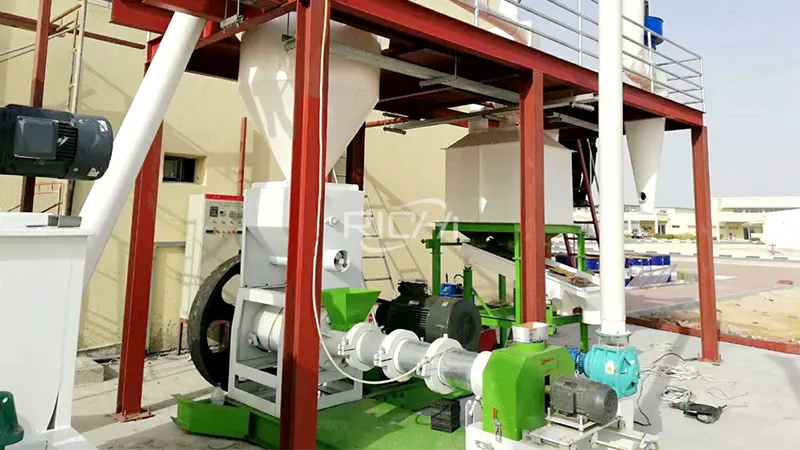
Qatar 1 T/H dry Type floating Fish feed extruder
To cut feeding costs for his large bass farm, the client chose to set up a small floating fish feed mill—first to achieve feed self-sufficiency, and then to generate additional revenue by selling surplus feed.
Based on this requirement, we designed a 1 TPH floating fish feed production line. The line is equipped with an animal feed grinder, a single-ribbon animal feed mixer, a dry fish feed extruder, a pellet cooler, and a pellet screener.
dry-type fish feed extruder design & Advantages
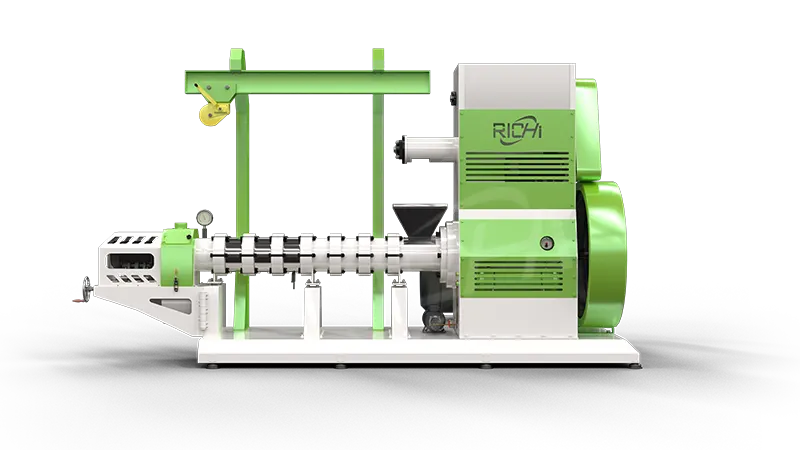
RICHI dry-type fish feed extruder can process dry powder materials directly. It eliminates the conditioning stage and uses high mechanical pressure to form the material into pellets.
Simple Operation
Dry-type feed extruders do not require steam boilers or conditioning systems. Instead, they utilize the friction generated by the rotating screw to produce the high temperature and high pressure necessary for cooking and shaping.
Compact Design
Compared to wet-type extruders, dry-type extruders have a smaller footprint, making them ideal for facilities with limited space or for clients requiring mobile, small-scale production trials.
Affordable
Featuring a simple structure and a lower production capacity, dry-type fish feed extruders are significantly more affordable than wet-type models. Prices typically range from 7,500 to 15,000 USD.
Versatile Applications
Dry-type extruders are suitable for a wide range of uses, including the production of floating or sinking fish feed, pet food, livestock and poultry feed, as well as the expansion (extrusion) of corn and soybeans.
Technical Parameters
The table below lists the specifications for RICHI dry-type fish feed extruders. If you require higher production capacity or superior pellet quality, we also offer wet-type models.
Dry-Type Fish Feed Extruder
| Model | DGP-90B | DGP-120B | DGP-160B |
|---|---|---|---|
| Main Motor Power (kw) | 37 | 55 | 90 |
| Feeding Power (kw) | 0.75 | 202 | 3 |
| Cutting Power (kw) | 0.55 | 1.1 | 1.5 |
| Screw Diameter (mm) | 90 | 120 | 160 |
| Equipment Dimension (mm) | 2100*1450*1350 | 2400*1950*1600 | 3100*2650*1800 |
| Output (T/H) | 0.2-0.4 | 0.5-0.6 | 0.8-1.0 |
Wet Type Fish Feed Extruder
Wet Type fish feed extruders are equipped with a conditioner, which ensures full gelatinization of starch and improves the digestibility of the feed. By adjusting process parameters, the buoyancy of the pellets can be flexibly controlled.

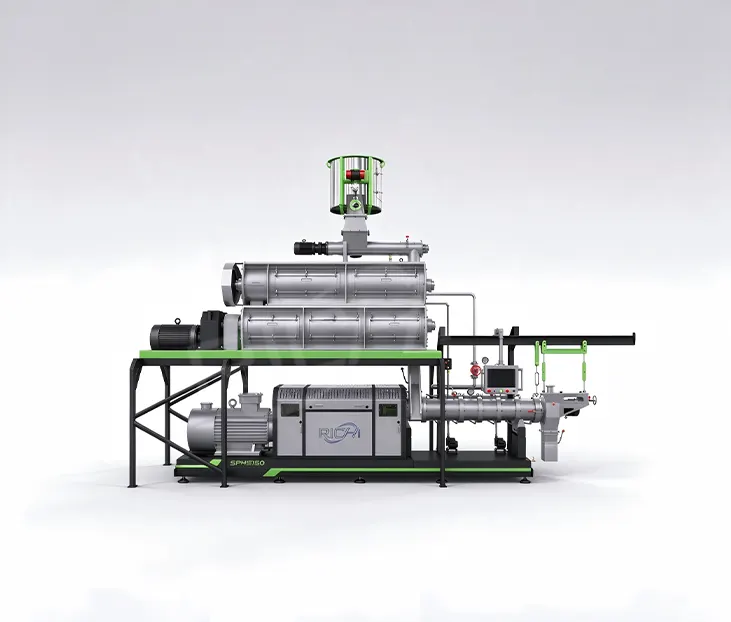
fish feed extrusion process Flow
The production of extruded fish feed is a systematic process centered on extrusion technology, where the operational parameters at each stage directly influence the quality of the final product. A typical production workflow for extruded fish feed can be clearly divided into the following stages.
01
Grinding
Clean and remove impurities from raw materials such as corn, soybean meal, and fish meal, then grind them to 60–80 mesh using a feed grinder. If a finer particle size is required, use an ultra-fine grinder.
02
Bating & Mixing
Accurately weigh the ground raw materials and additives according to the formula, and feed them into a mixer to thoroughly and evenly mix.
03
Extrusion
Feed the materials into the dry extruder, where they are forced through the die holes under the powerful push and shear of the screw, and then cut into pellets of the desired shape by cutters.
04
Drying
Freshly extruded expanded pellets have a high temperature, high moisture content, and a soft texture. They require a dryer to remove excess moisture.
05
Spraying
Spray heat-sensitive nutrients such as fats and oils (e.g., fish oil, soybean oil), attractants, vitamins, or pigments onto the surface of the dried pellets.
06
Cooling & Screening
After the spraying process, the feed is at a high temperature and must be rapidly cooled to near room temperature using a cooler to prevent mold growth and spoilage during packaging and storage.
07
Screening & Packing
After cooling, the feed passes through a vibrating screen for classification, where oversized particles, undersized particles, and fines are removed to ensure a uniform particle size in the finished product. The conforming product is then conveyed to storage bins for automated weighing and packaging.
Other Fish Feed Production Machine
Pre-cleaning Machine
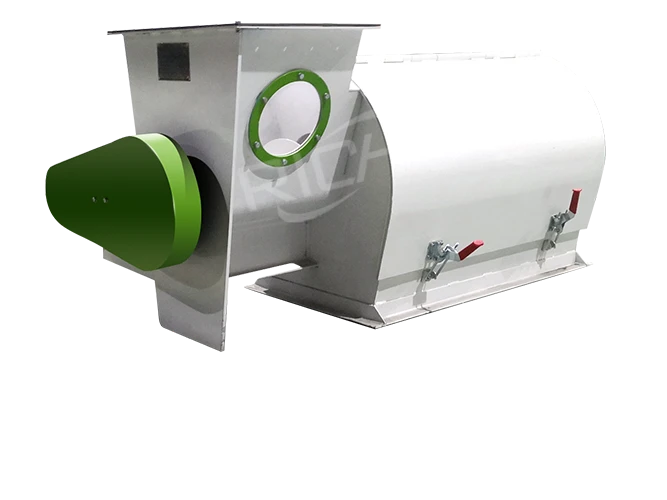
Filters out impurities from powder to maintain clean, consistent feed processing.
Equipment Type:permanent magnet drum, suspended iron separator, cylindrical pre-cleaning screen
Fish Feed Grinder Machine
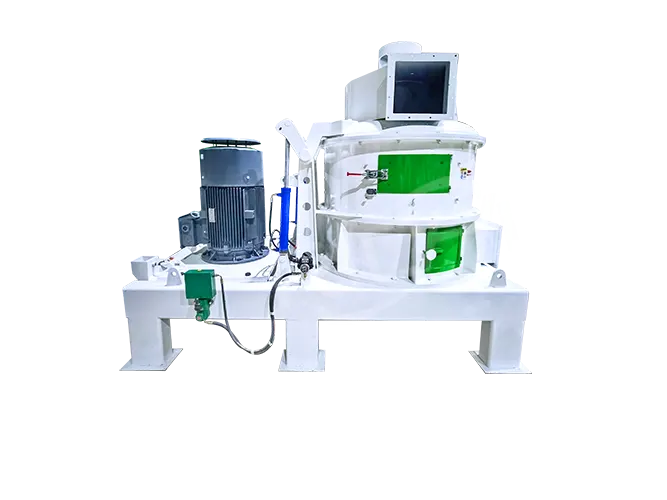
Grinds corn, soybean meal, and rice bran to 60–200 mesh, facilitating seamless mixing and pelletizing.
Equipment Type:ultra-fine grinder, feed hammer mill
Fish Feed Mixer Machine
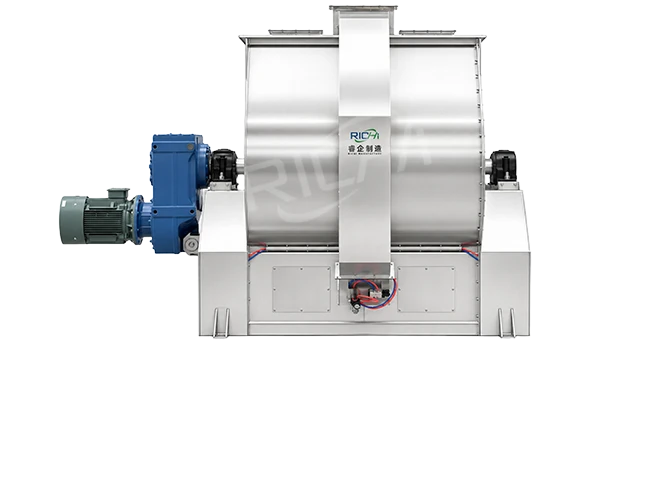
Blends all ingredients evenly into a uniform mixture for consistent nutrition in every feed pellet.
Equipment Type:paddle mixer, ribbon mixer
Fish Feed Dryer Machine
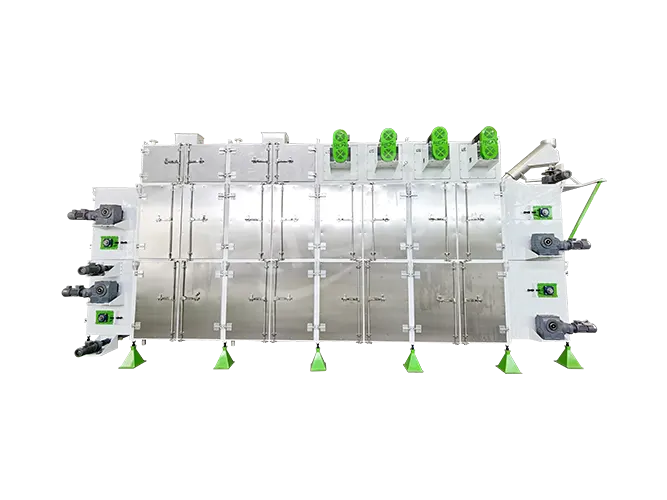
Lowers moisture content in freshly made pellets, improving their hardness, storage stability, and overall shelf life.
Equipment Type:belt dryer machine
Liquid Coating Machine
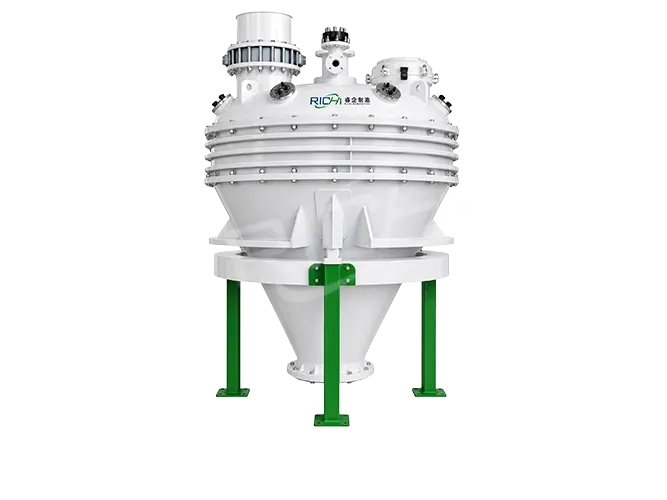
Precisely sprays fats, vitamins, enzymes, and liquid additives onto finished pellets, maximizing nutritional value.
Equipment Type:simple spraying machine, vacuum spraying machine
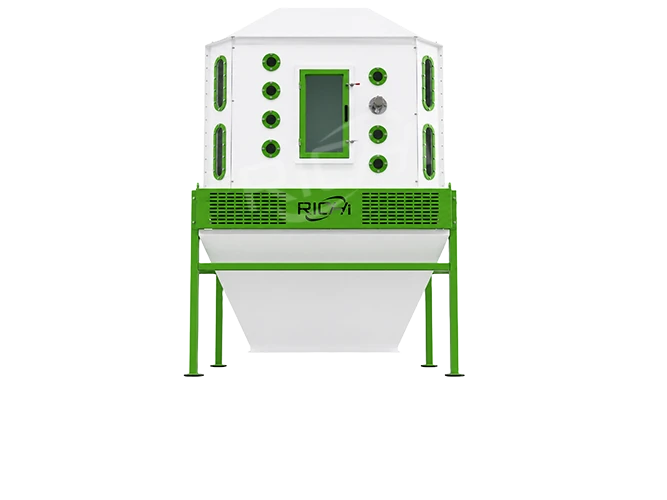
Cools pellets rapidly to boost hardness and prevent mold or breakage in storage and transit.
Equipment Type:flap-type counterflow cooler, impeller-type counterflow cooler
Pellet Screening Machine
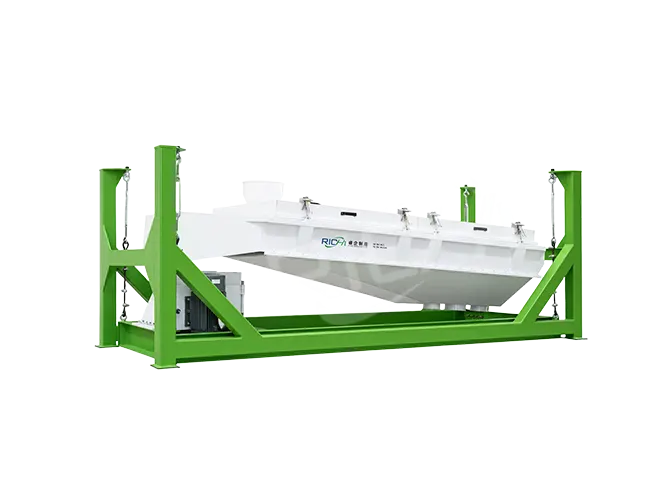
Screens and grades the pellets, removing fines and oversized particles to deliver a consistent, high-quality final product.
Equipment Type:vibrating screening equipment, high-efficiency screen, rotary grading screen
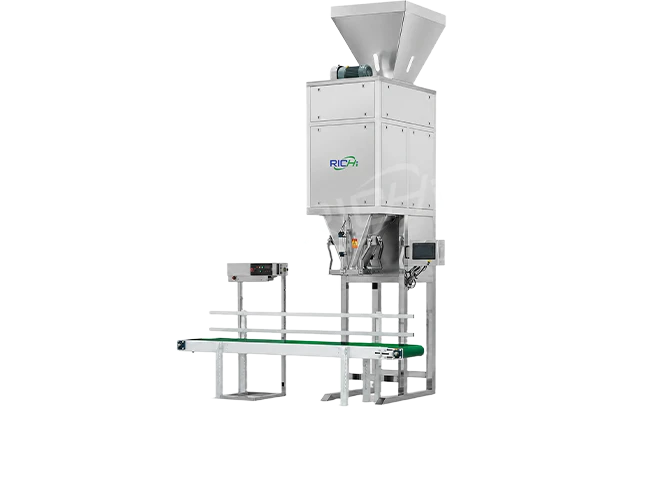
Weighs and packages finished pellets accurately for efficient storage, transport, and sale.
Equipment Type:stainless steel bagging scale, heat sealer, and bag sewing machine
Frequently Asked Questions
What is the difference between dry-type and wet-type fish feed extruders?
→
When producing fish feed, both dry and wet extruders can be used to manufacture floating, sinking, or slow-sinking feed. However, wet extrusion is better suited for large-scale, high-quality aquatic feed production, while dry extrusion is more appropriate for smaller-scale operations with limited investment and relatively simple formulations.
| Comparison Item | Dry-Type Fish Feed Extruder | Dry-Type Fish Feed Extruder |
|---|---|---|
| Conditioning Method | No steam conditioning; relies mainly on screw friction for self-heating and expansion | Equipped with a conditioner; steam or water is introduced to raise temperature and moisture before expansion |
| Cooking & Gelatinization Effect | Lower degree of cooking | More complete starch gelatinization |
| Pellet Quality | Poor water resistance of the granules; cannot guarantee 100% sinking. | The pellets exhibit good water resistance; their buoyancy—whether they sink or float—can be precisely controlled. |
| Production Efficiency | Generally lower output under the same power rating | Conditioned material is easier to convey, resulting in higher capacity and more stable energy consumption |
| Investment & Operation | Lower investment, smaller footprint, simple operation and maintenance | Higher investment, but suitable for continuous, large-scale production |
| Application Scenarios | Small farms, small to medium feed mills, and trial production lines | Medium to large feed mills, high-end aquafeed, and high-fat formulations |
How do you determine whether you need a dry-type extruder or a wet-type extruder?
→
1. Target species: Different species have varying requirements for the degree of gelatinization (cooking) and water stability, whether the feed is floating, sinking, or slow-sinking.
2. Production capacity: For an output of less than 1 tons per hour, a dry-type fish feed extruder may be suitable; for 1 ton per hour or more, a wet-type extruder is recommended.
3. Formula complexity: If the formula has a high fat content, a wide variety of ingredients, or requires a small pellet size, a wet-extrusion twin-screw system is the preferred choice.
4. Steam availability: In the absence of a boiler or steam supply system, a dry-extrusion process is easier to implement.
What is the price of a dry-type fish extruder machine?
→
Because it eliminates the need for steam conditioning, boilers, certain piping, and associated control components, the initial equipment investment for a dry-type fish feed extruder is typically lower. The price generally ranges from $7,500 to $15,000 USD.
Dry-type extruder design and operation
→
The core design principle of a dry-type extruder is the “replacement of hydrothermal energy with mechanical energy.” Instead of relying on external steam or water, the machine utilizes mechanical friction and shear generated by a rotating screw to create a high-temperature, high-pressure environment within the barrel. This allows the material to cook using its own inherent moisture, ultimately achieving expansion through a process of rapid pressure release.
What is the warranty period for the equipment? Is on-site installation available?
→
We provide a one-year warranty. During the warranty period, we offer free on-site repairs for any malfunctions not caused by human error. Furthermore, we provide comprehensive technical services—including project consultation, process design, equipment manufacturing, installation guidance, commissioning, operator training, spare parts supply, and after-sales support—to ensure the long-term, stable operation of the equipment. (view our YouTube)