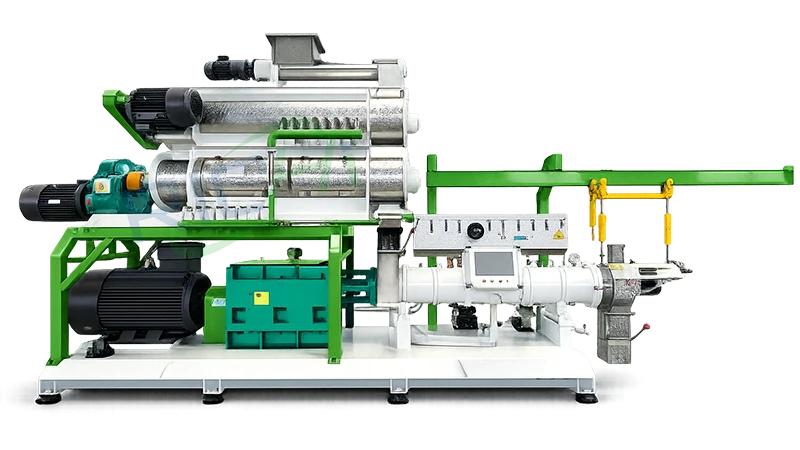
WET TYPE Fish Feed Extruder
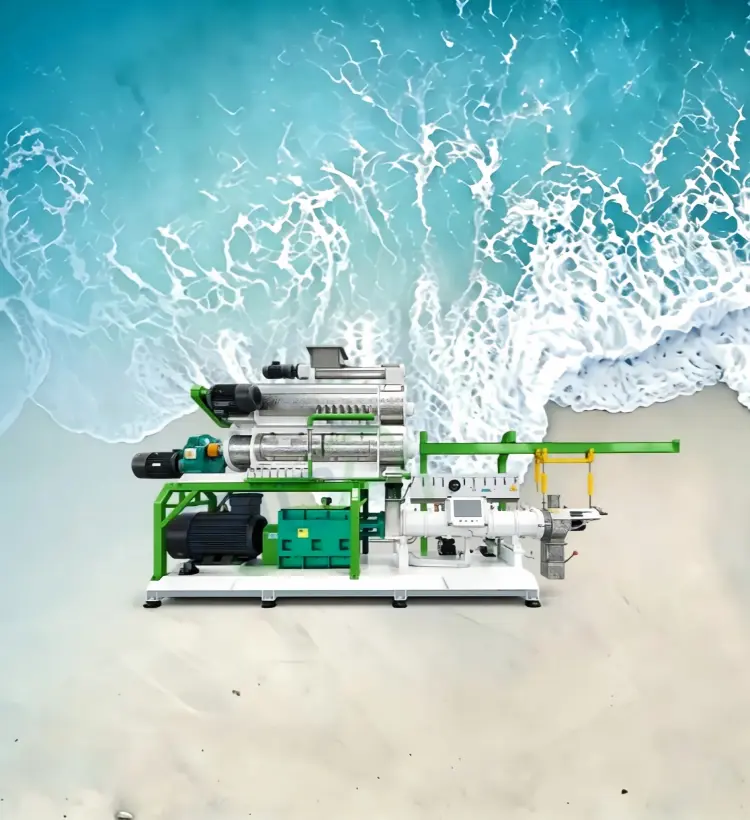
Processable Products

Floating Feed Pellet
Pelleted feed that can float on the water surface are suitable for various floating fish, improves feed utilization, and make it to observe feeding conditions.
Sinking Feed Pellet
Suitable for shrimp, crab, catfish, sturgeon, grouper, sea bass and other bottom-dwelling aquatic animals.
Poultry & Livestock Feed Pellet
Produce pellet feed for pigs, chickens, ducks and other animals, improve maturity and digestibility, and help animals grow healthily.
Pet Food
Process dog food, cat food, and fish food of various shapes and tastes, which are comprehensive in nutrition and highly palatable, suitable for a variety of pets.
Why Choose RICHI Wet Type Fish Feed Extruder
A high-performance wet type fish feed extruder is essential for producing nutritious and water-resistant aquatic feed pellets. Leveraging advanced extrusion technology and steam conditioning processes, our wet type feed extruder achieves superior expansion results and precise control over pellet density, enabling the production of either floating or sinking feed pellets.
Excellent starch gelatinization & high digestibility
The core of the wet process is steam conditioning. Before extrusion, the raw materials are thoroughly mixed with steam and water, allowing the starch to gelatinize completely and the protein structure to become more balanced. This pre-cooking treatment greatly improves the digestibility and absorption rate of fish feed.
High-quality particle appearance & water stability
Fish feed pellets produced by wet extrusion have a smoother, more uniform surface, are burr-free, and have better palatability. Furthermore, they maintain stability in water for over 12 hours and are less prone to collapsing. This significantly reduces nutrient loss, preventing feed waste and water pollution.
Long Service Life & High Efficiency
Our fish feed extruder’s screw and sleeve are made of special wear-resistant and high-temperature-resistant alloy steel, resulting in a service life far exceeding that of ordinary models. The feeding, cutting, and main drive systems all utilize variable frequency speed control, ensuring powerful performance and smooth operation while effectively saving energy.
Flexible Pellet Adjustment
Different aquatic animals require feeds with different characteristics. RICHI floating feed extruders, through adjustable extrusion conditions and a cutting system, can precisely control the diameter, length, density, and floating time of the pellets to produce different types of pellet feed.
Flexible Pellet Adjustment
Different aquatic animals require feeds with different characteristics. RICHI floating feed extruders, through adjustable extrusion conditions and a cutting system, can precisely control the diameter, length, density, and floating time of the pellets.
Precision Buoyancy Control
Different aquatic animals require different feed characteristics. RICHI floating feed extruder machine allows precise control of pellet diameter, length, density, and floating time through adjustable extrusion conditions and cutting systems. This flexibility helps feed manufacturers serve multiple markets with one production system.
Technical Parameters
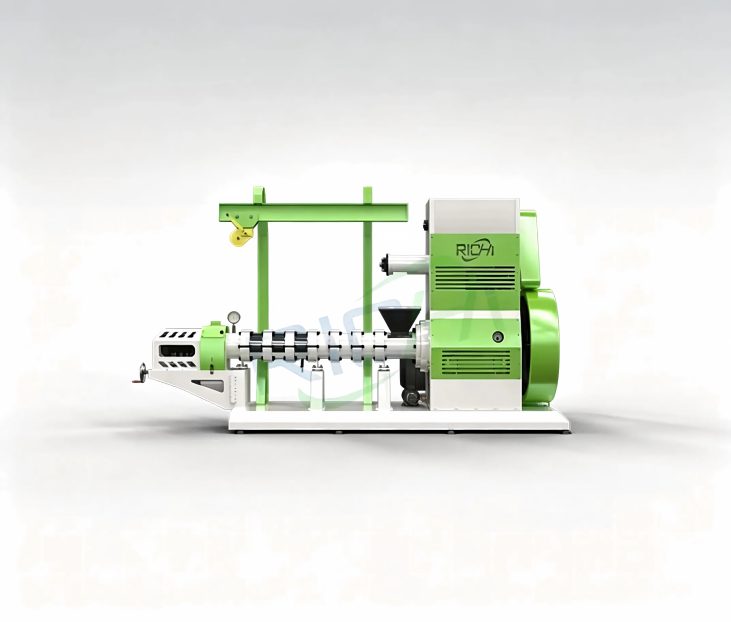
Based on screw structure, wet type fish feed extruder machines can be classified into twin-screw extruders and single-screw extruders. Wet type twin-screw extruders are suitable for large-scale, continuous production, whereas single-screw extruders are suitable for small-scale production and are cost-effective. Equipment production capacity varies depending on formulation, bulk density, and sinking/floating requirements.
Wet Type Fish Feed Extruder Machine Series
| Twin-Screw Model | SPHS75*2 | SPHS120*2 | SPHS150*2 | SPHS185*2 | |
| Capacity (T/H) | 0.5-1.0 | 1.5-2.0 | 3.0-4.0 | 5.0-6.0 | 10-12 |
| Main Power (kW) | 55 | 90 | 110 | 200 | 355 |
| Feeder Power (kW) | 1.5 | 1.5 | 1.5 | 1.5 | 2.2 |
| Conditioner Model | DC400-244 | DC500-244 | DC500-244 | DC600-300 | DC600-300 |
| Conditioner Power (kW) | 7.5 | 11 | 11 | 11 | 11 |
| Dual-Shaft Differential Conditioner Model | DC400*300-244 | DC500*400-300 | DC500*400-300 | DC600*500-300 | DC600*500-300 |
| Dual-Shaft Differential Conditioner Power (kW) | 11 | 11 | 11 | 15 | 15 |
| Screw Diameter (mm) | 75 | 120 | 120 | 150 | 185 |
| Single-Screw Model | DSP-90B | DSP-135B |
| Capacity (T/H) | 0.5-0.6 | 0.8-1.0 |
| Main Power (kW) | 37 | 75 |
| Feeding Power (kW) | 7.5 | 7.5 |
| Conditioning Power (kW) | 1.1 | 2.2 |
| Cutting Power (kW) | 1.1 | 1.5 |
| Screw Diameter (mm) | 90 | 135 |
| Overall Dimension (mm) | 2600*1600*1900 | 3750*1980*1950 |
Other Fish Feed Making Machine Models
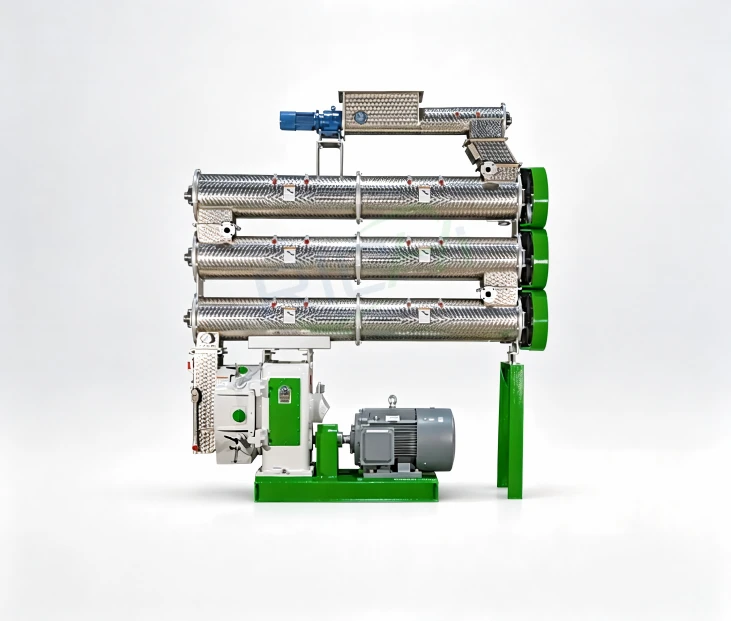
Except for wet type extruder, we also offers dry type fish feed extruders and fish feed pellet making machines. Dry type fish feed extruders are suitable for small-scale production, and fish feed pellet making machines are suitable for produce sinking feed pellets.
Equipment Running Videos
Trustworthy equipment proves its worth in real-world production. The following videos features the RICHI wet fish feed extruder machines working at customer factories. Stable extrusion, uniform pellets and smooth running highlight our reliable aquatic feed processing solutions. Need custom fish feed production lines? Consult RICHI for your project.
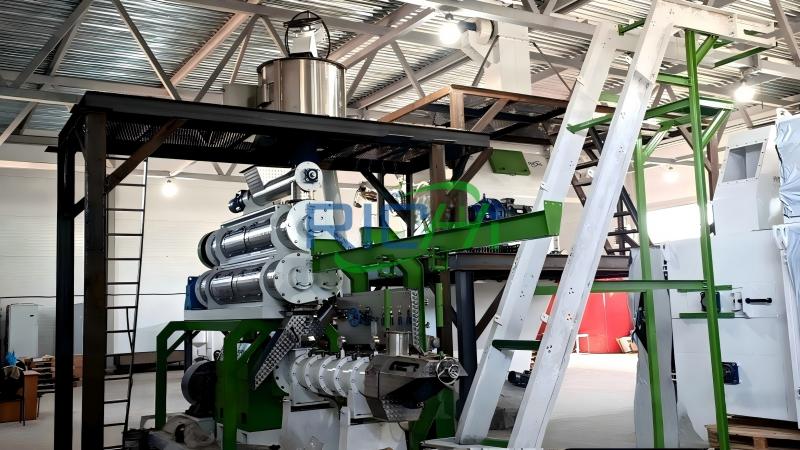

Russia 1.5-2 т/H wet type feed extruder pellet machine
The client, targeting the strong local market demand for high-end aquatic feed, planned to build an automated fish feed production line to simultaneously produce both floating and sinking feeds, aiming to capture a larger market share.
Based on the client’s needs, we configured a standardized fish feed production line with a wet type fish feed extruder machine as the core pelleting equipment. By adjusting the formula and key process parameters, various feed pellets, including floating, sinking, and slow-sinking types, can be produced on the same equipment.
Iran 2-2.5 T/H Wet Type Fish Feed Extruder Machine for Floating Feed
This client is a local feed producer, primarily engaged in poultry feed. They plan to add a floating fish feed production line to their existing line to enrich their product portfolio and expand their market.
After thoroughly surveying the client’s factory conditions, we customized a mixed production solution that can handle both floating fish feed and poultry feed. To ensure excellent buoyancy of the finished pellets while improving palatability and digestibility, we selected a wet fish feed extruder equipped with a double-layer conditioner. Steam conditioning promotes full starch gelatinization, effectively improving feed digestibility and utilization.
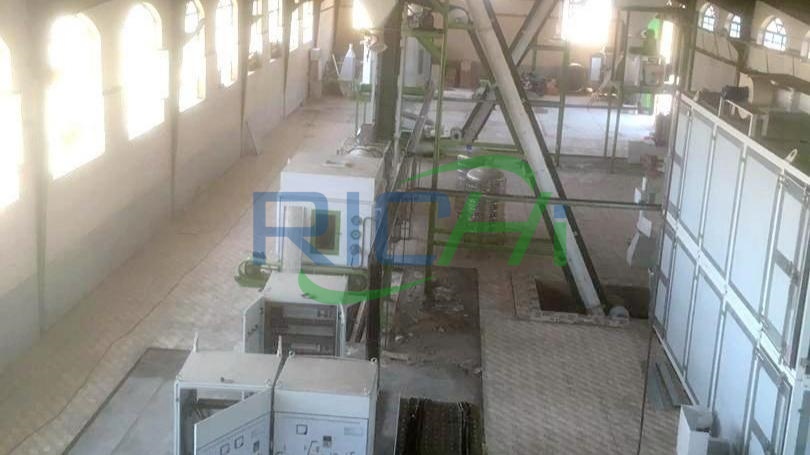
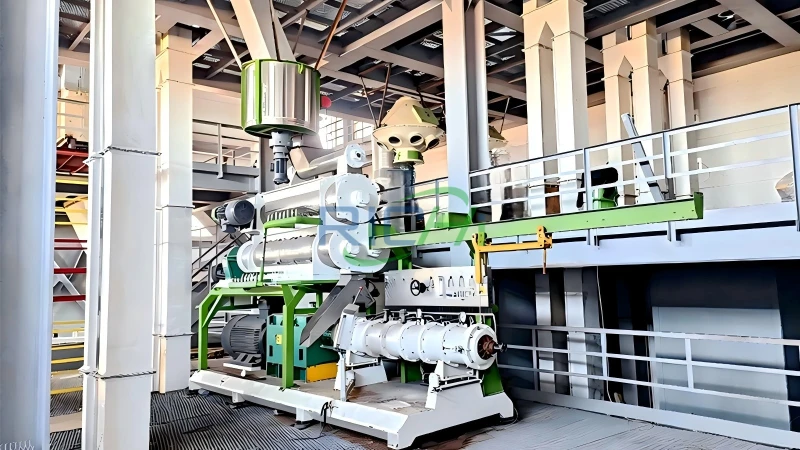
Iraq 5-6 т/H Wet Type Fish Feed Extrusion Machine
The client plans to invest in a new extrusion production line to produce 2-8mm floating fish feed. With a sufficient budget, the client requires a high degree of automation, stable equipment operation, and continuous production.
The client also has stringent standards for the finished fish feed pellets: smooth, burr-free surfaces, excellent buoyancy, and no disintegration for at least 8 hours after being placed in water. Based on these requirements, we tailored a customized wet-process fish feed extrusion production line solution for them.
Wet Type fish feed extrusion production Line
Manufacturing top-grade fish feed pellets is not merely about picking a qualified extruder. All production phases — grinding, blending, extrusion, drying, coating, cooling and packaging — jointly affect pellet quality, nutrition, output efficiency and running costs.
As a specialist aquatic feed equipment supplier, we offer complete fish feed production systems customized to your raw materials, capacity demands, feed formulas and automation expectations. Our engineers optimize each processing step to achieve stable operation, fluent material transport and consistent pellet quality, supporting you to build dependable and profitable aquafeed factories.
01
Raw Material Grinding
Grind raw materials into uniform particle sizes to imporve mixing consistency and extrusion performance. If you want to produce floating feed, it is recommended to use an ultrafine pulverizer to grind the raw materials to a fineness of 80 mesh or higher.
02
Mixing
Weigh precisely and mix thoroughly all ingredients to ensure a balanced nutrition in every single feed pellet. If your formulation contains heat-sensitive or easily oxidized ingredients such as vitamins, enzymes, or fish oil, it is recommended that you spray the coating after the pellets have cooled.
03
Extruding
Deliver the mixed materials into the wet type feed extruder pellet machine. Ensure the machine runs under proper temperature, pressure, and humidity to yield feed pellets with superior expansion and high digestibility.
04
Drying
Dry the extruded feed pellets to approximately 10% moisture using a continuous mesh belt dryer.
05
Cooling & Screening
Cool the pellets to ambient temperature to increase hardness and prevent condensation during storage. Then screen them to remove fines and ovesize pellets.
06
Coating
Use a spraying machine to evenly coat fish oil onto the surface of the fish feed pellets.
07
Packing
Weighing and packaging the compliant fish feed pellets for transportation or sale.
Auxiliary Equipment for Fish Feed Production
A premium wet type feed extruder pellet machine is just one piece of an effective aquafeed production line. Consistent pellet quality and high productivity can only be achieved with properly matched equipment across all processing stages. RICHI provides all supporting machinery for extruded fish feed production. Looking to construct a wet type fish feed mill and confused about equipment selection? Reach out to us for reliable turnkey solutions.
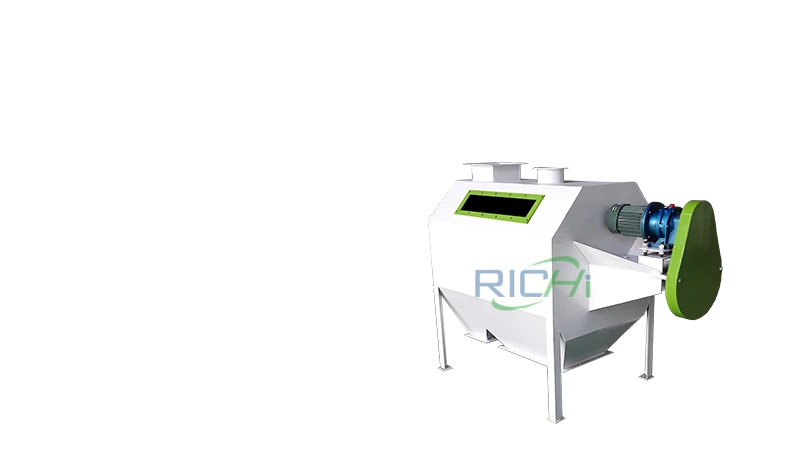
Powder Cleaner
Removes impurities and oversized particles from powdered raw materials to ensure clean and consistent feed processing.
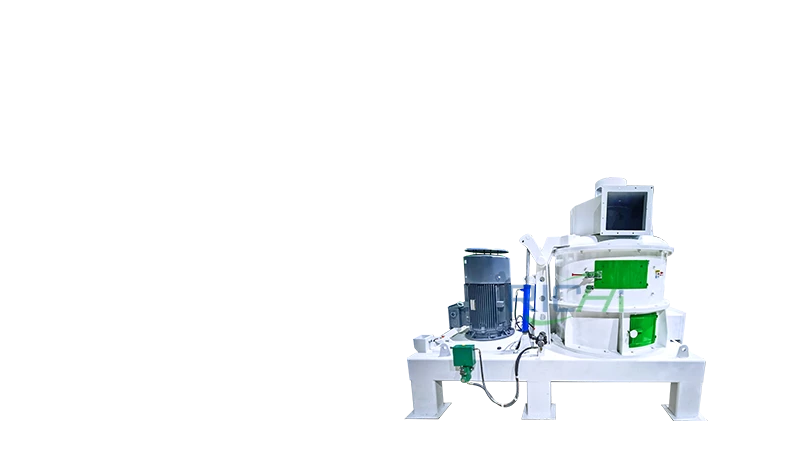
Ultra-fine Grinder
Crush large raw materials such as corn and soybean meal into uniform fine particles, which is convenient for subsequent mixing and granulation.
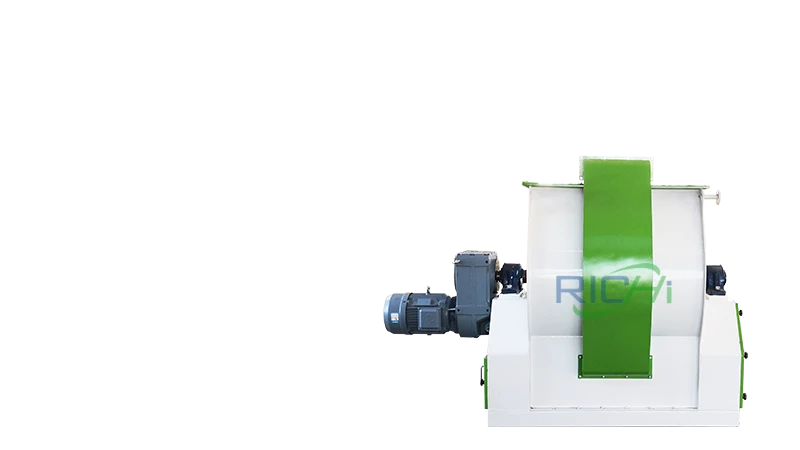
Fish Feed Mixer Machine
Evenly blends all ingredients into a homogeneous mixture, ensuring consistent nutrition in every feed pellet.
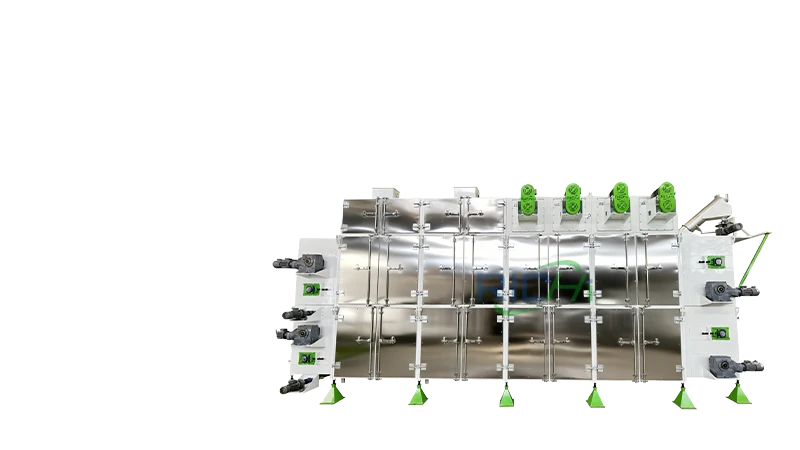
Fish Feed Dryer Machine
Reduces pellet moisture after extrusion to improve storage stability, pellet strength, and shelf life.
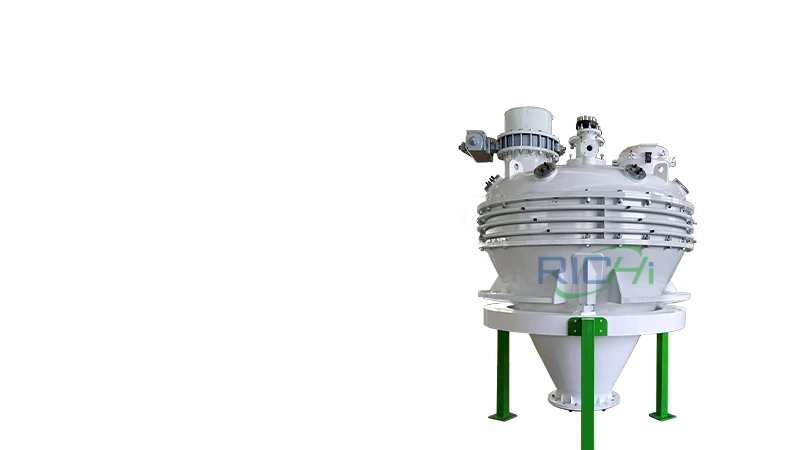
Fish Oil Coating Machine
Applies oils, vitamins, enzymes, and liquid additives evenly onto feed pellets to enhance nutrition and palatability.
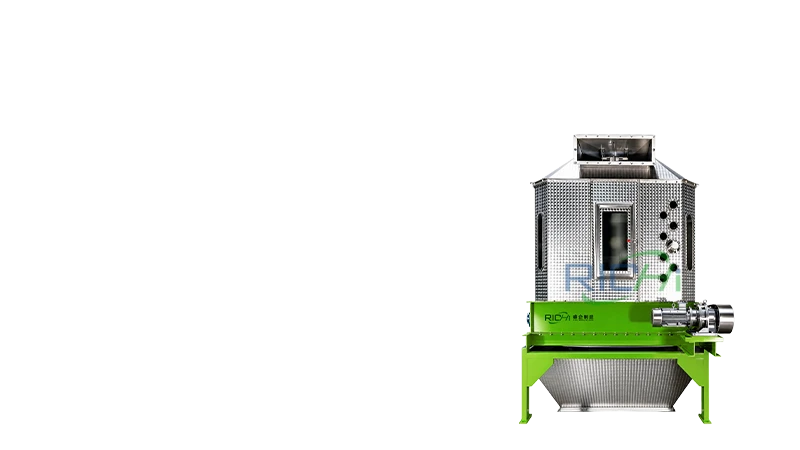
Lowers pellet temperature and moisture after drying to increase hardness and prevent condensation during storage.
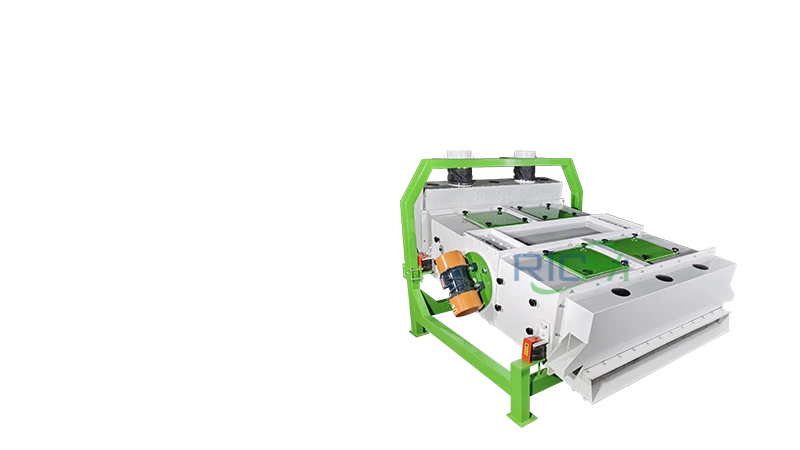
Separates qualified pellets from fines and oversized particles to ensure a uniform final product.
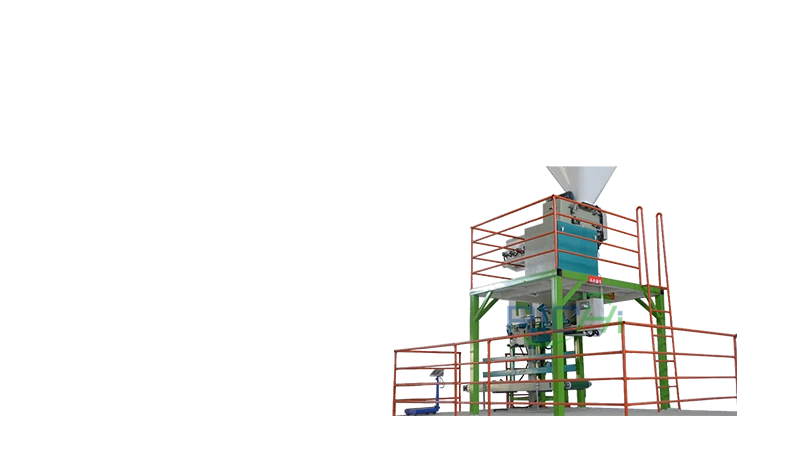
Accurately weighs and packages finished feed pellets for efficient storage, transportation, and sale.
Frequently Asked Questions
What types of fish feed can be produced by a wet type fish feed extruder machine?
→
Wet type fish feed extruders can produce a variety of aquatic feeds, including floating fish feed, slow-sinking fish feed, and sinking fish feed, suitable for different aquatic animals such as carp, tilapia, catfish, eel, shrimp, and soft-shelled turtle. By adjusting the formula, mold, and processing parameters, pellets of different diameters and densities can be produced.
What is the difference between dry type and wet type fish feed extruder?
→
Dry type feed extruders do not require steam conditioning, have a simple structure, and lower investment costs, making them suitable for small to medium-scale production. Wet feed extruders are equipped with a steam conditioning system, resulting in a higher degree of raw material maturation. The produced feed pellets have better buoyancy, water stability, and digestibility, making them more suitable for large-scale commercial fish feed production.
What capacity does the wet fish food extruder machine have?
→
Depending on the model and configuration, the output of a single unit typically ranges from several hundred kilograms per hour to several tons per hour. For example, small equipment is suitable for use in laboratories or small-scale fish farms, while large equipment can be used in commercial fish feed factories to achieve continuous, large-scale production.
How much does a wet fish feed extruder machine cost?
→
The price of wet fish feed extruders is affected by factors such as equipment model, output, level of automation, supporting equipment, and production line configuration. The price of a single machine and the investment cost of a complete fish feed production line can differ significantly, requiring a customized quote based on the customer’s raw materials, target capacity, and product requirements.
What equipment is included in a complete fish feed extrusion production line?
→
A complete fish feed extrusion line typically includes a raw material cleaning system, crusher, batching system, mixer, wet extruder, dryer, oil spraying system, cooling and screening equipment, and packaging equipment. RICHI can provide turnkey solutions from single machines to complete lines, depending on the customer’s production scale.
Can the fish feed extruder produce floating feed with good water stability?
→
Yes. Through wet extrusion technology, the starch in the raw materials is fully gelatinized, forming a uniform porous structure inside the pellets. This gives the feed good buoyancy while reducing nutrient loss from the water and improving aquaculture efficiency.
What factors should be considered when choosing a fish feed extruder machine?
→
The main factors to consider are:
- Target yield (kg/h or t/h)
- Feed type (floating, sinking, or slow-sinking)
- Fish fry and feed formulation
- Raw material characteristics
- Automation requirements
- Subsequent expansion needs
Selecting the appropriate model based on these factors can reduce investment costs and ensure production stability.
How long is the service life of a wet type fish feed extrusion machine?
→
High-quality fish feed extruders utilize wear-resistant alloy screws, premium bearings, and reliable transmission systems, ensuring long-term stable operation with proper handling and regular maintenance. Regular replacement of wear parts and equipment maintenance help extend the equipment’s lifespan.
Can you provide a complete wet extruded fish feed production solution based on our requirements?
→
Yes. Depending on the customer’s location, raw material conditions, target output, feed type, and investment budget, the manufacturer can provide process design, equipment selection, production line layout, installation and commissioning, and after-sales technical support, achieving a one-stop solution from raw materials to finished product packaging. (view our YouTube)