Goat Feed Pellet Making Machine
Multifunctional goat feed pellet making machine processes alfalfa, grass, corn, soybean meal,wheat bran and more. High output (1-40T/H), durable ring die designs. Suitable for small farms to commercial use. Get free factory price quote now!

RICHI MACHINERY
Brief Introduction
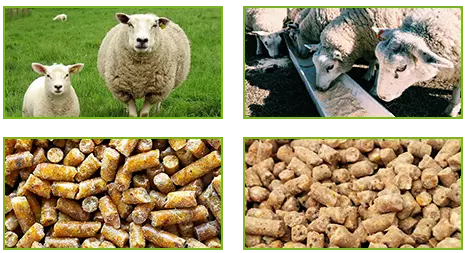
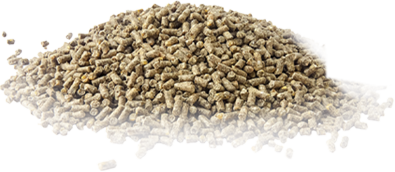
Goat feed pellet making machine is a professional equipment specially used for processing goat, sheep and cattle feed. Its main function is to press various raw materials such as corn, wheat, soybean meal, grass, etc. into pellet feed under high temperature and high pressure conditions. The equipment integrates high efficiency, stability and intelligence. It is designed for modern goat farms and feed factories and can meet the production needs of goat feed of different scales and feeding stages.
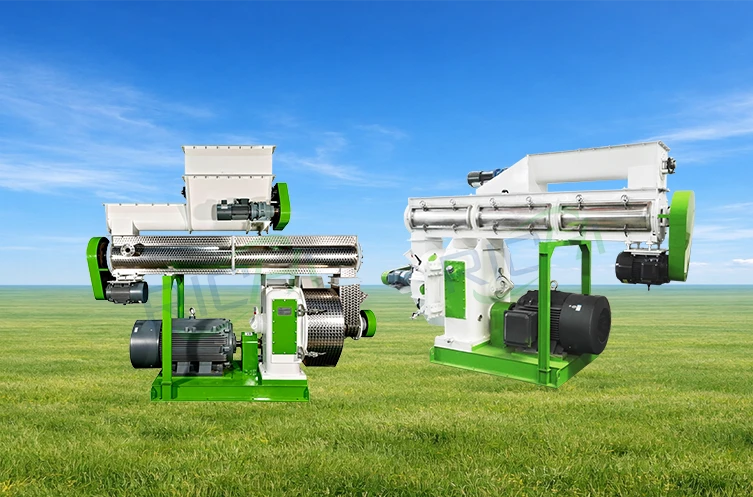
RICHI goat feed pellet machine offers a wide production capacity, capable of producing 0.5 to 40 tons of goat feed pellets per hour. Furthermore, we provide customized solutions with capacities reaching up to 100 tons per hour.
Project Videos
Below are actual videos of a successfully delivered goat feed pelleting project. These videos allow you to clearly see the equipment’s outstanding performance and demonstrate our expertise in designing goat feed pelleting solutions.
12-15 T/H Uganda Goat Feed Pellet Production Project
0.5-1 T/H Pellet Sheep Feed Production Project

Global Customer Cases
The following are examples of recent orders for goat feed pellet making machines. Many clients were either setting up new plants or upgrading existing production lines; consequently, in addition to the main pelletizing unit, they also purchased various types of auxiliary equipment. Whether you require a single machine or a complete production line solution, we can provide exactly what you need.
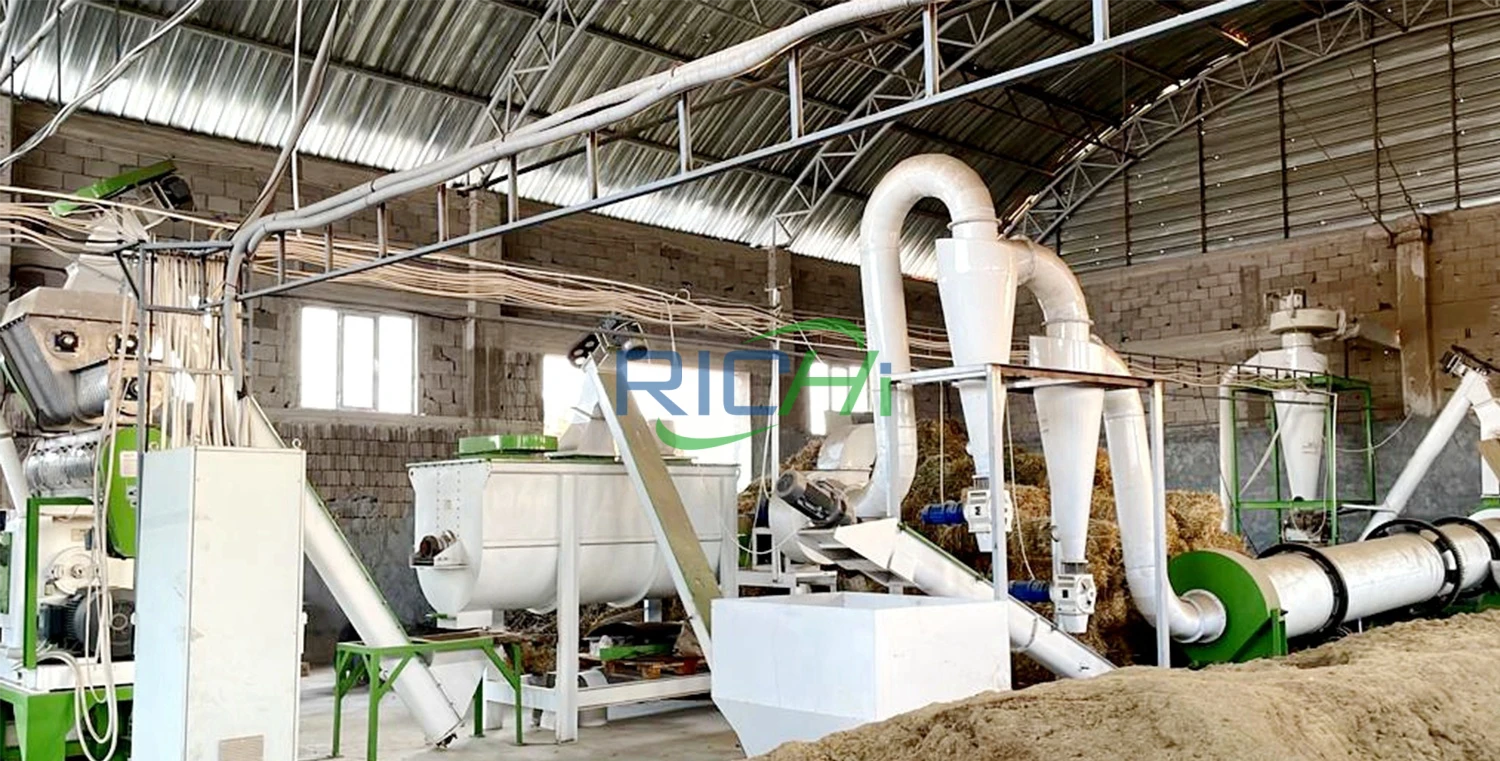
1-2 T/H New Zealand Pellet goat & Sheep Feed Processing Project
The client, an agricultural and livestock enterprise specializing in the production of high-quality lamb and wool, wishes to construct a dedicated processing facility for pelleted sheep feed on its own ranch.
The raw materials consist primarily of ryegrass, alfalfa, barley, corn, oats, and rapeseed meal.
The core equipment for this project includes a hammer mill, feed mixer, sheep feed pellet mill, cooler, and screening machine.
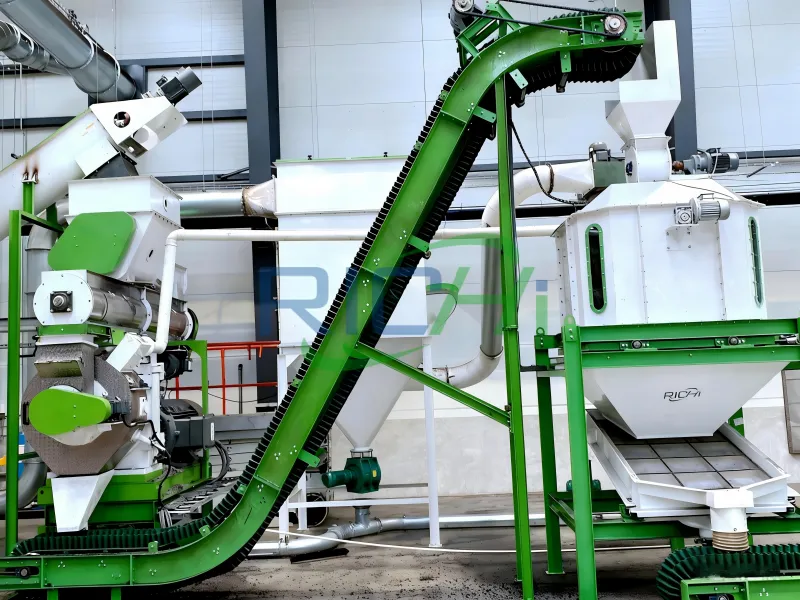
3-4 T/H Pellet Feed Production Line for Meat Goat &Sheep in Australia
The client wants to build their own sheep pellet feed production line to achieve feed self-sufficiency. The main raw materials will be oat hay, alfalfa hay, barley, wheat, and rapeseed meal.
The production line needs to have the capability for rapid formula switching to adapt to the processing requirements of different raw materials.
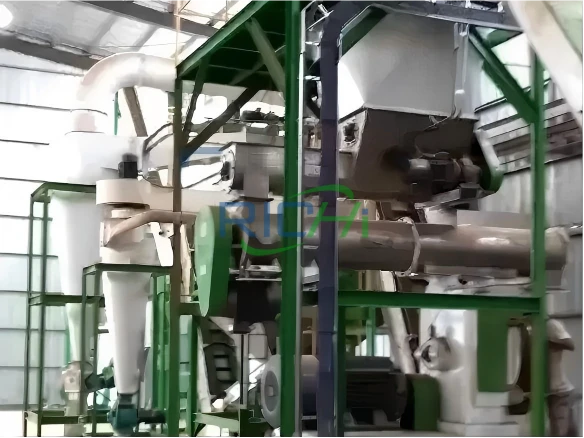
5-6 T/H Oman Goat & Cattle Feed Pellet Production Project
The client is a livestock feed manufacturer specializing in the production of Total Mixed Rations (TMR) for cattle and sheep.
The primary raw materials include locally abundant date palm fronds and date waste, supplemented by fish meal, wheat bran, cottonseed meal, broken rice, and urea.
The project installation took 90 days. We not only assisted in planning the supporting infrastructure but also dispatched technicians to the site to handle equipment installation and commissioning.
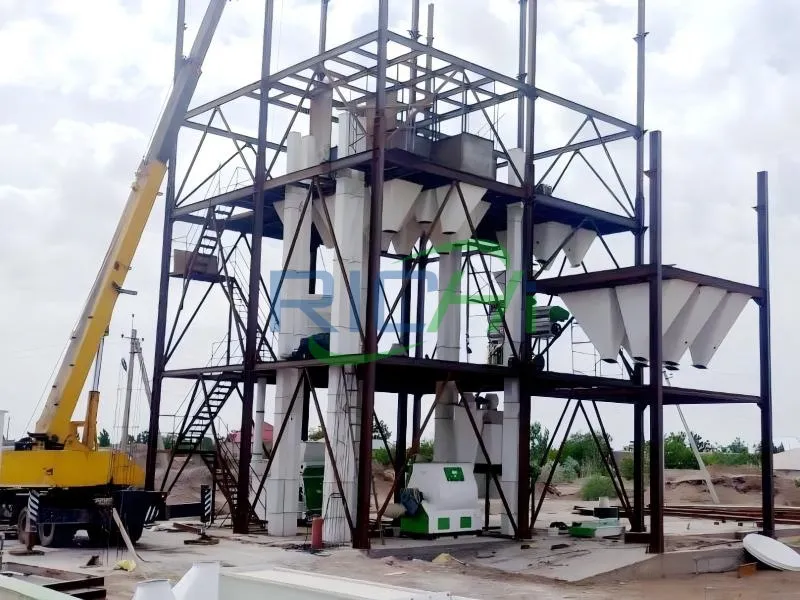
6-8 T/H Goat, Cattle & poultry Feed Pellet Production Line in Uzbekistan
The client wants to build an animal feed processing plant to produce pelleted feed for sheep, cattle, and poultry.
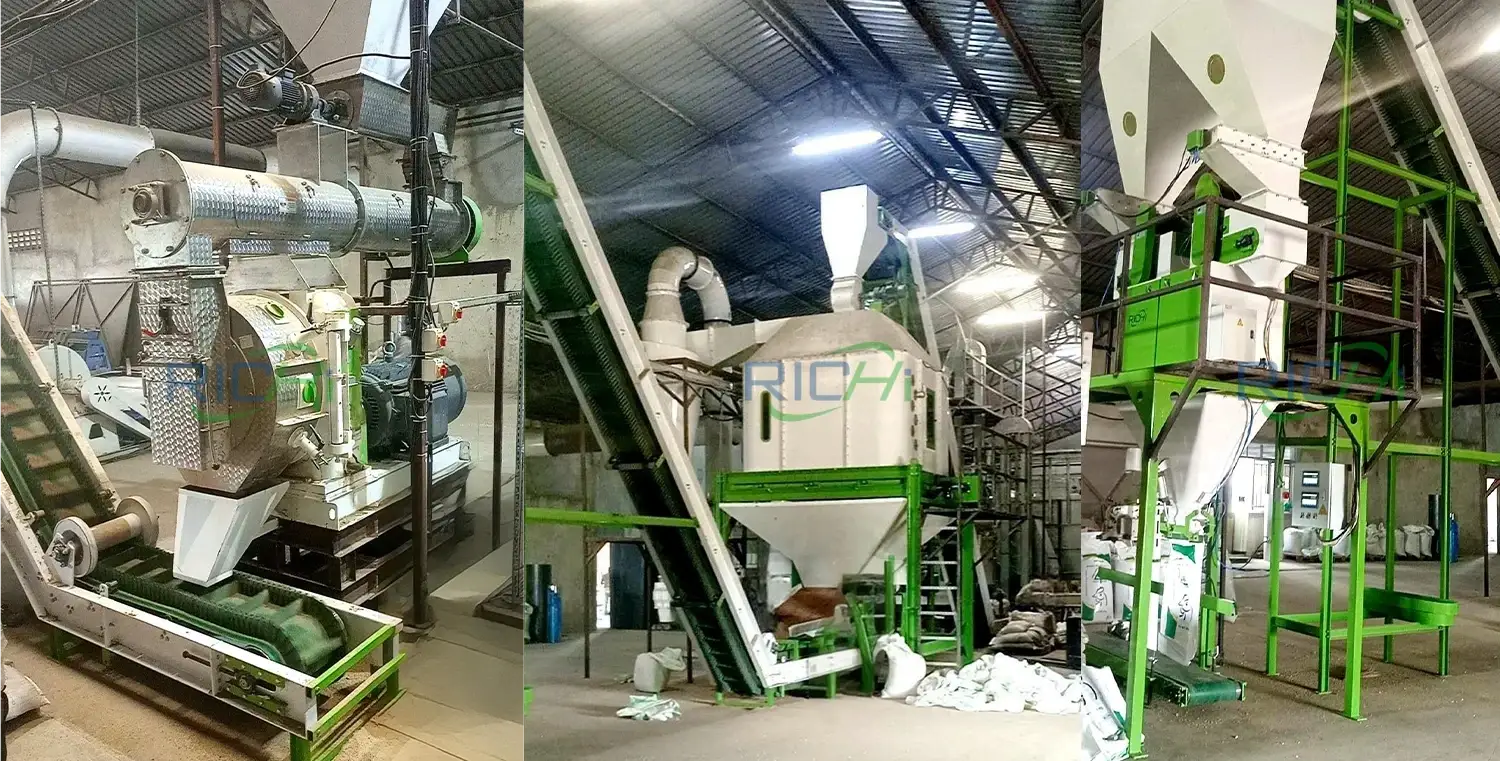
The entire production line includes a grinder, feed mixer, pellet mill, cooler, and packaging machine.
The project construction period was approximately 100 days. We assisted the client with infrastructure planning and equipment installation and commissioning.
- Capacity: 6-8 T/H
- Pellet Size: 4-6 mm
- Raw materials: wheat straw, oat hay, rice straw, cottonseed meal, corn, soybean meal.
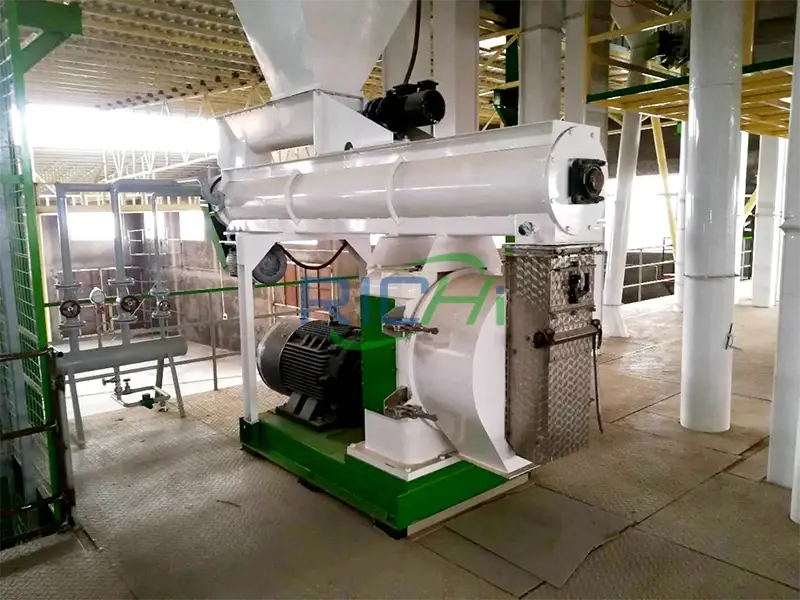
8-10 T/H Dairy Goat Feed Pellet Machine for Sale Netherlands
The client’s original goat feed pellet machine suffered from low production capacity, high energy consumption, and frequent breakdowns; consequently, they sought to replace it with a high-capacity machine.
The customer’s formula mainly includes corn, soybean meal, wheat bran, premix, alfalfa hay, and beet pulp.
Our goat feed pellet mill uses gear transmission, which is both high-yield and energy-efficient. The ring die and pressure rollers are made of high wear-resistant alloy steel, and the transmission gearbox is reinforced to ensure stable and continuous production.
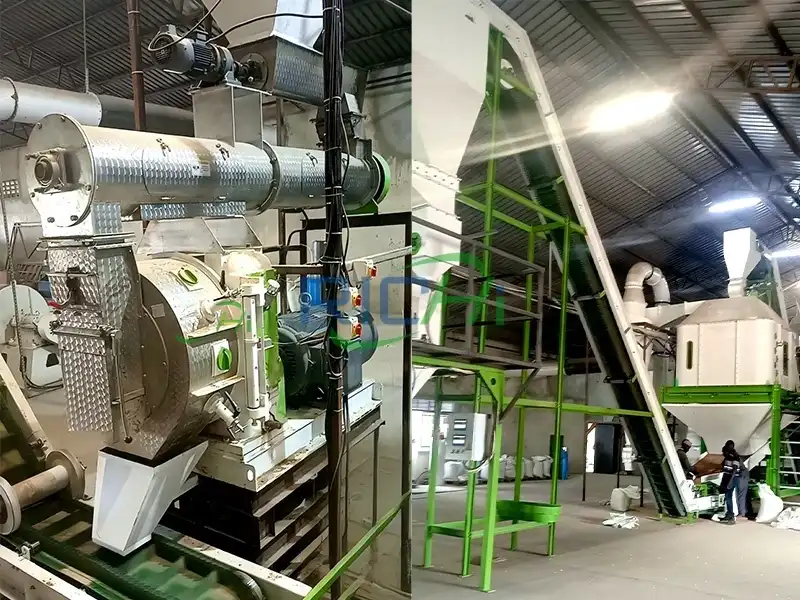
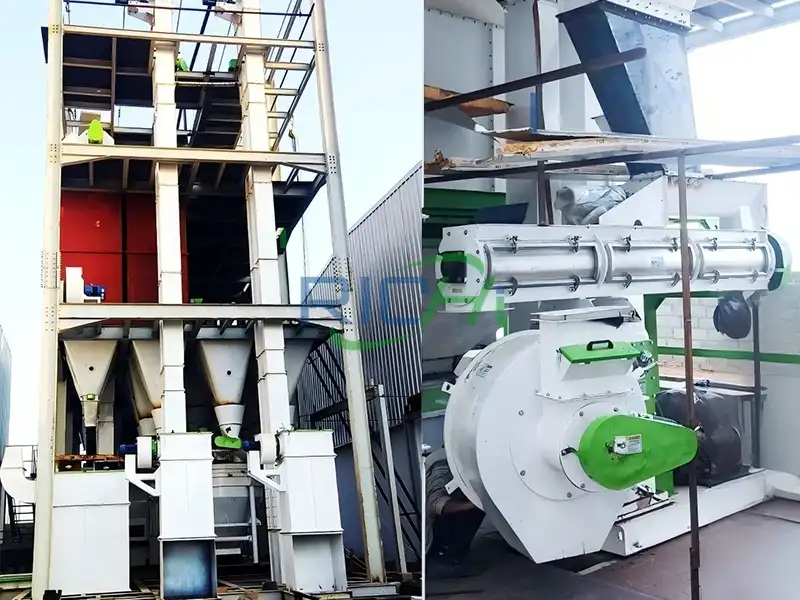
12-15 T/H Goat Feed Pellet Production Line in Uganda
The client wants to utilize the country’s abundant agricultural by-product resources to produce standardized pelleted feed. The main raw materials include corn, soybean meal, dried cassava, corn stalks, and cassava peels.
The main equipment in the production line includes a crusher, a mixer, a pellet goat feed machine, a pellet cooler, a screening machine, a packaging machine, and conveying equipment.
This project does not require infrastructure construction; it only requires the equipment to be installed and debugged.
Hot-Selling Models
RICHI offers a wide range of goat feed pellet making machine models, with single-unit capacities ranging from 0.5 to 40 tons per hour, meeting the diverse production scale requirements of users ranging from family farms to large-scale goat feed manufacturers. Incidentally, the equipment’s capacity depends on the amount of forage in the feed formulation. The higher the forage content, the lower the capacity.
SZLH320 goat feed pellet machine
- Production Capacity: 3–4 T/H
- Main Motor Power: 37 kw
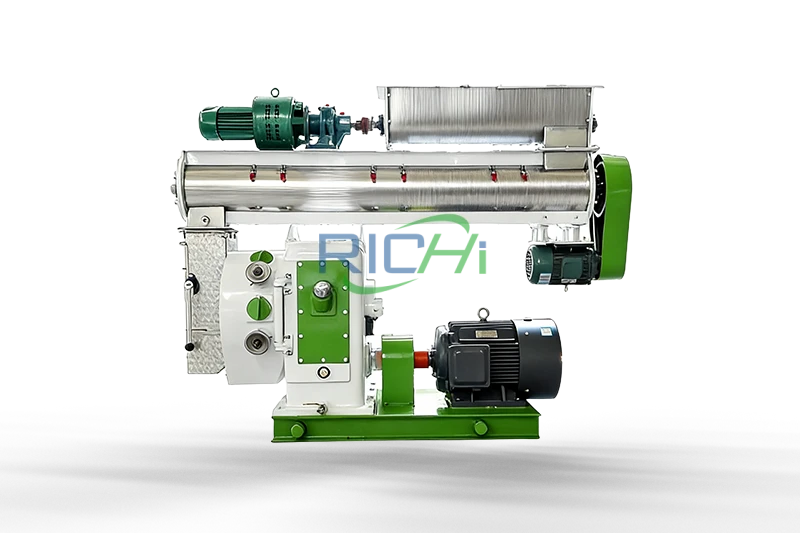
SZLH350 goat feed pellet mill
- Production Capacity: 5–6 T/H
- Main Motor Power: 55 kw
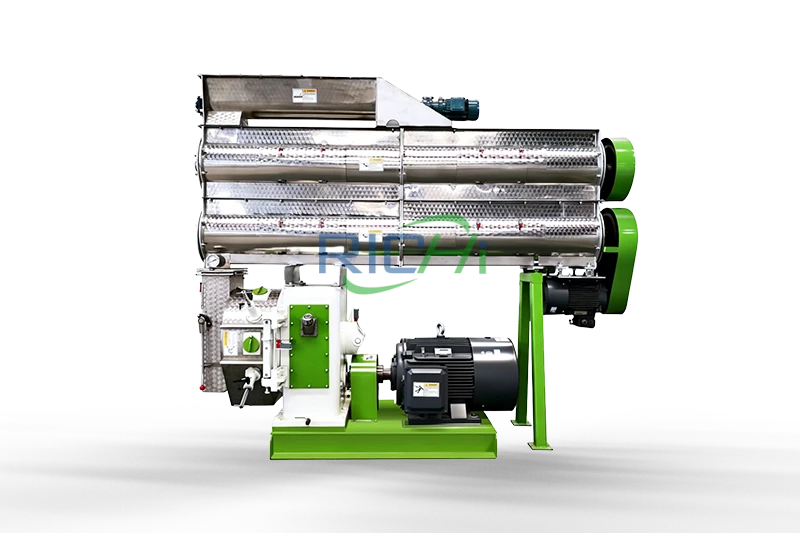
CZLH420 goat feed pellet maker
- Production Capacity: 1.8–2.0 T/H
- Main Motor Power: 90 kw
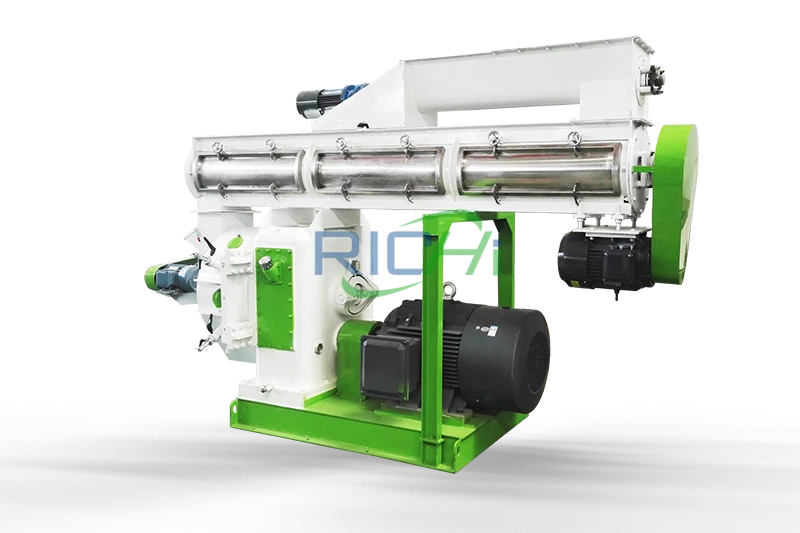
SZLH508 Pellet goat feed machine
- Production Capacity: 15–16 T/H
- Main Motor Power: 160 kw
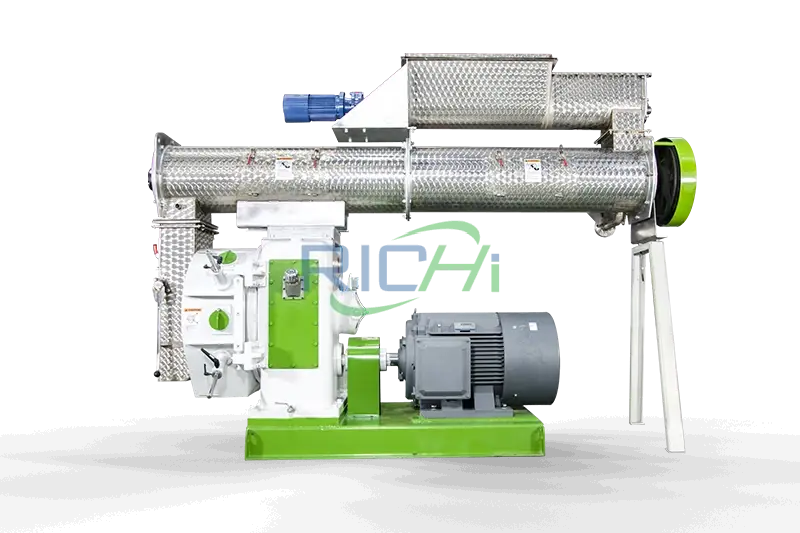
CZLH520 goat feed pellets mill
- Production Capacity: 2.8–3.0 T/H
- Main Motor Power: 132 kw
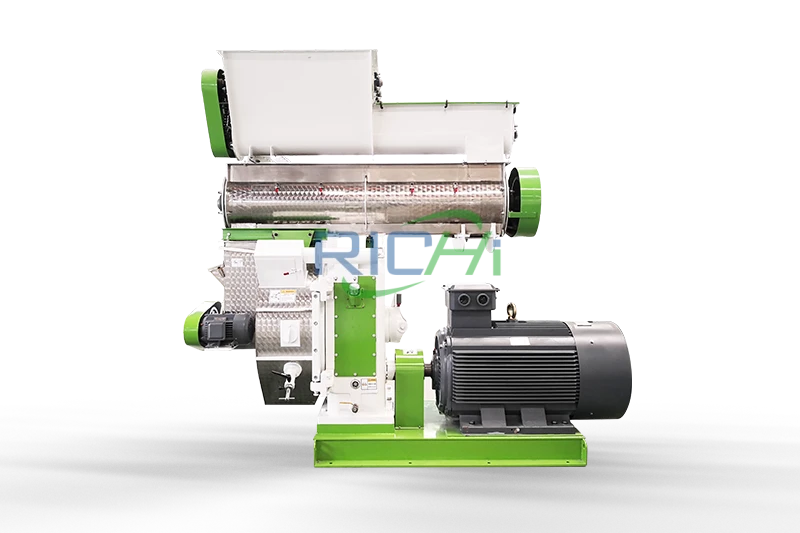
SZLH768 pellet goat feed machine
- Production Capacity: 38–40 T/H
- Main Motor Power: 315 kw
Why Choose RICHI Machinery
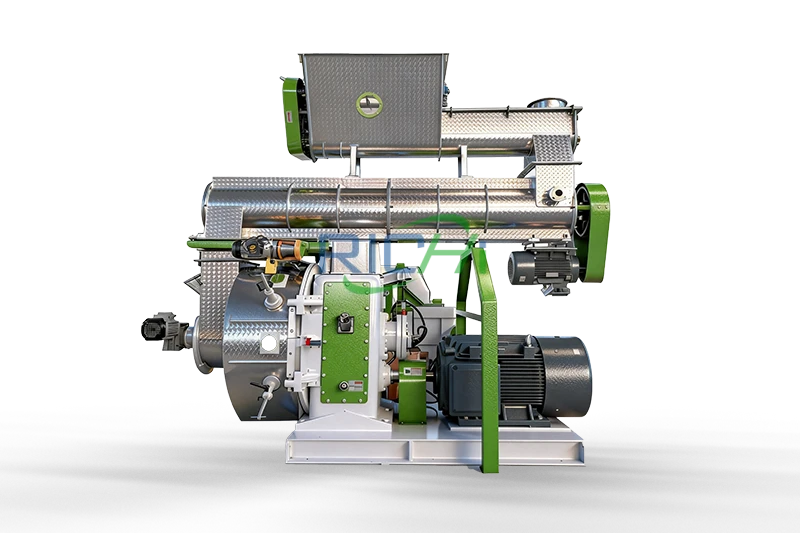
The RICHI sheep feed pelletizer features an optimized design of key components—including the ring die, press rollers, conditioner, transmission system, and feeding mechanism—specifically tailored to the high-fiber characteristics typically found in sheep feed formulations.
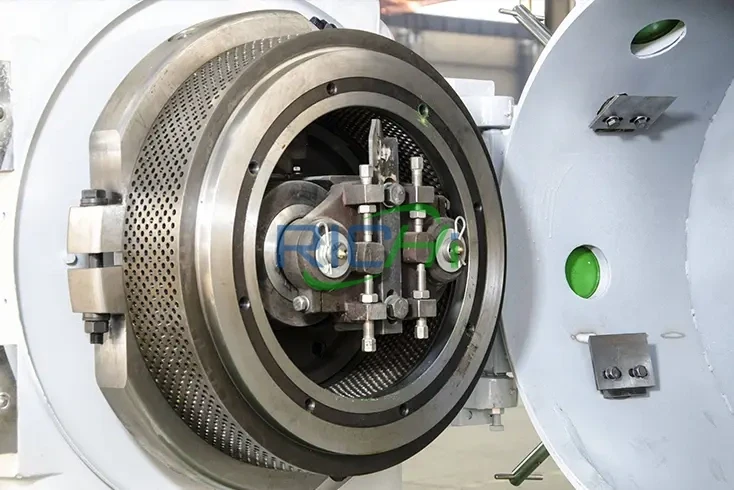
Wear-Resistant Ring Dies and Press Rollers
The ring dies and pressure rollers of our sheep feed pelletizers are crafted from 42CrMo wear-resistant alloy steel. Combined with an advanced heat treatment process, their wear resistance is significantly enhanced, thereby extending their service life. Besides, the ring die features a diverse range of aperture specifications, capable of meeting the production requirements for various types of sheep feed.
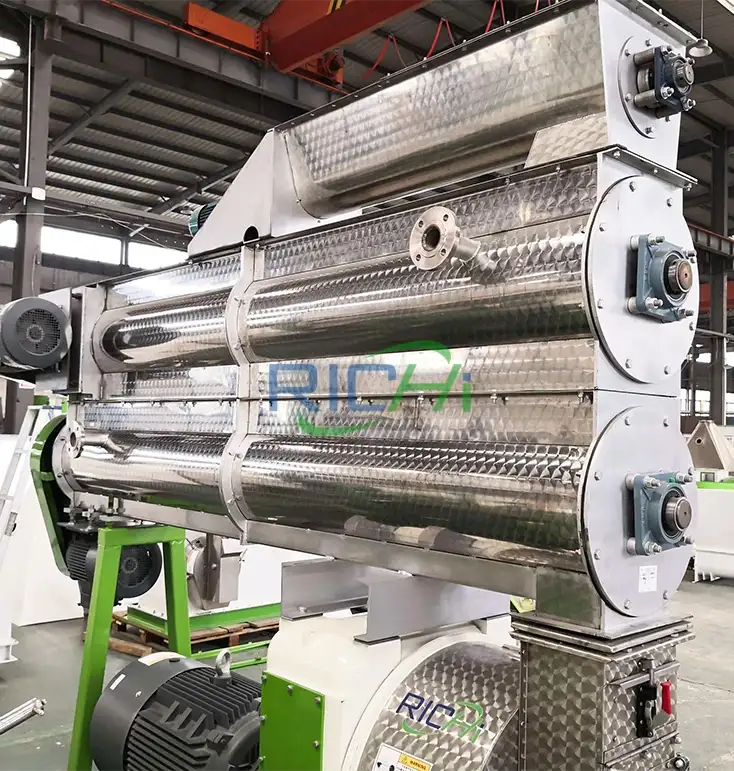
304 Stainless Steel Conditioner
Our sheep feed pellet machine comes with a single-layer or double-layer conditioner, which thoroughly cooks the raw materials to enhance both feed palatability and digestibility. The cylinder and paddles in contact with the material is constructed of stainless steel to ensure corrosion resistance, safety, and hygiene.
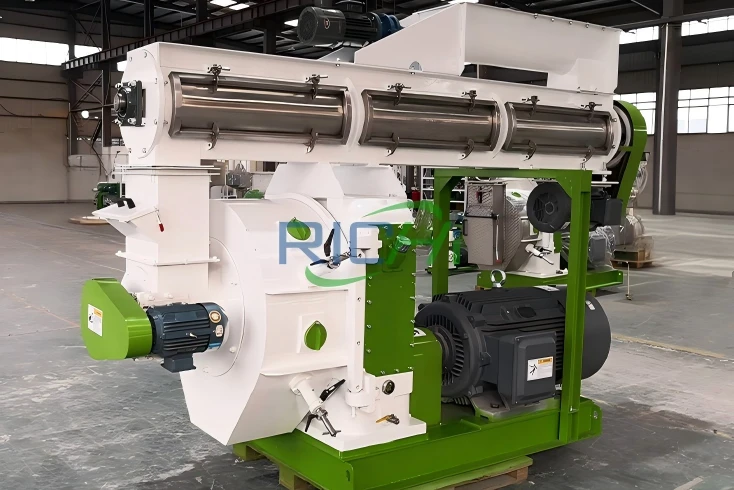
Heavy-Duty Gear Transmission System
Our sheep feed pelletizer utilizes a gear-driven transmission system, offering an efficiency increase of approximately 15% compared to belt-driven systems. The gears and gear shafts are manufactured using high-precision processes—including carburizing, quenching, and hard-surface gear grinding—to ensure low noise levels and a long service life.
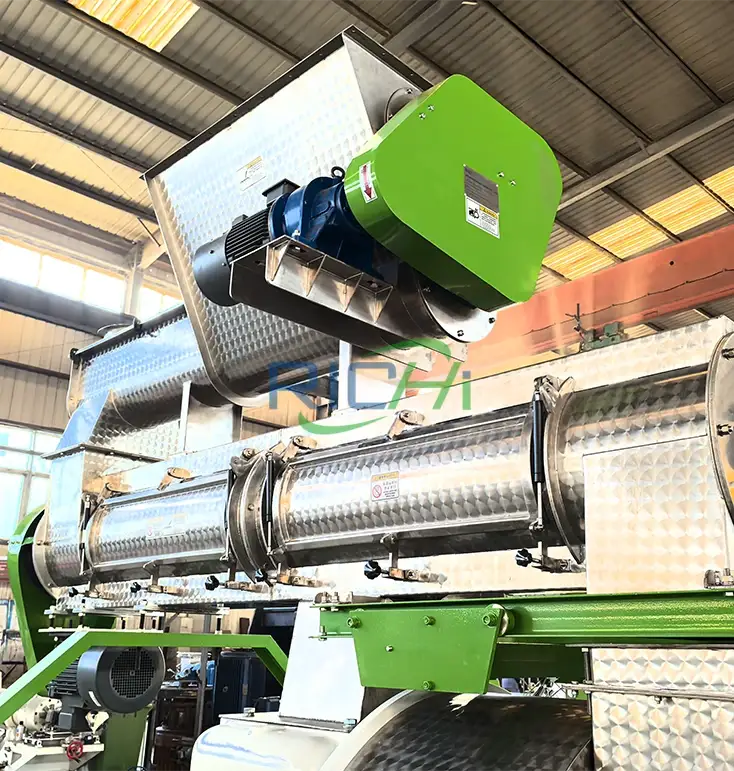
Variable-Frequency Differential Feeder
A variable‑frequency motor drives the feeder, ensuring material enters the conditioner uniformly and steadily. In addition, we install an anti‑bridging device to stop material bridging.
Technical Parameters
When selecting a goat feed pellet making machine, different raw material ingredients require different pellet machine. To produce higher-quality and nutritionally rich pellet feed, RICHI Machinery has specifically developed distinct configurations and performance specifications for goat feed making machines, tailored to various raw materials.
For feed formulations based primarily on grains—such as corn, wheat, and soybean meal—it is necessary to select a goat feed pellet making machine capable of achieving a finer grind. Conversely, if the raw materials consist mainly of high-fiber substances—such as straw, alfalfa, and forage grasses—a pelletizer with greater compression capacity should be chosen. The technical specifications for both types of sheep feed pellet machines are provided below. We hope this information proves helpful to you.
| High-Strarch Content Formula | ||||||||
| Model | SZLH250 | SZLH320 | SZLH350 | SZLH420 | SZLH508 | SZLH558 | SZLH678 | SZLH768 |
| Main Motor Power (kW) | 22 | 37 | 55 | 110 | 160 | 185 | 250 | 315 |
| Feeder Power (kW) | 1.1 | 1.5 | 1.5 | 1.5 | 1.5 | 1.5 | 1.5 | 2.2 |
| Modulator Power (kW) | 1.5 | 4 | 4 | 7.5 | 7.5 | 11 | 11 | 11 |
| Die Inner Diameter (mm) | 250 | 320 | 350 | 420 | 508 | 558 | 673 | 762 |
| Finished Pellet Diameter (mm) | 2~12 | |||||||
| Output (T/H) | 1.0-1.5 | 3-4 | 5-6 | 10-12 | 15-16 | 20-22 | 30-33 | 38-40 |
| High-Forage formula | ||||||
| Model | CZLH320 | CZLH350 | CZLH420 | CZLH520 | CZLH678 | CZLH768 |
| Main motor power (kw) | 22 | 37 | 90 | 132 | 185 | 250 |
| Arch-breaking feeder power (kw) | 2.2 | 2.2 | 3 | 3 | 3 | 4 |
| Forced feeder power (kw) | 0.75 | 0.75 | 1.5 | 1.5 | 1.5 | 1.5 |
| Ring die inner diameter (mm) | 320 | 350 | 420 | 520 | 673 | 762 |
| Finished particle diameter (mm) | 2~12 | |||||
| Output (T/H) | 0.5-0.6 | 1.0-1.2 | 1.8-2.0 | 2.8-3.0 | 4-5 | 6-8 |
Supporting Equipment
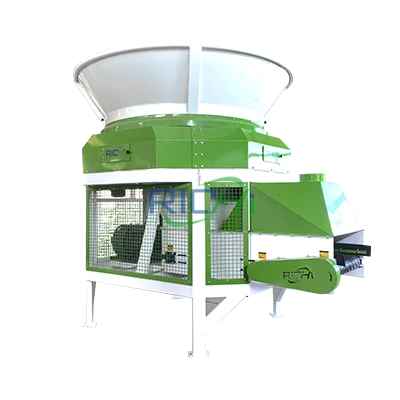
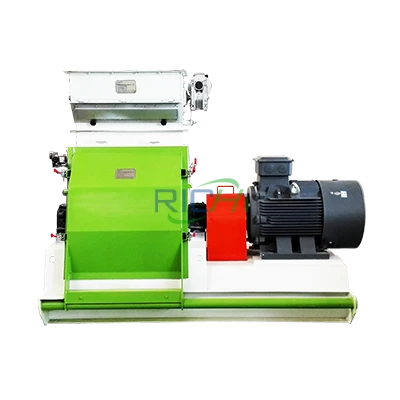
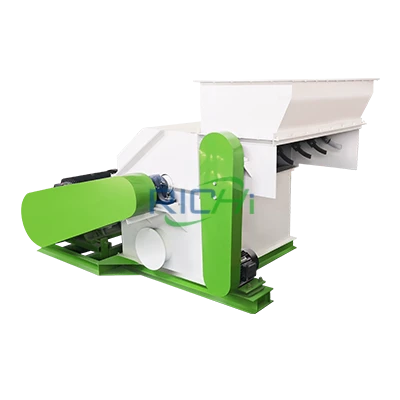
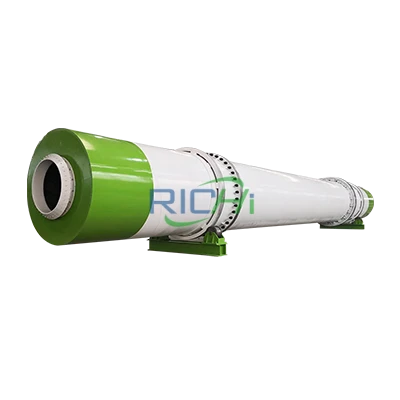
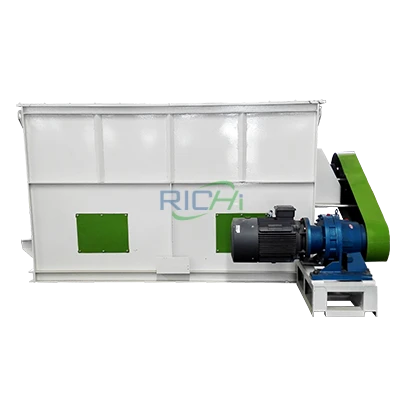
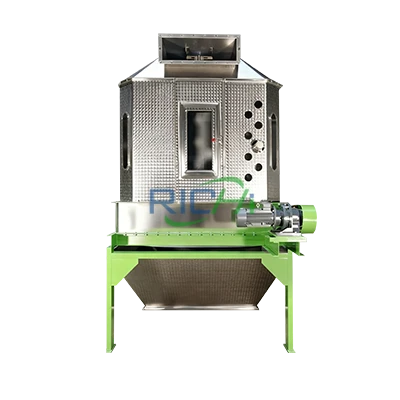
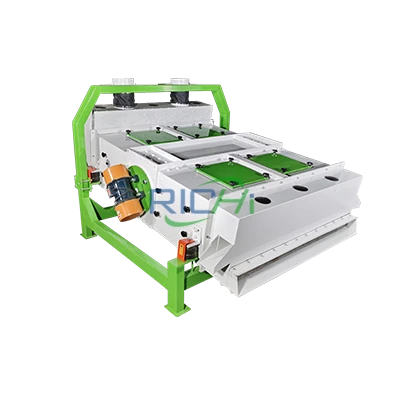
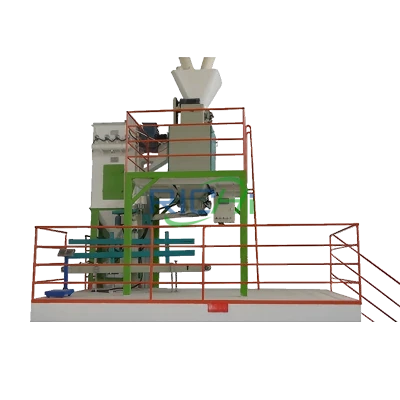
For regular, large-scale production, in addition to goat feed pellet making machines, a complete set of auxiliary equipment is required, including crushing, mixing, drying, cooling, screening, and packaging. RICHI Machinery focuses on providing comprehensive pelleting production line solutions, offering a one-stop supply of complete pellet feed production equipment.
How to Make Goat Feed Pellets
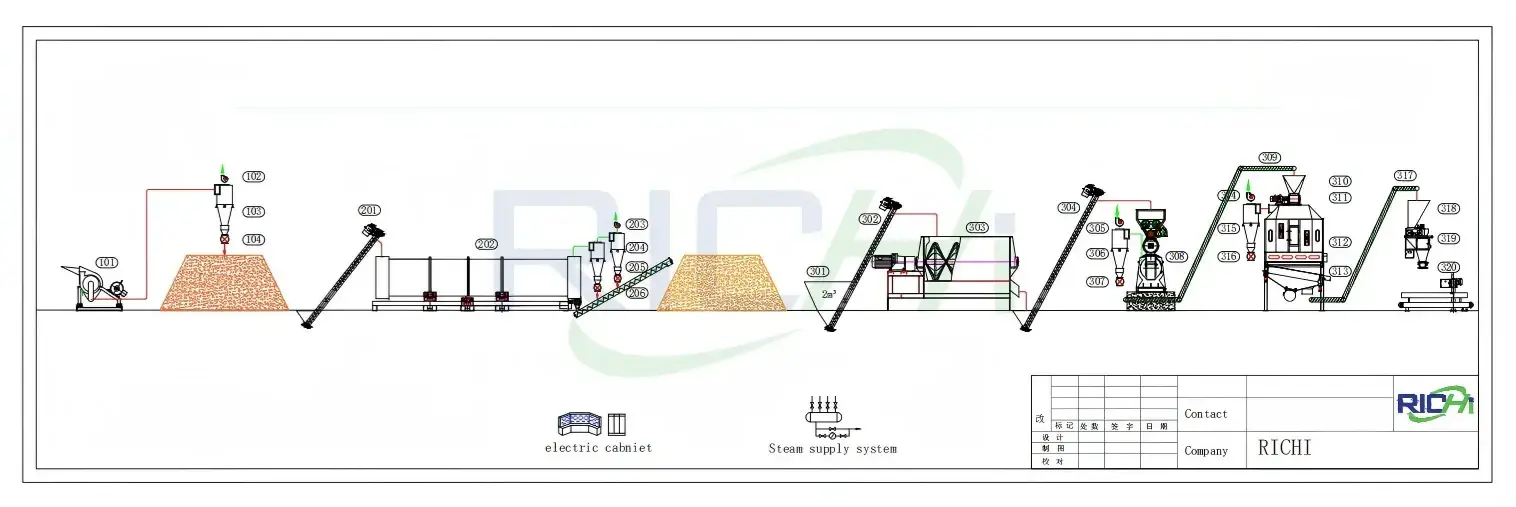
To understand how to maker goat feed pellets, one requires specialized goat feed pellet making machine and a complete animal feed production line. The primary objective is to transform raw materials—such as forage or grains—into pelletized feed, endowing it with rich nutritional content while ensuring it is easy to store and convenient to transport. The entire operational process typically comprises the following eight key stages.
1
Crushing Process:
First, if your raw material are forage bales, you will need to use a bale breaker to unwrap them and remove impurities—such as metal, stones, and threads—from the raw materials. Next, use a forage grinder to pulverize the loosened forage or straw into a powder. If your goat feed formula has a high grain content, you can use an animal feed hammer mill to grind ingredients such as corn, wheat bran, soybean meal, and cottonseed meal to a particle size of less than 3 mm.
2
Drying Process (Optional):
If the raw materials have an excessively high moisture content, they must first be dried to reduce the moisture level to approximately 12–15% before proceeding with pelleting.
3
Mixing Process:
Mix the various ground raw materials together according to the feed formula. Premixes and other functional additives can also be added during this stage.
4
Pelletizing Process:
Feed the mixed materials into the goat feed pellet machine for compaction. If your goat feed formula has a high forage content, it is recommended to use a pellet mill specifically designed for forage-based feed. While the production capacity of this type of pellet mill is somewhat lower than that of machines processing high-grain formulas, it delivers higher torque, making it suitable for pelleting high-fiber materials.
5
Cooling Process:
Use a counterflow cooler to cool the freshly pressed goat feed pellets to room temperature, thereby enhancing their hardness and stability.
6
Screening process:
Use the vibrating screening machine separates powder and substandard goat feed pellets, ensuring uniform product size.
7
Packing Process:
Use an feed packing machine to weigh and bag the finished goat feed pellets. Sealing methods include stitching and heat sealing.

FAQs about the goat feed Pellet making machine
What raw materials can a goat feed pellet making machine process?
Our goat feed pellet making machine can process common raw materials such as corn, soybean meal, wheat bran, straw, forage grass, peanut vines, and distillers’ grains, making it suitable for producing mixed feed for goats at various growth stages.
What is the approximate hourly production capacity of a sheep feed pellet machine, and is it suitable for small-scale farms?
Standard models offer production capacities ranging from 0.5 to 40 tons per hour, catering to everyone from small-scale individual farmers to large sheep farms. The machine’s capacity is influenced by the forage content in the feed formula; the higher the forage content, the lower the equipment’s output.
How do you produce pelleted feed suitable for sheep and goat at different growth stages?
If you wish to produce sheep feed pellets for different growth stages, there is no need to replace your equipment; you simply need to adjust the formula and change the ring die aperture.
Is the goat feed pellets machine complex to operate, and is routine maintenance troublesome?
Our goat feed pellets machine is easy to operate, allowing even beginners to get up to speed quickly. Routine maintenance requires only periodic cleaning of the machine body, lubrication, and inspection of the pressure rollers and ring die, resulting in low maintenance costs.
How long is the warranty period?
We provide a one-year warranty. Within this one-year period, should your equipment experience any malfunctions, we will dispatch an engineer to your location to inspect and repair the machine. (view our YouTube)