Straw Pellet Plant
Want to invest a straw pellet plant? Stop throwing money away on waste disposal and start turning straw into profit. Whether you plan to produce fuel pellets for heating or feed pellets for livestock, we offer complete turnkey solutions from 0.2 T/H to 20 T/H. Get a custom quote tailored to your budget and raw materials.
Raw materials
wheat straw, rice straw,
corn stalk, alfalfa hay…
Production:
0.2-20
tons per hour
Customized Solutions
One client, one plan. Built to fit. Tailored to raw materials, capacity, pellet specs, budget, and plant layout—no templates, more accurate investment.

High efficiency,
energy saving
Want to invest in a straw pellet plant?
As a turnkey project provider, RICHI can tailor a straw pelletizing solution specifically for you.
Turnkey projects
One-stop delivery from design, equipment, installation, and commissioning to training and O&M—faster startup, stable pellet output.

Proven Global
experience
RICHI Manufacture
Customized Production Lines
Here, we showcase several straw pelletizing solutions customized for various clients. Each solution is tailored to specific requirements regarding raw materials, production capacity, finished products, budget, and plant layout. We are committed to a “one client, one solution” approach and end-to-end customization, helping you avoid pitfalls, achieve rapid startup, and secure stable returns.
01
/04
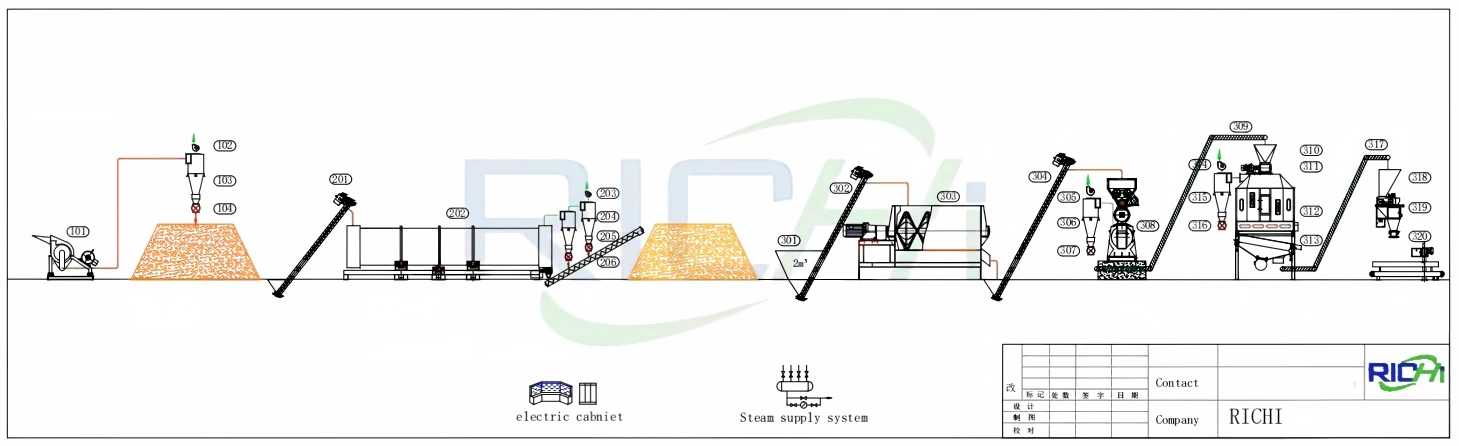
1-2 T/H straw Pellet Production Line with Drying
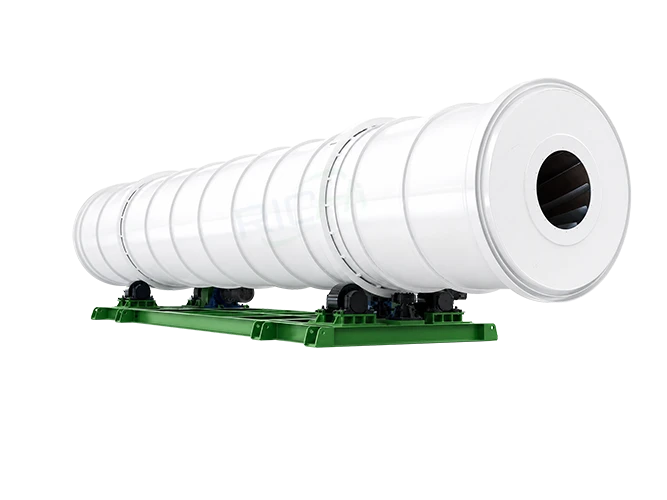
The client needs to process livestock feed by mixing straw with wheat, corn, and soybean meal. The straw is supplied in bulk and can be pulverized directly; however, as the raw material has a moisture content of 40%–50%, it requires pre-drying before being mixed with the other ingredients and pelletized.
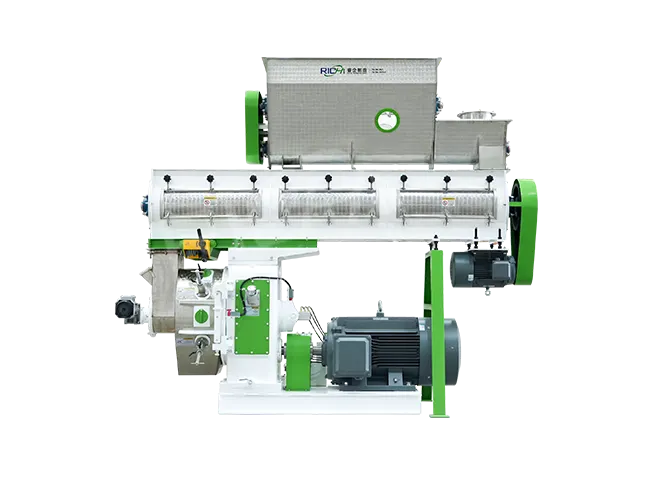
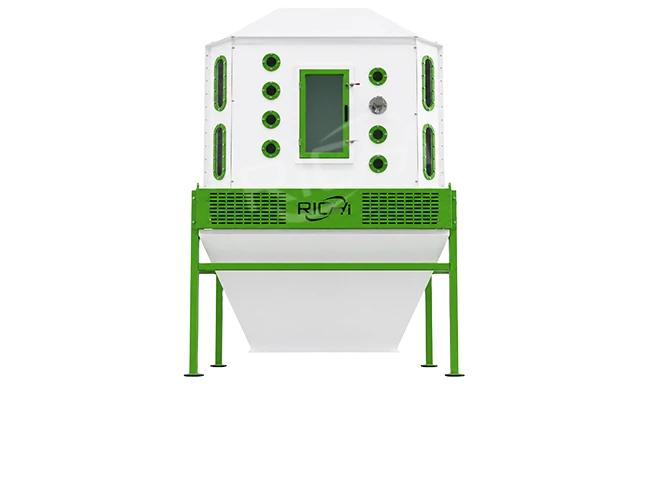
The complete straw processing line is equipped with a straw pulverizer, rotary dryer, feed mixer, pellet mill, cooler, screener, and bagging scale.
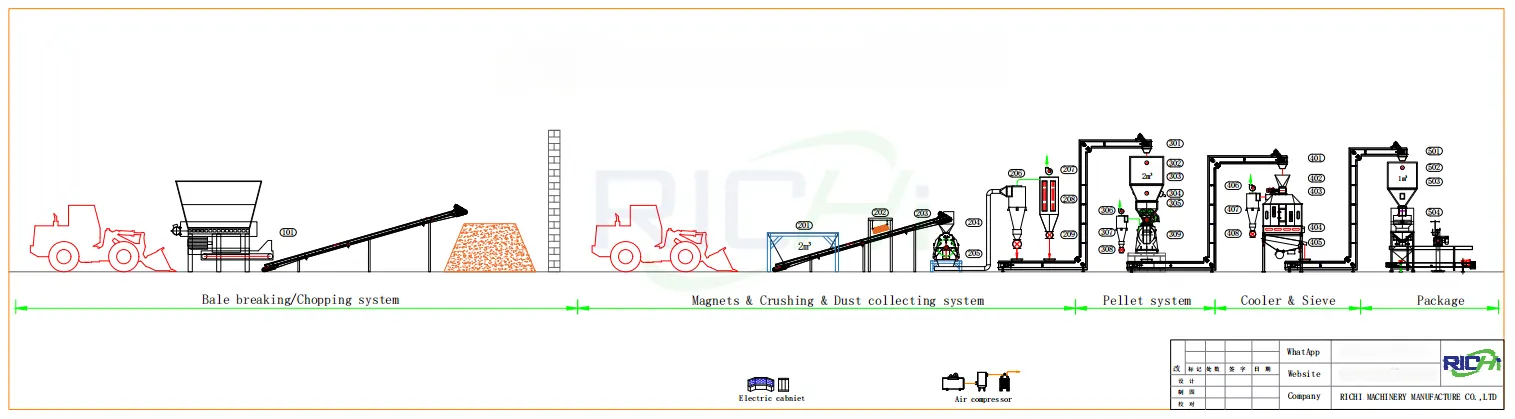
1.8-2 T/H Straw Pellet Production Line
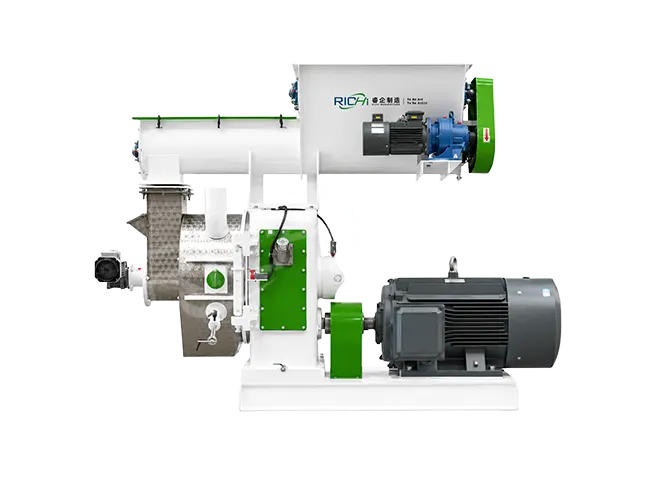
This client intends to produce pellet fuel from materials such as straw, rice husks, and peanut shells. As the initial moisture content of the raw materials is around 10%, no drying process is required. The complete production line is equipped with a disc bale breaker, crusher, straw pellet mill, cooler, screener, packaging machine, dust collector, storage silo, and conveyors. The equipment setup is streamlined and compact, making it ideal for small-scale straw pellet plants.
8-10 T/H Straw Pellet Production Line with 2 Pellet Machines
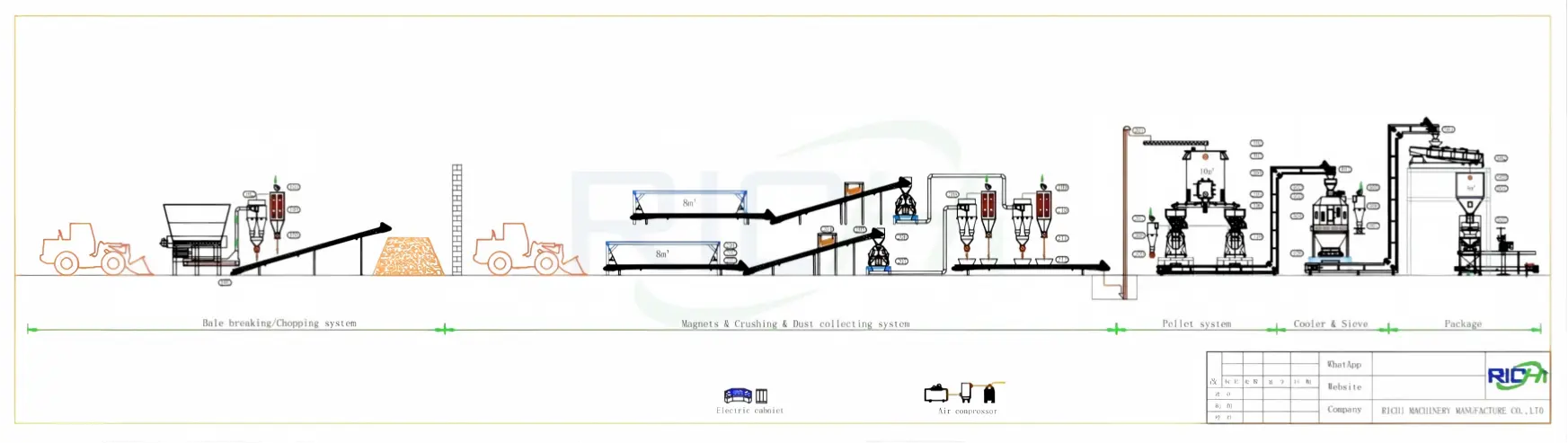
This production line has a rated capacity of 8–10 tons per hour and is compatible with various crop residues, such as corn, wheat, and rice straw. The design excludes a drying stage, requiring the raw material’s initial moisture content to be kept below 15%. The line features a linear, sequential layout, with the process flow proceeding as follows: bale breaking, fine grinding, pelletizing, cooling, screening, and packaging.
Key design highlights include a parallel configuration utilizing dual grinders and dual pelletizers; this setup reduces the operating load on individual units and effectively lowers the probability of equipment failure. Additionally, a sectional dust removal system is integrated throughout the line, allowing all collected dust and fine particles to be recovered and reused, thereby enhancing raw material utilization.
3-4 T/H Straw Pellet Line × 2 Complete Sets (MC 70%)
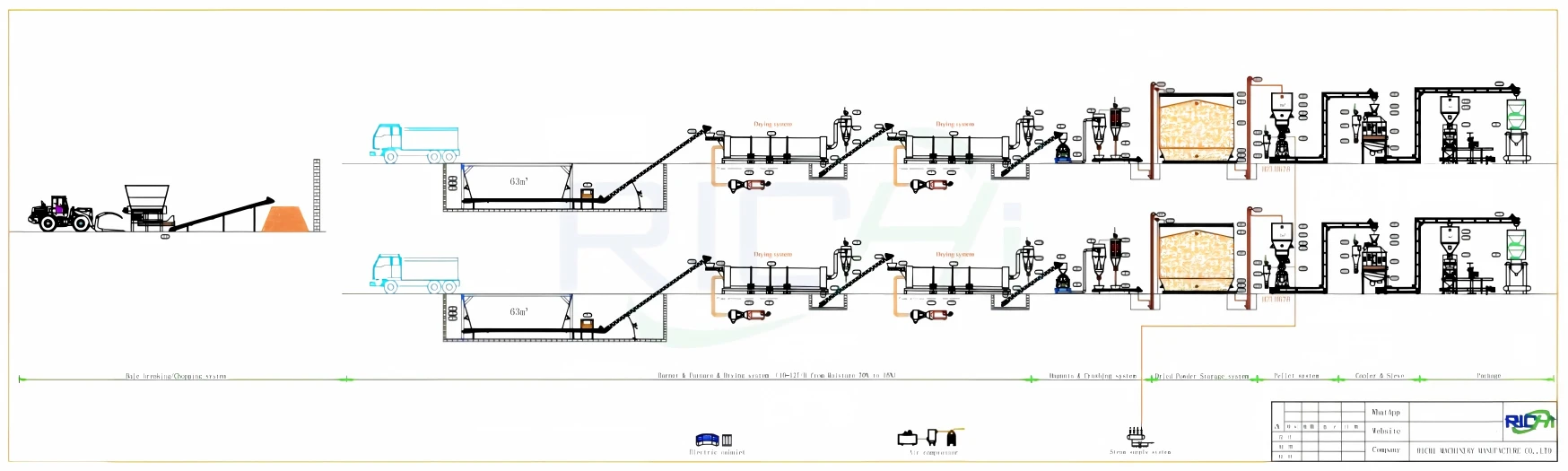
The client intends to process baled straw into roughage with a target production capacity of 6–8 tons per hour, while requiring the flexibility to reduce output during unfavorable market conditions. As the raw material has an initial moisture content of approximately 70%, a drying process is essential.
The overall process involves unbaling and shredding the straw, followed by distribution to two identical, independent production lines. Each line is equipped with two dryers, a pulverizer, a pellet mill, a cooler, a screener, and packaging equipment.
These two lines operate independently, allowing for simultaneous operation or the use of a single line to flexibly adjust production output.
RICHI Manufacture
Watch Videos
Customer Cases
The following are several turnkey straw pellet production plant projects we have successfully delivered across various countries and production scales. Each project is tailored to the client’s specific raw material characteristics, capacity requirements, and operating environment to ensure the long-term, stable operation of the production line.
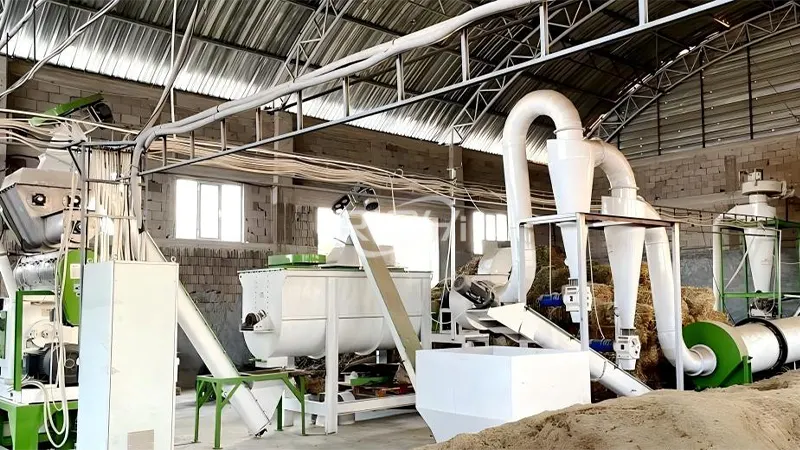
Raw Materials: loose crop straw with 30%-40% moisture content, corn, wheat, soybean meal
Equipment Configuration: straw crusher, straw dryer, feed mixer, straw pellet machine, pellet cooler, vibrating screening machine, packing machine
Investment Cost: $170,330
→
Uzbekistan 0.5-1 T/H Straw Pellet Plant for Roughage (with Drying System)
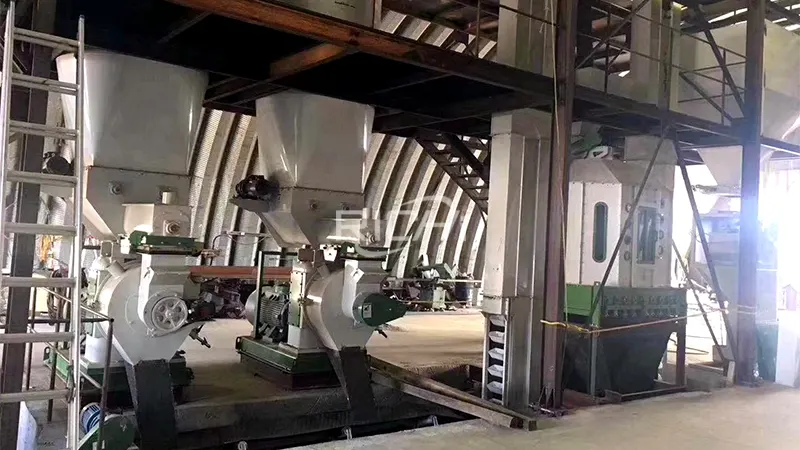
Raw Materials: crop straw, wood chips; no drying required
Equipment Configuration: hammer mill, two straw pellet machines, pellet cooler, vibrating screening machine, ton bag scale
Investment Cost: $160,420
→
Zimbabwe 4-4.5 T/H straw fuel pellet Production plant (with 2 Pellet Machines)
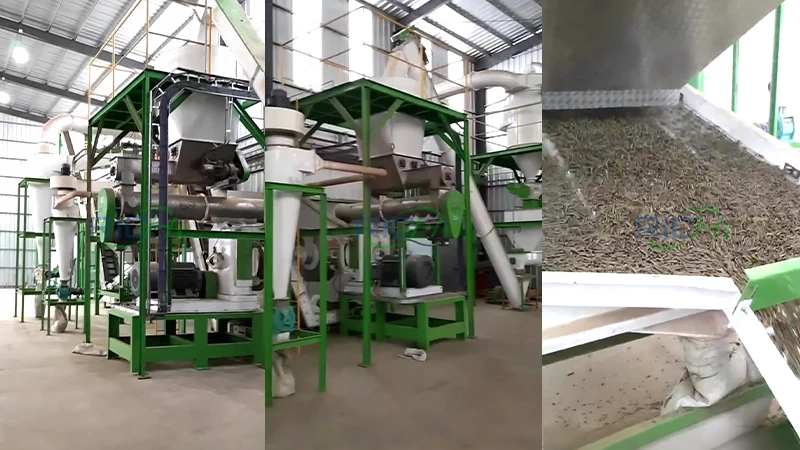
Raw Materials: crop straw and alfalfa hay round straw bales with a diameter of 1 meter; air-drying, no drying required
Equipment Configuration: pulverizer, feed mixer, straw feed pellet machine, cooler, screener, and auto-packaging machine.
Investment Cost: $1,446,657
→
Botswana 2.8-3 T/H straw Feed Pellet plant
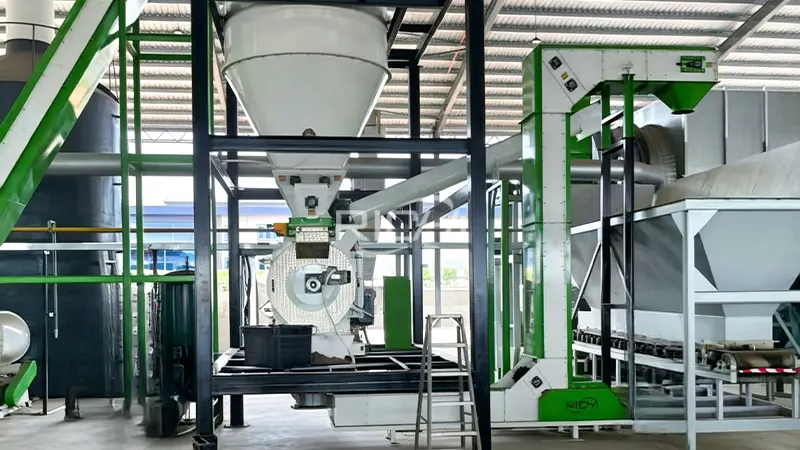
Raw Materials: square straw bales(45 cm × 45 cm × 100 cm), rice husk, sawdust; drying required
Equipment Configuration: straw bale breaker, rotrary dryer, hammer mill, straw pellet machine, pellet cooler, pellet screening machine, ton bag scale
Investment Cost: $25,8200
→
korea 1-1.5 T/H straw pellet line for Carbonized Pellets (with Drying System)
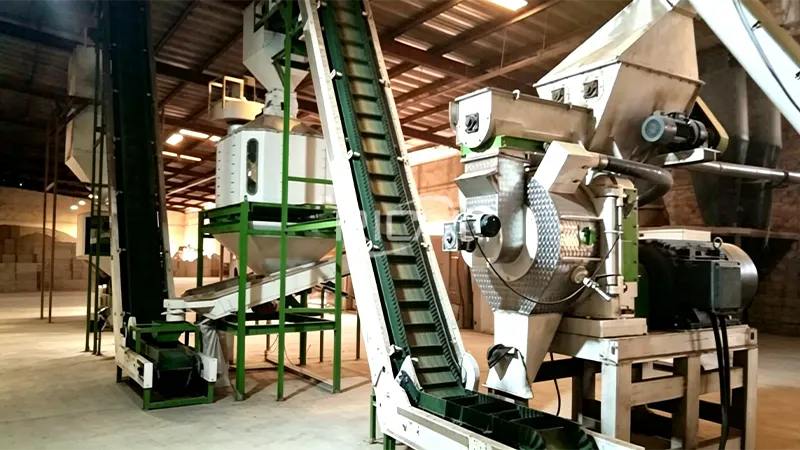
Raw Materials: square straw bales, 80 cm × 60 cm × 180 cm; no drying required
Equipment Configuration: straw bale breaker, straw grinder, straw pellet machine , pellet cooler, pellet screening machine, packing machine
Investment Cost: $151,000
→
France 2.5-3 T/H straw pellet bedding processing line
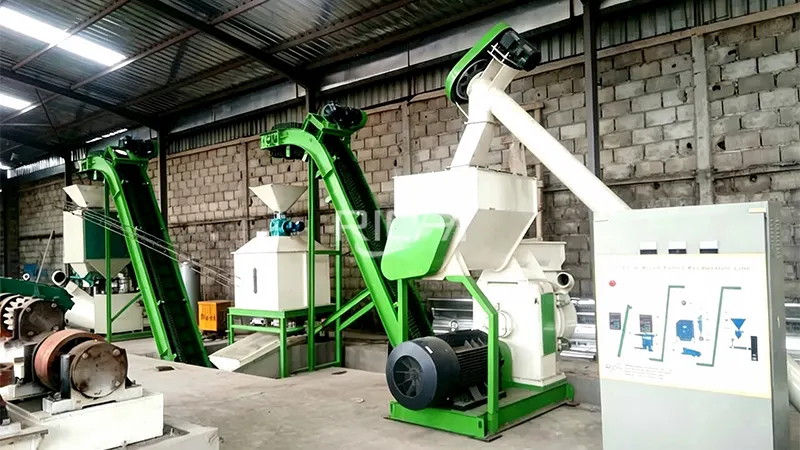
Raw Materials: loose straw, with a 10-18% moisture content; no drying required
Equipment Configuration: straw crusher, straw pellet mill, pellet cooler, pellet screening machine, packing machine
Investment Cost: $53,500
→
Kenya 0.2-0.3 T/H straw pellet manufacturing plant for fuel
RICHI Manufacture
How to Make Straw Pellets

RICHI Manufacture
Production Equipment
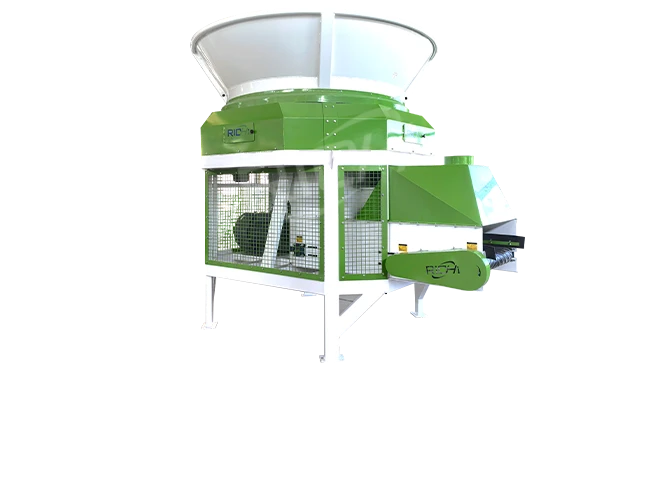
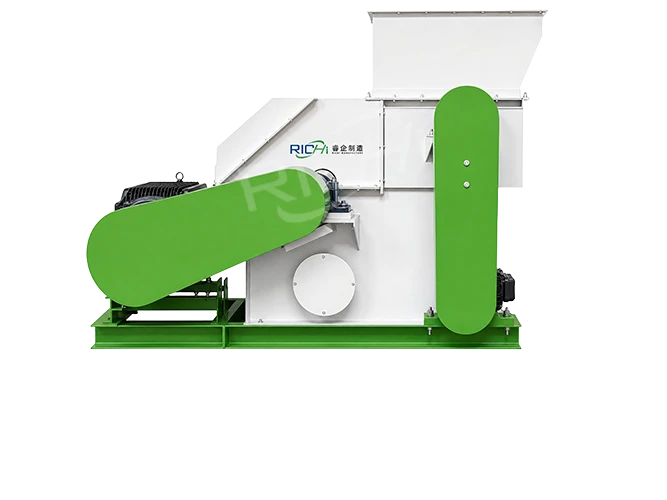
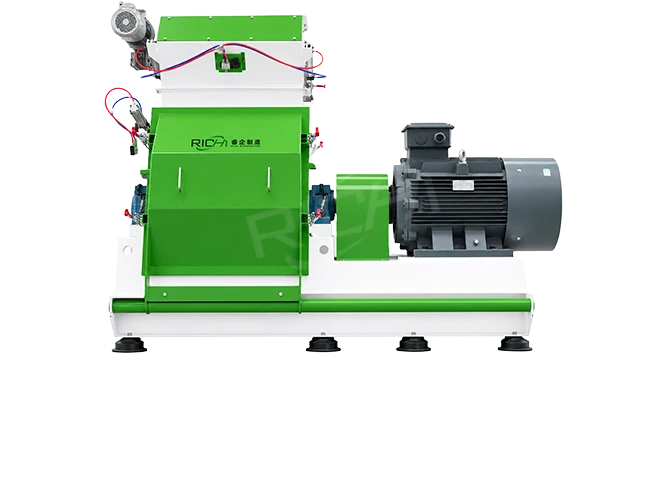
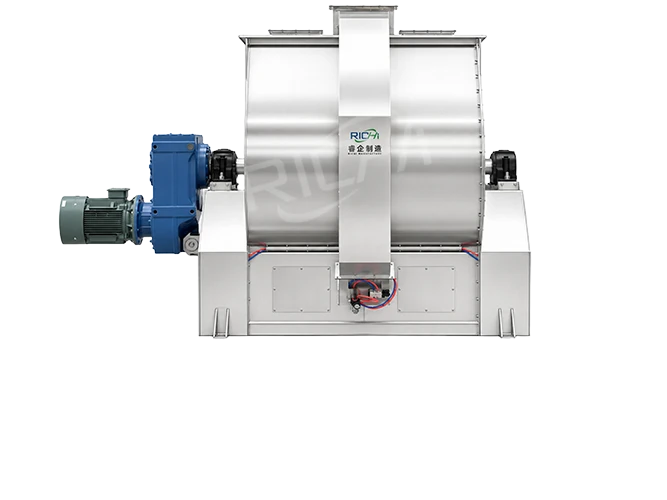
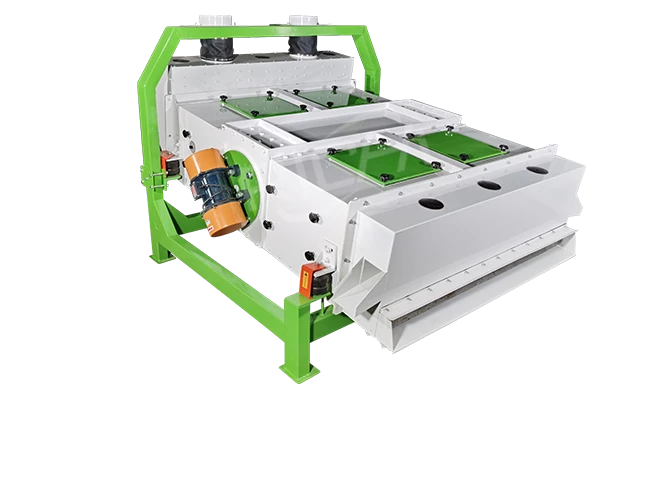
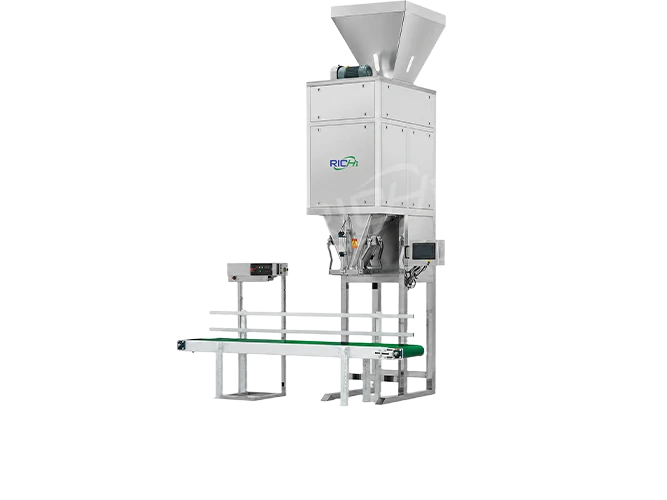
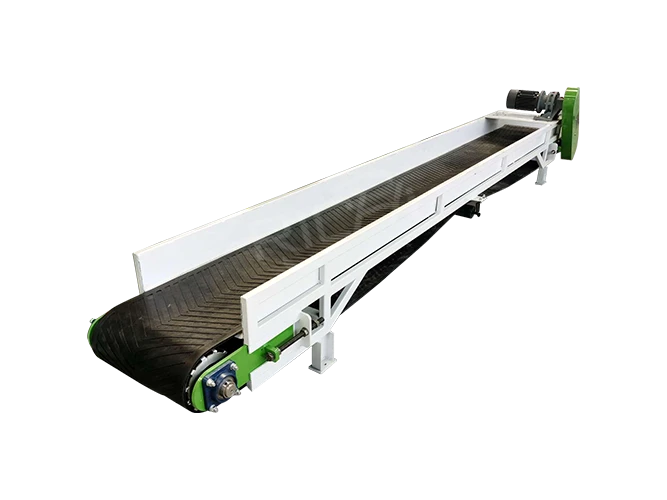
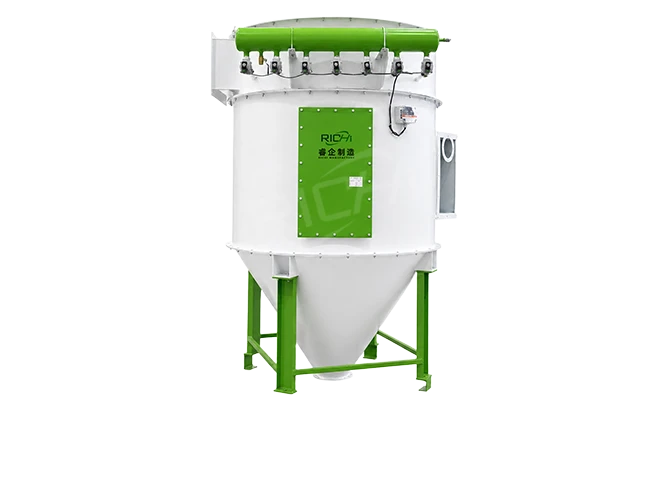
RICHI Manufacture
Straw Pellet Machines for Sale Worldwide
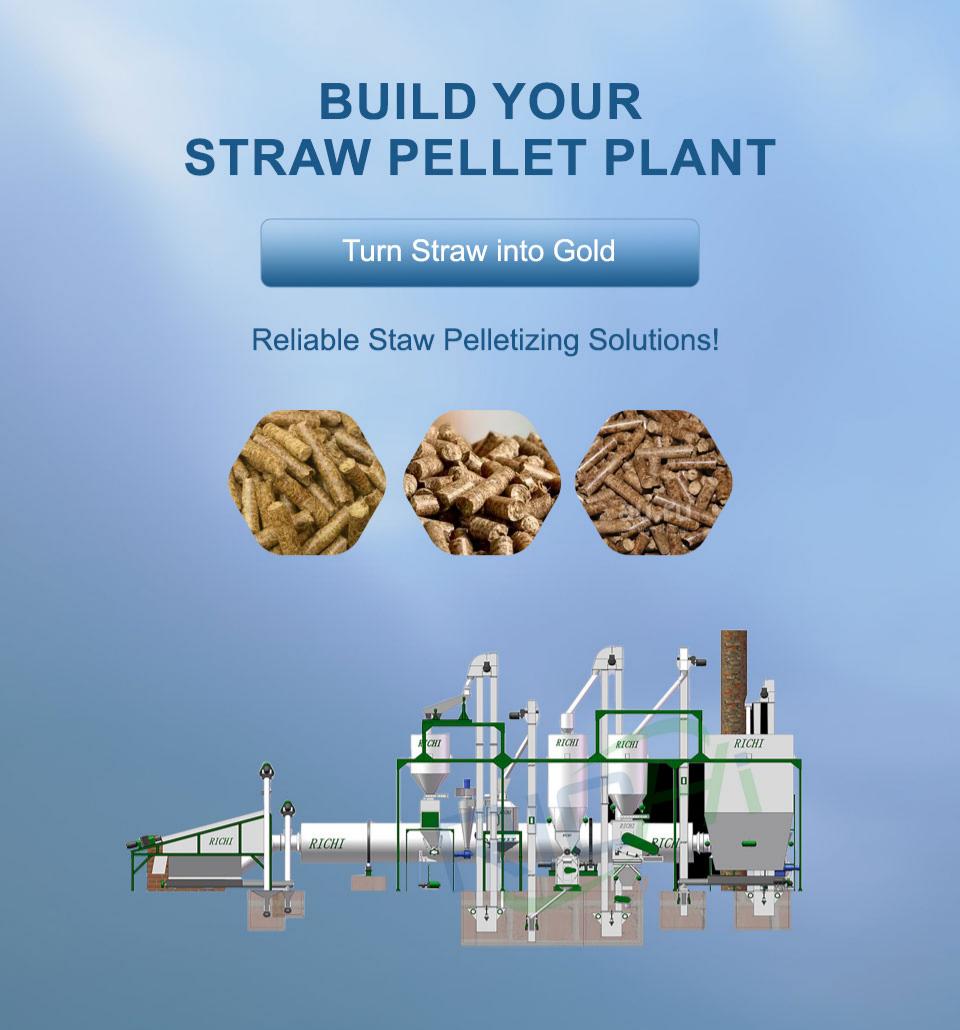
Finding the ideal straw pellet machine is more than just investing in durable machinery—it means partnering with a proficient engineering team with proven expertise. Our track record spans countless pellet production undertakings of every output level, including small farms and large-scale industrial biomass pellet manufacturing plants. Here are some straw pellets machine projects we have delivered for your reference.
Please refer to the following investment advice:
Start with your production target
Your capacity requirement directly determines the overall process design and equipment scale.
- Small-scale: for local fuel use or farm-level production
- Medium-scale: for commercial sales and regional supply
- Large-scale: for industrial biomass energy projects
Define your end product requirements
Fuel pellets for boilers and heating? animal bedding? or livestock feed pellets? Different applications require different pellet density, durability, and moisture control standards.
Evaluate your raw material conditions
Different raw materials require different processing approaches. Ask key questions: Is the straw baled or loose? What is the moisture level? Are impurities or soil content high? This will determine whether you need bale breaker systems, crushing units and drying systems or not.
Choose the right level of automation
Automation should match your labor cost and production stability needs.
- Fully automatic: higher investment, but stable production and lower operating cost
- Manual / semi-automatic: lower investment, more labor required
Work with an Experienced Manufacturer
Building a straw pellet processing plant involves more than just purchasing equipment; it requires professional engineering design capabilities. RICHI can provide customized solutions based on the client’s country, raw material conditions, target products, and investment budget, helping clients smoothly transition from project planning to formal production.
RICHI Manufacture
Our Service Process
RICHI Manufacture has built a complete after-sales service system. We offer full-lifecycle technical support ranging from project design, equipment manufacturing, on-site installation and technical training to operational guidance and spare parts supply. This ensures continuous, efficient and stable operation of your production line.

Customized Solution Design
Based on the customer’s raw material (type of straw, moisture content, particle size), production capacity, and site conditions, we provide free process flow diagrams, equipment configuration lists, plant layout suggestions, and capacity estimates. Every plant gets a tailored solution to avoid improper equipment selection and waste.
Equipment Manufacturing
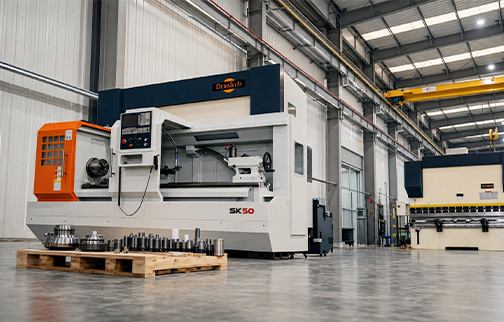
Once the solution is confirmed, production begins immediately. All core components are manufactured under standardized processes with strict quality inspection, including factory pre-commissioning and no-load/loaded testing to ensure performance. Key wear parts can be supplied with the machine to simplify future spare parts procurement.

Shipment & Logistics
Depending on the equipment size and destination, we provide optimized sea solutions. We handle packing and reinforcement, moisture-proof protection, customs documentation, and cargo insurance coordination, with full tracking throughout transit to ensure safe and punctual delivery to the customer’s site.
Installation & Commissioning
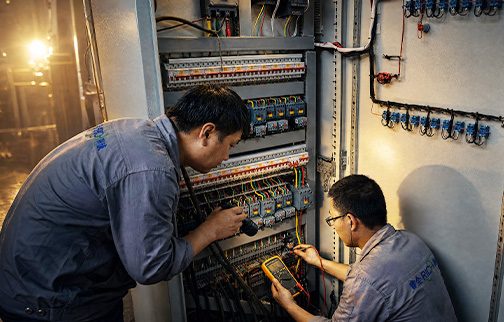
Professional engineers can be dispatched to the site for installation guidance, or remote video guidance can be arranged. After positioning, we carry out power-on commissioning, parameter optimization, and trial production to make sure the production line is stable and ready to run upon arrival.

Operation Training
We provide operation manuals and video materials in Chinese and English, and offer on-site or online training for local operators — covering startup, parameter adjustment, routine maintenance, and common troubleshooting — helping customers get up to speed quickly and independently.

After-Sales Service
We provide a 12-month warranty that includes free repairs during the warranty period. We offer long-term spare parts supply and regular inspections, ensuring a rapid response to any issues and guaranteeing stable, long-term production.
RICHI MANUFACTURE
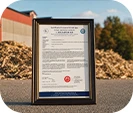
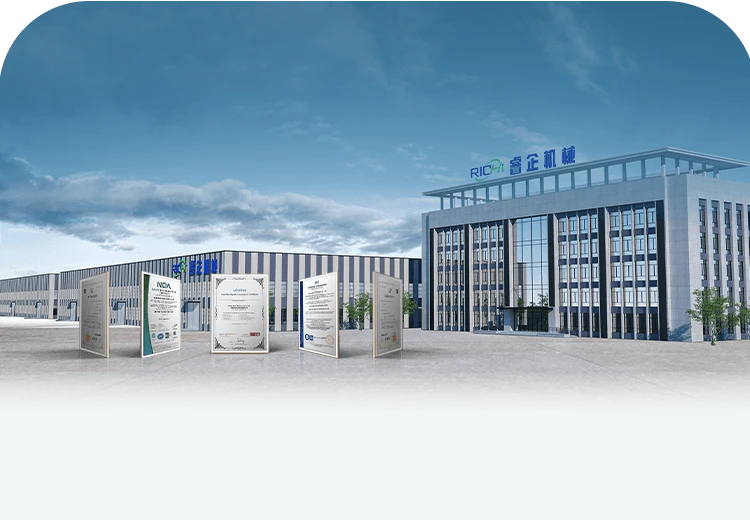
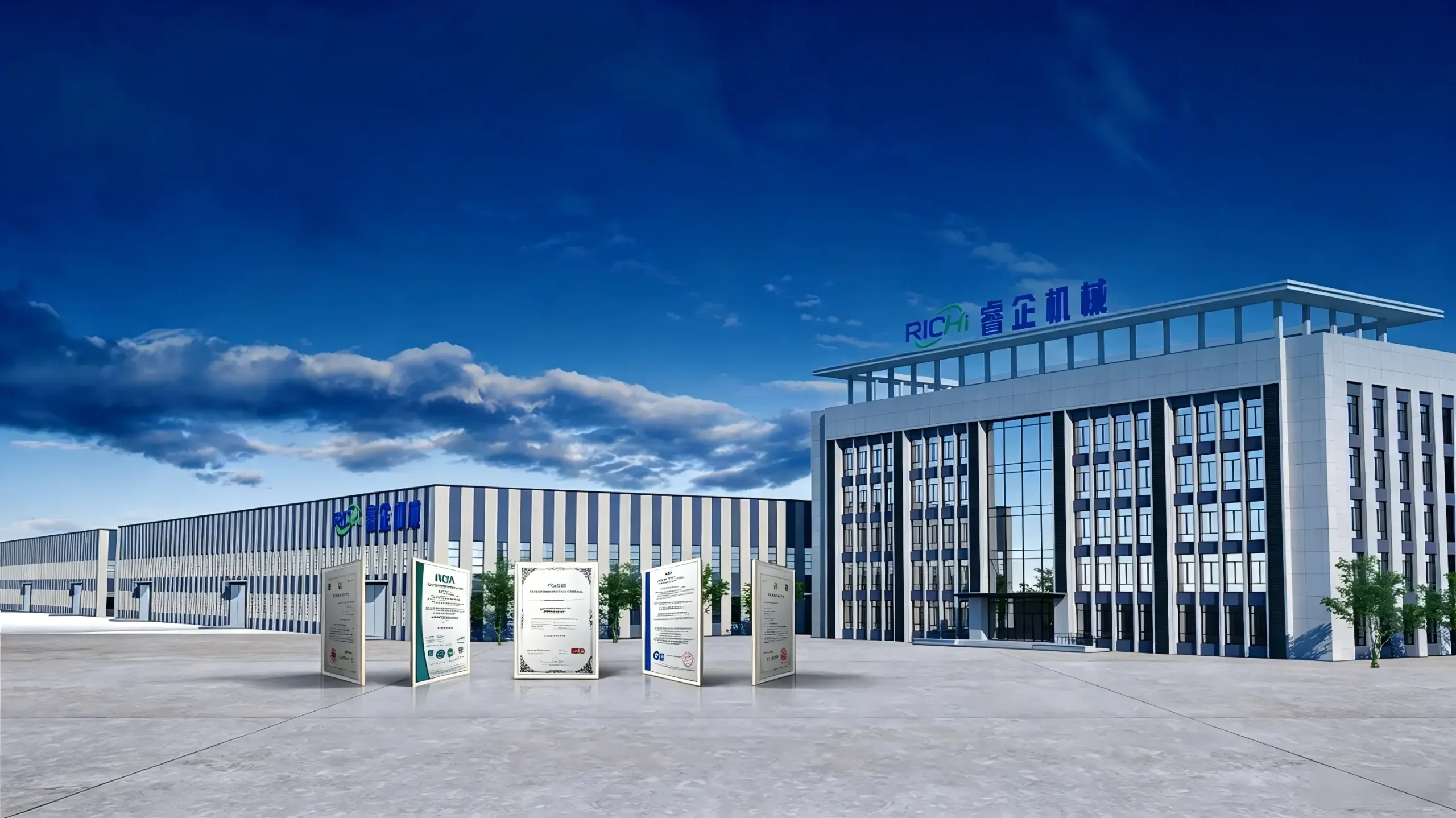
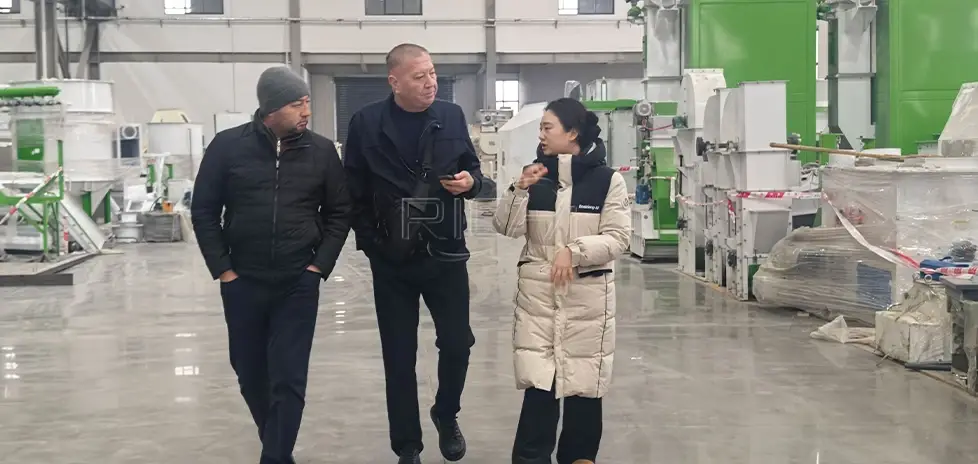
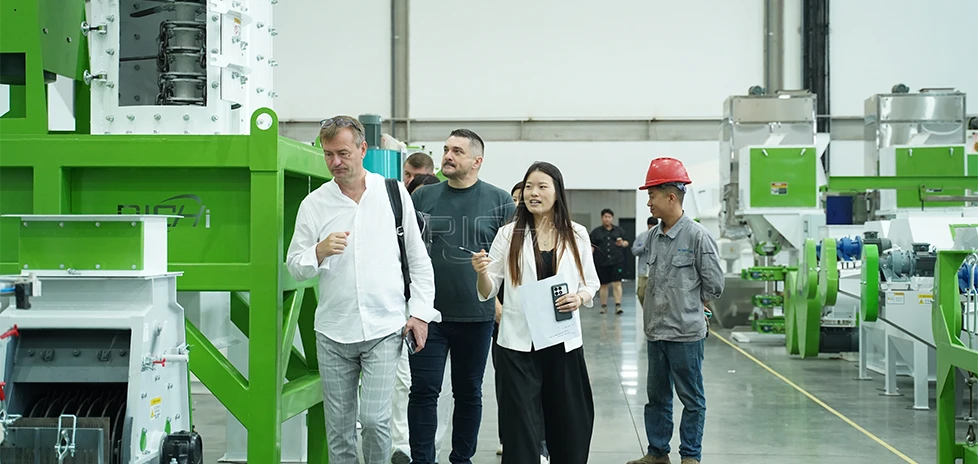
Henan RICHI Manufacture was founded in 1995. We are a professional integrated manufacturer covering R&D, production, engineering design and installation for feed, biomass, organic fertilizer, cat litter pellet lines, steel silos and automatic control systems. RICHI has obtained a full range of authoritative international certifications, including CE, TÜV, SGS, BV, RTN, ISO9001, amd more, laying a solid foundation for global trade. Featuring world-class process equipment such as large CNC cutting machines, CNC drilling machines, smart sandblasting & painting lines, and dynamic balancing testers, we guarantee premium equipment quality to empower the successful execution and commissioning of our global clients’ projects.
60,000
m²
Factory Area
30+
Years of Experience
140+
Exported Countries
2,000
+
Global Projects
To be art, to be artist. We deliver premium turnkey projects with professional craftsmanship and innovation.
Frequently Asked Questions
Can my raw materials (such as wheat straw, corn stalks, rice husks, etc.) be used for pelletizing? What pre-treatment is required?
→
The straw pellet plant can process all kinds of biomass raw materials. For examples, barley straw, wheat straw,rice straw, bean stalks, corn stalks, cotton stalks, peanut vines, alfalfa, hay, Ryegrass, elephant grass, etc. If your raw material consists of straw bales, they must first be unpacked. If the moisture content of the raw material is too high (>20%), drying is recommended. Additionally, all raw materials must be pulverized into powder before pelletizing.
What is the production capacity?
→
We provide customized solutions ranging from small-scale systems to large industrial production lines, with processing capacities typically between 0.2 and 20 tons per hour. Final output depends on raw material conditions, particle size, and production requirements.
How much does a straw pellet factory cost?
→
The investment cost depends on several factors, including production capacity, raw material preparation requirements, equipment configuration, automation level, and installation requirements. We provide customized solutions based on each customer’s specific project needs.
Do you provide a complete turnkey solution?
→
Yes. We provide complete turnkey solutions covering process design, equipment manufacturing, installation guidance, commissioning, operator training, and after-sales support to help customers build efficient straw pellet production plants.
How do you design a customized straw pellet processing line?
→
We design each straw pellet project based on the customer’s raw materials, production capacity, final pellet application, factory layout, and local operating conditions. Our engineers analyze the entire process to ensure stable production and optimized performance.
Can your straw pelleting production line process baled straw?
→
Yes. We can offer bale breaking system to handle large square bales and round bales. The system automatically loosens and prepares straw for further processing.
Does straw pellet production require a drying system?
→
It depends on the moisture content of the raw material. Straw with high moisture requires drying before pelletizing, while naturally dry materials may need less or no drying. We select the suitable drying solution according to actual conditions.
How long does it take to install a straw pellet plant?
→
The installation period depends on the project scale, equipment configuration, and site conditions. Small projects may require several weeks, while large biomass pellet plants need longer preparation and commissioning periods.
Do you provide installation and after-sales service?
→
Yes. We provide technical support throughout the straw pellet plant project, including installation guidance, commissioning assistance, spare parts supply, maintenance suggestions, and long-term after-sales service. (view our YouTube)