
Counterflow Pellet Cooler
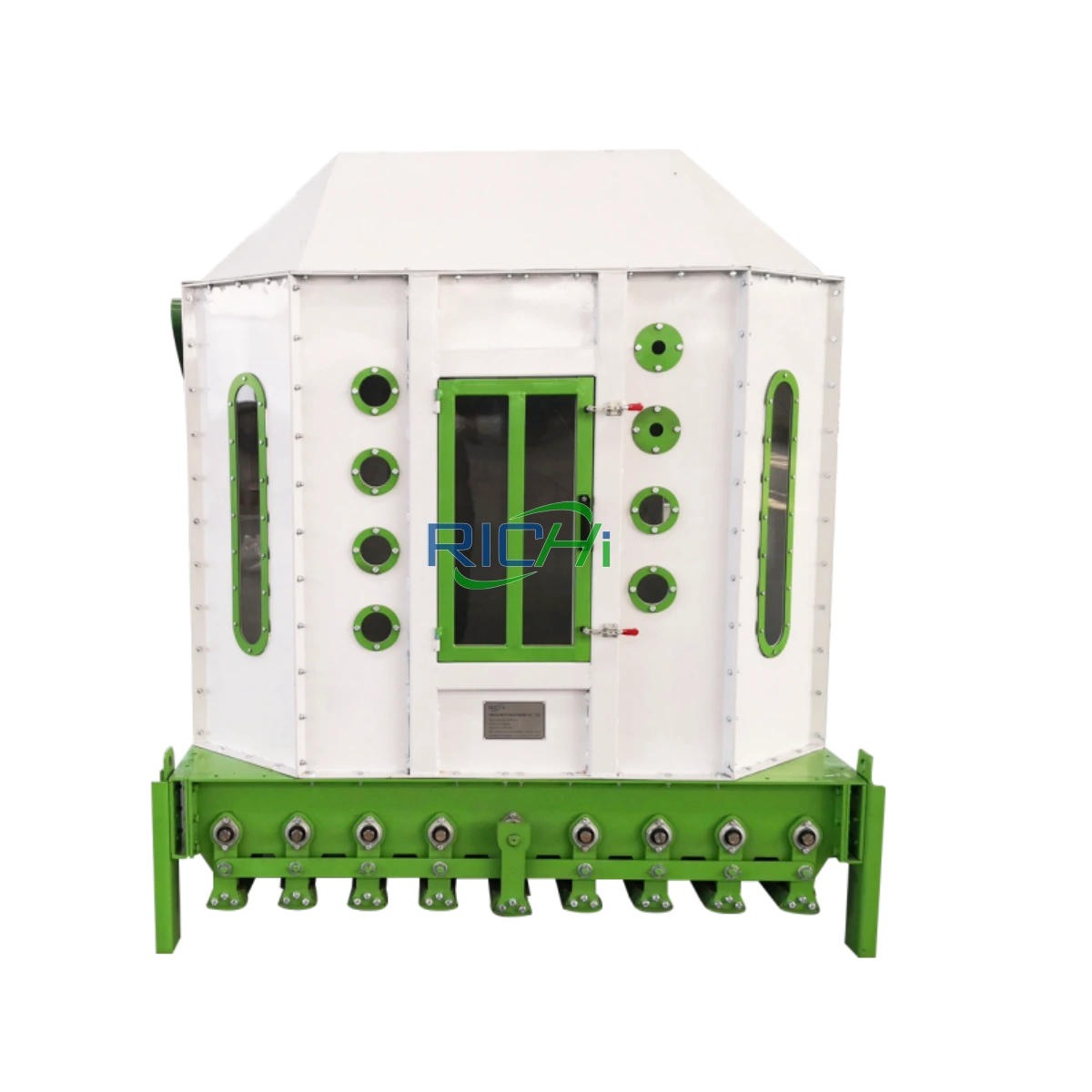
Counterflow pellet coolers efficiently reduce the temperature of pellets immediately after exiting the pellet mill, ensuring a compact pellet structure, resistance to storage and transportation, and improving the overall quality and stability of the pellets. They are an indispensable core piece of equipment in modern pellet production lines.
RICHI MACHINERY
About Counterflow Pellet Cooler
The counterflow pellet cooler is a key post-processing device in various animal feed, aquatic, wood pellet, and biomass pellet production lines. It is mainly used to rapidly cool the high-temperature pellets (90–110℃) after pelleting to near room temperature (approximately 3-5℃) while simultaneously reducing moisture content. This results in a more stable pellet structure, higher strength, and less susceptibility to moisture regain, making them suitable for packaging, transportation, and long-term storage.
Pellet cooling machines have a wide range of applications, covering various feed pellets for poultry, livestock, ruminants, and aquatic products, as well as various biomass pellet production processes such as sawdust, straw, and forage. They are an important core piece of equipment for ensuring product quality and production efficiency.
Types and Parameters of Counterflow Pellet Cooler
Counterflow pellet coolers are mainly divided into three structural forms: SKLF flapper counterflow cooler, SKLY impeller counterflow cooler, and slide valve counterflow cooler. These three types are designed to adapt to different material characteristics and different customer production needs:
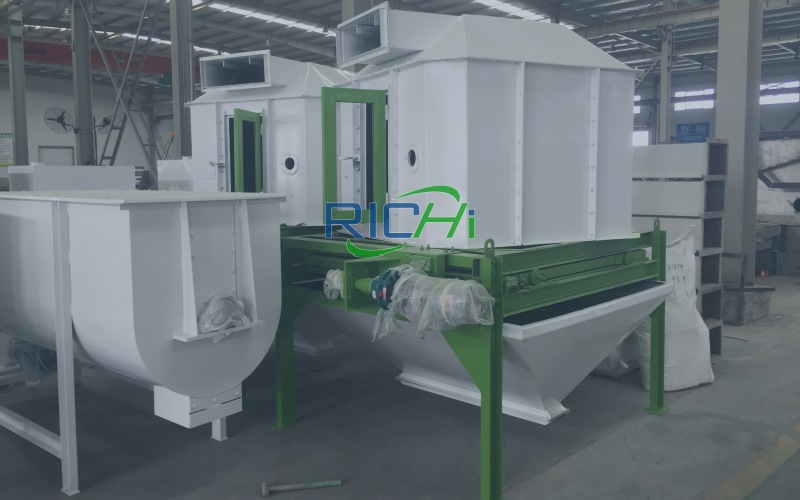
Slide Valve pellet cooler
Slide valve pellet coolers discharge finished pellets through a horizontal sliding gate located at the bottom of the cooler. This design provides simple mechanical structure, stable operation, and easy control of discharge volume. Slide valve coolers are suitable for specific working conditions where uniform discharge is required and production capacity is relatively small or medium.
SKLF Flip-plate Pellet Cooler
Utilizes a flexible hydraulic/pneumatic driven swing flapper discharge structure, ensuring continuous and gentle discharge. Suitable for various conventional feed pellets, it features low breakage rate and high stability.
| Model | SKLF11*11 | SKLF14*14 | SKLF17*17 | SKLF20*20 | SKLF24*24 | SKLF28*28 | SKLF32*32 |
| Output (T/H) | 1-3 | 3-5 | 6-8 | 8-13 | 13-20 | 25-30 | 30-40 |
| Power (KW) | 1.5 | 1.5 | 1.5 | 1.5 | 2.2 | 2.2 | 2.2 |
| Cooling Time | 6-15 minutes | ||||||
| Material Temperature After Cooling | Room temperature +3~5℃ | ||||||
SKLY Impeller Pellet Cooler
Discharges material through an impeller structure, ensuring uniform discharge. Suitable for pellet materials with high powder content and varying densities. It features a compact structure and simple maintenance.
| Model | SKLY11*11 | SKLY14*14 | SKLY17*17 | SKLY20*20 | SKLY24*24 | SKLY28*28 | SKLY32*32 |
| Output (T/H) | 1-3 | 3-5 | 6-8 | 8-13 | 13-20 | 25-30 | 30-40 |
| Power (KW) | 1.5 | 1.5 | 1.5 | 1.5 | 2.2 | 2.2 | 2.2 |
| Cooling Time | 6-15 minutes | ||||||
| Material Temperature After Cooling | Room temperature +3~5℃ | ||||||

Key Components of a Counterflow Pellet Cooler
A high-quality pellet cooler typically includes the following core components:
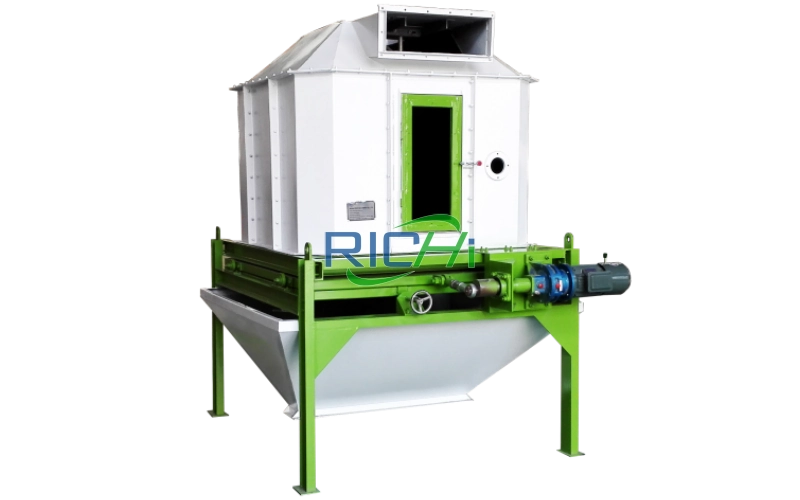
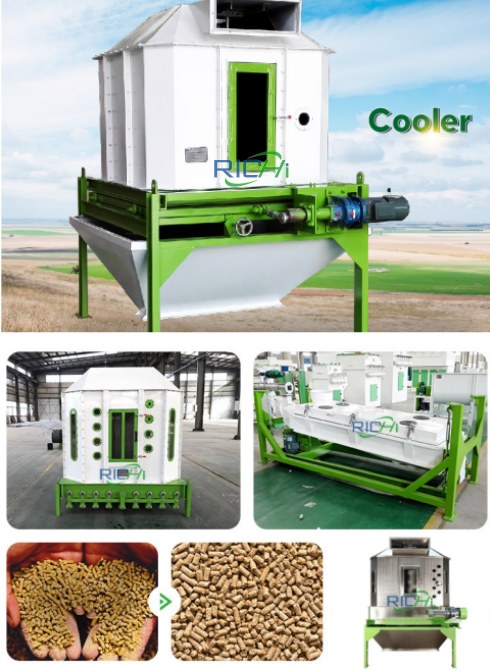
Octagonal cooling chamber
Four-way adjustable distributor
Flap or impeller discharge mechanism
Fan and air exchange system
Level sensor (imported from Japan, micro motor)
Distribution plate
Stroke/end switch
Top cover and feeder
Inspection port
RICHI MACHINERY
How a Counterflow Pellet Cooler Works
In pellet production, the counterflow cooler not only determines the appearance and hardness of the finished product but also directly affects storage stability and overall production efficiency. You might wonder how it achieves the temperature change from high to room temperature, and what factors dominate the final cooling effect. Below, we will clearly explain its working principle and key influencing factors to help you quickly grasp the core operating mode of the counterflow cooler.
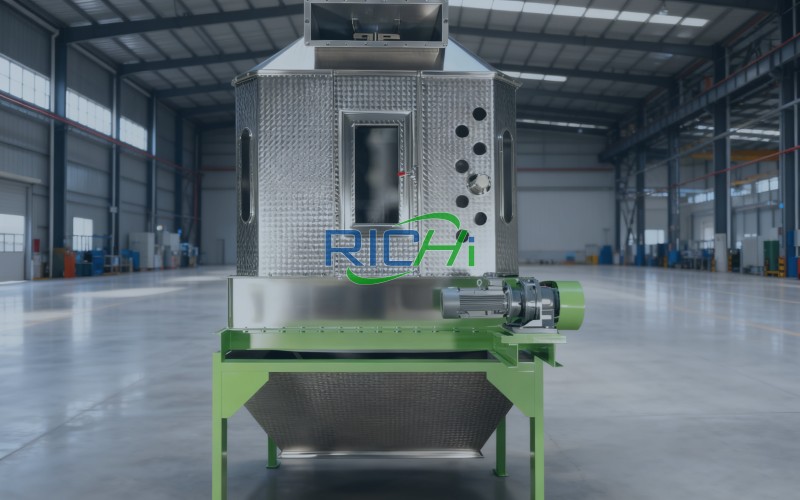
Working Principle
The counterflow pellet cooler operates based on a “reverse airflow heat exchange” mechanism. High-temperature pellets enter the cooling chamber from the top and are evenly spread by a distributor to form a stable material layer.Ambient temperature air is drawn in from the bottom by a fan, causing the air to come into countercurrent contact with the falling pellets. Heat and moisture are removed through convection heat exchange, achieving rapid and uniform cooling.
As the material layer reaches the set height, the level sensor sends a control signal, driving a slide valve, flap, or impeller-type automatic unloading mechanism to smoothly discharge the cooled pellets from the chamber.The entire process is gentle and stable, effectively preventing surface cracking of the particles and improving the quality of the finished product.
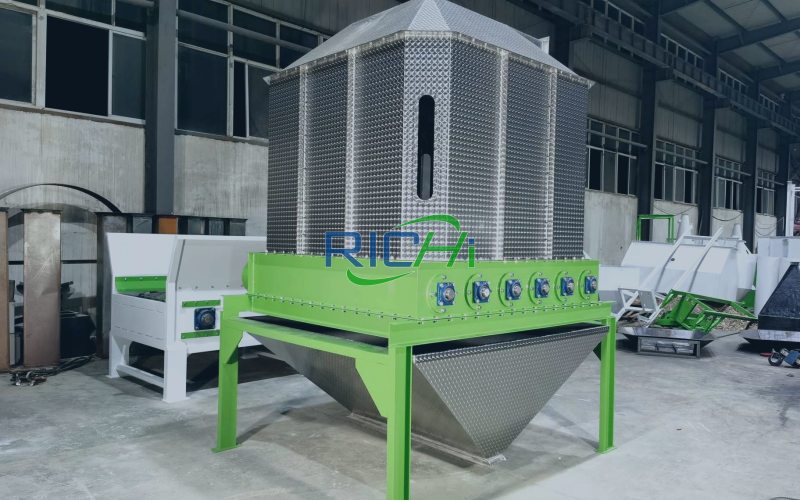
Cooling effect mainly depends on the following factors:
- Fan airflow: The larger the airflow, the higher the heat exchange efficiency between air and particles, and the faster the cooling speed.
- Cross-sectional area of the cooling chamber: The larger the cross-sectional area, the more dispersed the material layer, and the more uniform the airflow, which is beneficial to improving cooling uniformity.
- Material level (material layer thickness): A higher material level and a thicker material layer result in greater air resistance and slower cooling; conversely, a lower material level results in less air resistance and more thorough cooling.
Cooling time is generally 6–15 minutes. It is affected by factors such as the initial temperature, density, moisture content of the material, and airflow. The cooling time itself cannot be directly adjusted but is naturally determined by the actual heat exchange conditions.

Features of Counterflow Pellet Cooler
Based on extensive successful project experience, we deeply understand our customers’ real needs in pellet cooling. Therefore, we continuously optimize and upgrade our product design, resulting in counterflow cooling equipment that combines high efficiency, stability, and durability. Below, we will introduce the core features of this equipment.
Significant Cooling Effect
Our pellet cooler uses counterflow heat exchange, enabling rapid cooling of high-temperature pellets. The cooled pellet temperature is stably controlled at 3–5°C below room temperature.
Feel Reduced Pellet Breakage
Our counterflow pellet coolers feature a specifically optimized unloading structure. The SKLF tilting plate cooler, in particular, is equipped with a flexible hydraulically driven swinging tilting plate mechanism, resulting in exceptionally smooth unloading.
High Automation
Equipped with a mechanical material level control system, the entire process of feeding, stopping, and unloading is automated without manual supervision, significantly reducing manual intervention.
Uniform Material Distribution
The built-in four-way adjustable material distributor ensures that the material entering the cooling chamber is spread evenly and uniformly, resulting in more consistent cooling performance.
Octagonal Cooling Chamber Design
The octagonal cooling chamber fundamentally prevents material from accumulating in corners, making cleaning easier.
High-Strength, Corrosion-Resistant Materials
Key components are made of stainless steel, ensuring both durability and strong corrosion resistance.
Rich Optional Configurations
Diverse customization options are available: pneumatic or hydraulic drive options are available; larger models can be equipped with an automatic rotating material distribution device; additionally, high-temperature level gauges, imported motors, and observation windows are optional to suit the production requirements of different factories.
RICHI MACHINERY
Related Project Cases of Counterflow Pellet Cooler
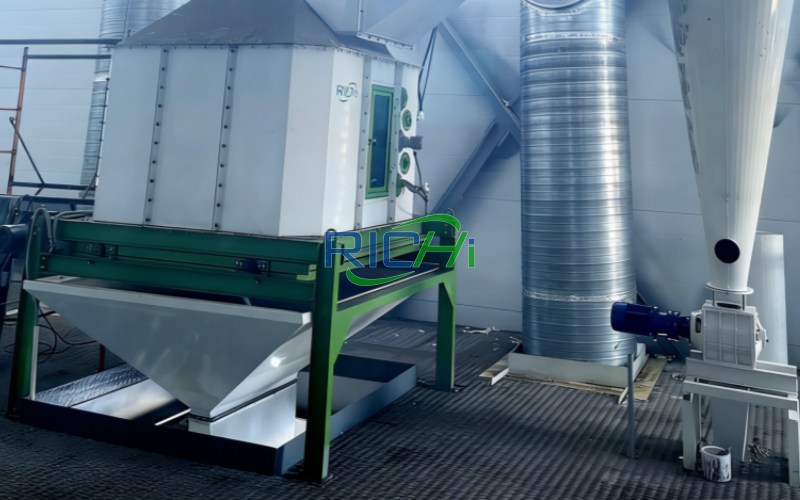
As a professional manufacturer specializing in feed pelleting equipment for many years, RICHI has customized a large number of counterflow pellet coolers for many countries around the world, including large feed mills and biomass plants in Thailand, Indonesia, Malaysia, Russia, Nigeria, Saudi Arabia, and South Africa. The following project case studies show that each counterflow pellet cooler was specifically designed according to the customer’s output and process requirements. Many customers have given it high praise after use and have placed additional orders for our other pelleting equipment.
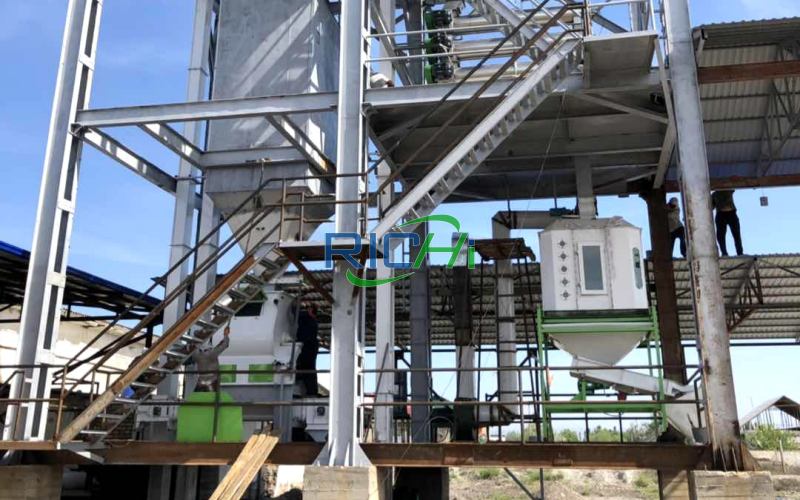
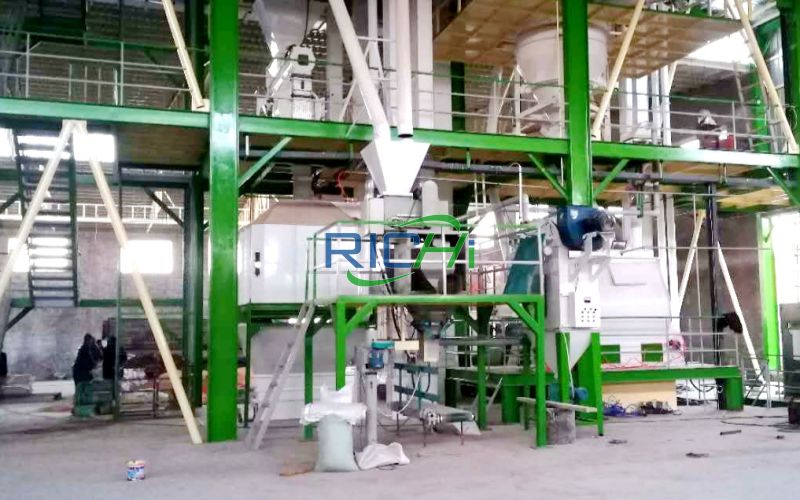
feed pellet cooler for Sale Uzbekistan
Project: 5T Sinking Fish Feed Production Line
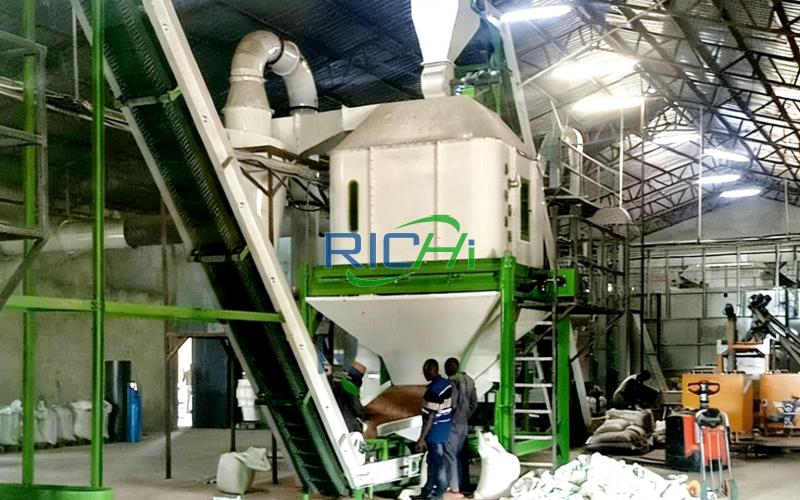
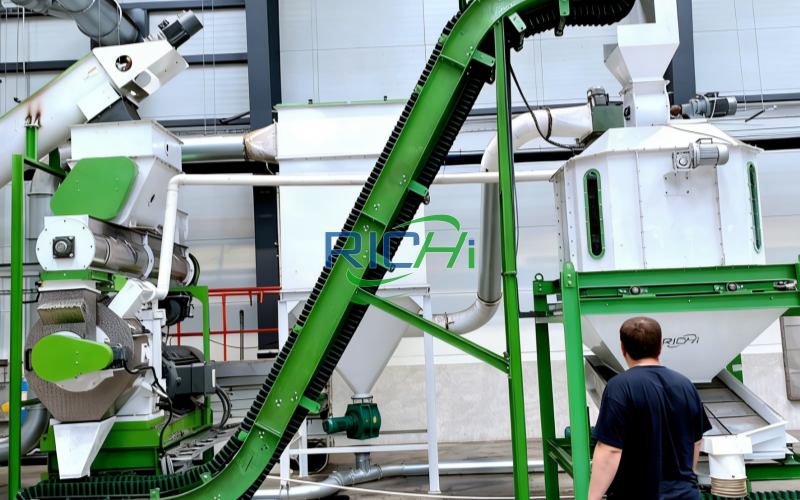
pellet cooler for Sale Afghanistan
Project: 10T chicken Feed Production Line
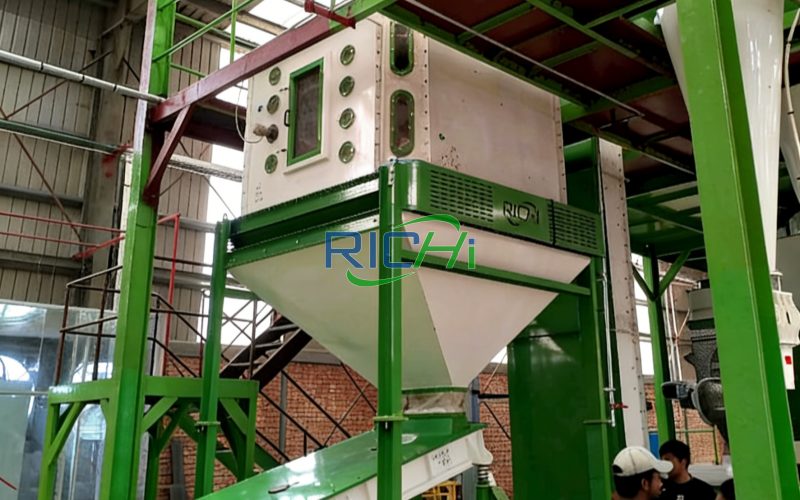
Sawdust Pellet Cooler for Sale USA
Project: 10T Wood Sawdust Pellet Production Line
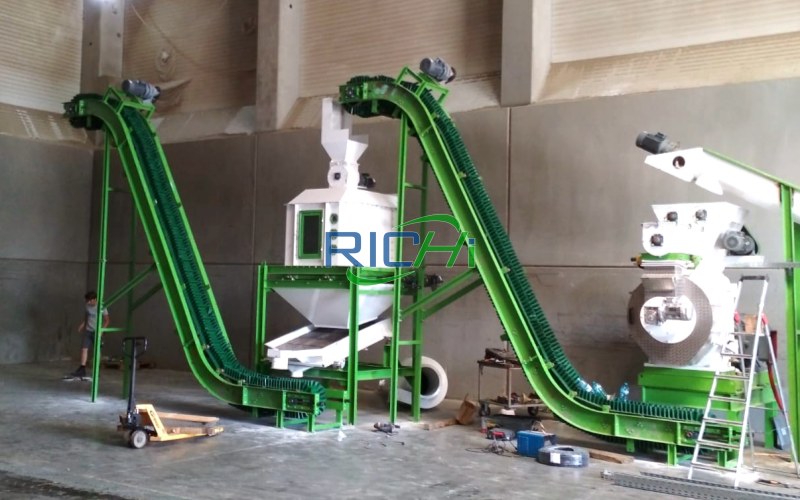
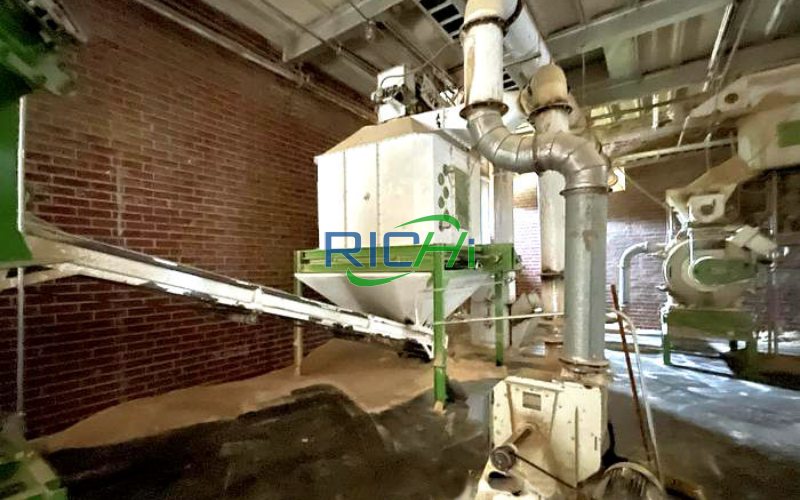
Wood Chip Pellet Cooler for Sale Romania
Project: 2–2.5T Wood Chip Pellet Production Line
How to Judge the Quality of a Counterflow Pellet Cooler
When purchasing a counterflow pellet cooler, you can judge its performance and technological level by considering the following:
- Is the discharge mechanism type reasonable (flip plate/impeller/slide valve)?
- Is the cooling chamber octagonal, leaving almost no residue and making cleaning easier? (Many 90-degree right-angled chambers on the market tend to accumulate material and leave more residue.)
- Is the material level sensor reliable (high temperature resistance, high sensitivity, imported micro motor)?
- Is the cooling design scientific, and are there any potential leaks?
- Is the distributor adjustable and able to distribute material evenly?
- Are stainless steel components used, and does their corrosion resistance meet standards?
- Does it have inspection holes, and is cleaning easy?
Frequently asked questions

Why must pellets fresh from the feed pellet mill be cooled?
Freshly pressed pellets are typically 90–110℃ in temperature and have a relatively high moisture content. If not cooled promptly, the pellets are prone to deformation, cracking, becoming damp, moldy, and even affecting their storage and transportation stability. Cooling is a necessary step to ensure pellet hardness, quality, and shelf life.
Can the pellet cooling machine remove dust simultaneously?
Yes. During the cooling process, an airflow is generated by a fan, which carries away some dust, which is then collected by a cyclone separator or bag filter.
Can the Counterflow Pellet Cooler be connected to a fully automated feed mill production line?
Yes. A cooler supports automatic material level control signals and can be perfectly integrated with crushing, pelleting, screening, and packaging systems, making it a standard configuration for fully automated production lines.
Do floating fish feeds need to be cooled?
Yes. Although floating fish feeds have a loose structure, their temperature is higher after extrusion, so they still need to be cooled and shaped using a feed pellet cooler to prevent shrinkage or pulverization.
How long does the cooling process typically take?
The cooling cycle usually lasts 6-15 minutes, depending on particle density, temperature, and airflow settings. You can find us on YouTube.
Our Honors & Certifications
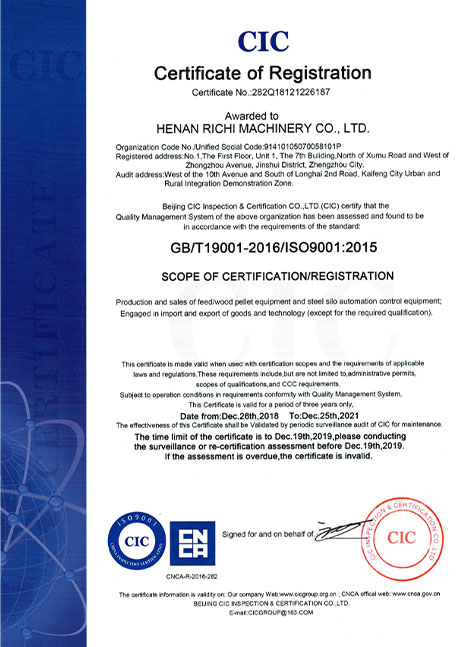
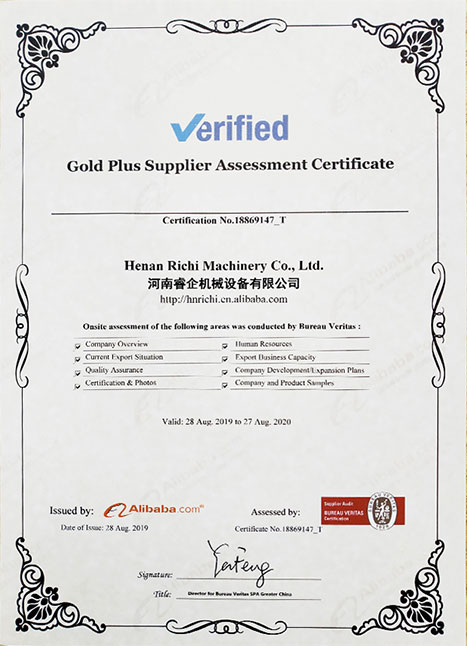
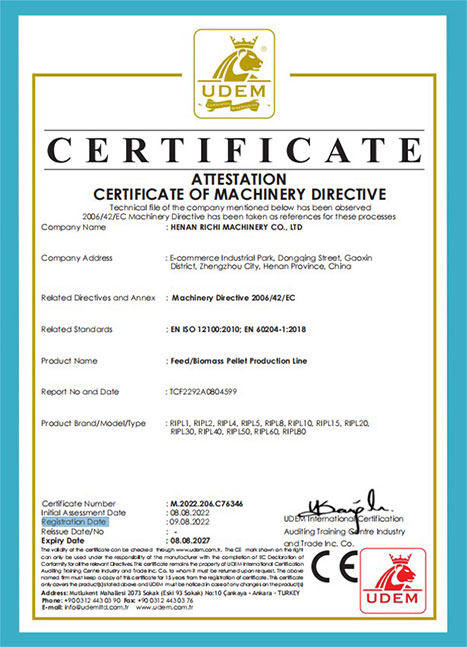
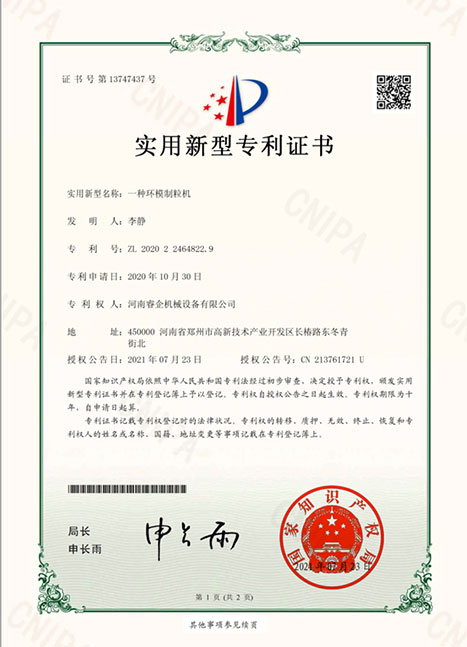
At RICHI Machinery, quality and innovation go hand in hand. Over the years, we have earned numerous international certifications and national patents, covering product design, manufacturing excellence, and quality control. These certificates reflect our strong R&D capabilities and global trust in our feed and biomass machinery solutions. We remain committed to delivering reliable technology and long-term value to our customers worldwide.