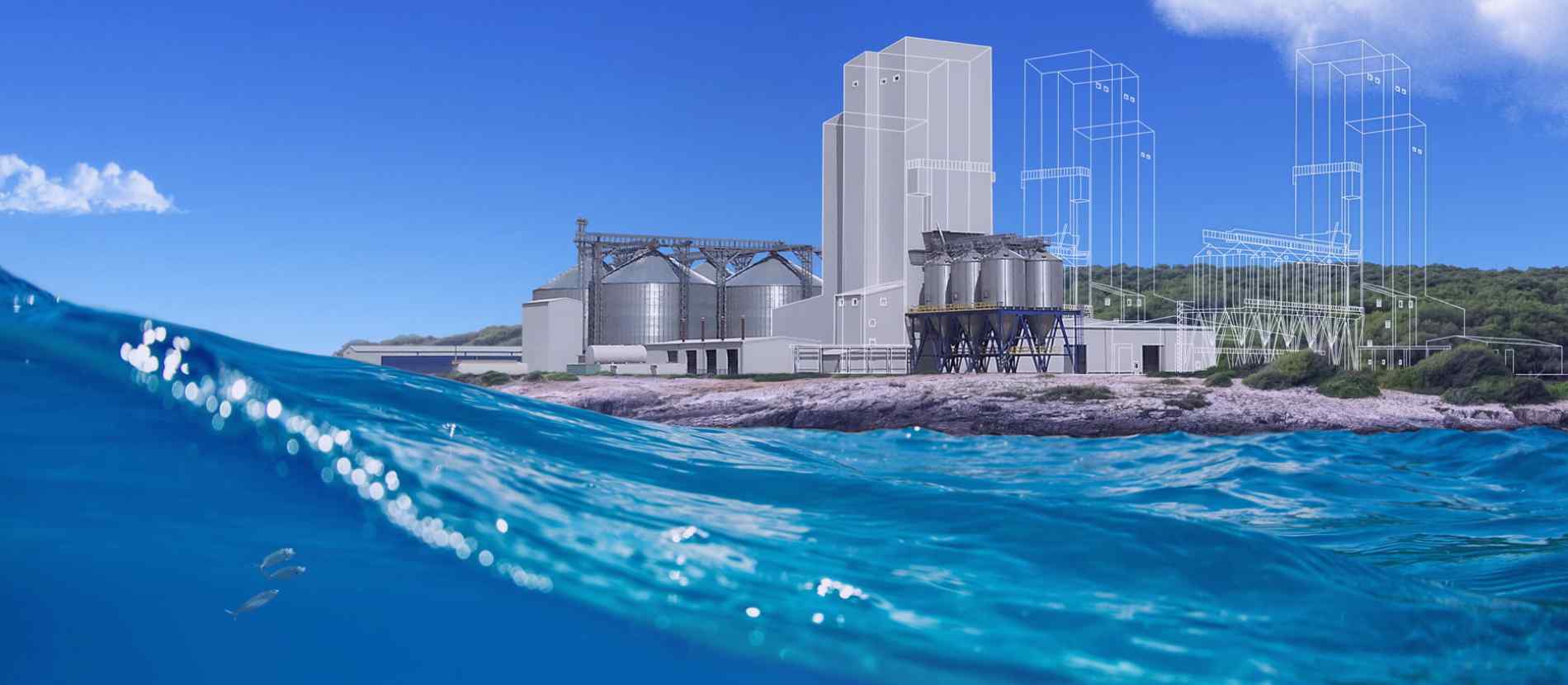
Kleine Fischfutteranlage
The small scale fish feed plant consists of a complete set of equipment and multiple processing steps, including crushing, mixing, granulation, drying, cooling and packaging. By coordinating the use of modern equipment and scientific production technology, it converts common raw materials such as rice bran, soybean meal and fish meal into nutritious feed pellets. The plant is highly efficient and has low energy consumption, which not only supports the sustainable development of the aquaculture industry, but also conforms to the global efforts to promote green and environmentally friendly energy solutions.
This small scale fish feed plant is particularly suitable for individual fish farmers or small-scale operations, and can produce floating feed pellets and sinking feed pellets for a variety of aquatic organisms. Due to its low cost, easy operation, wide range of applications and flexible settings, it has become an ideal solution for small aquaculture farms, courtyard fish farms and home feed producers.
What is Small Scale Fish Feed Plant
The small scale fish feed plant is a modern production facility tailored for small and medium-scale aquaculture and pet feed production. With its small footprint and flexible production mode, it provides farmers with an economical and efficient feed production solution.
The following video offers a real-time glimpse into the fish feed production line in action. Although the system shown can support various capacities, it also demonstrates the core processes and efficiency that define a small Fischfutterproduktionsanlage. From raw material handling to final pellet packaging, every step reflects the flexibility, automation, and compact design that make small-scale solutions ideal for modern aquaculture operations.
Although small scale fish feed plant is small in scale, the processing plant has a complete production process, covering all aspects from raw material reception, crushing, mixing to granulation, drying, cooling, screening and automatic packaging, ensuring the efficiency and stability of feed production.
This small processing plant is particularly suitable for breeders who have high requirements for feed quality but do not need large-scale production. It can accurately control the size and quality of feed particles and make the maturity of feed just right, thereby improving the digestion and absorption rate of aquatic animals and providing strong guarantee for breeding benefits.
In addition, the intelligent design and highly configured production equipment of small fish feed plant make it more convenient to operate, and its production efficiency is not inferior to that of large factories. It can flexibly adjust production parameters according to different breeding needs to achieve personalized production.
This miniaturized and intelligent production model not only reduces investment costs, but also improves production flexibility, making it highly competitive in the aquaculture and pet feed markets, and becoming an ideal choice for breeders to achieve efficient breeding and sustainable development.
RICHI-MASCHINEN
Features of Small Scale Fish Feed Plant
Small scale fish feed plant is a fish feed production system designed for small and medium-sized aquaculture farms and individual farmers. Its main function is to process a variety of raw materials into nutritious pellets suitable for different fish. The system has the significant advantages of flexibility, high efficiency and low investment, and is very suitable for start-up farms or small-scale feed factories with specific production capacity requirements.

This type of small capacity fish feed mill is equipped with an intelligent control system and a variable frequency speed regulation device, which can flexibly adjust the production speed according to actual conditions. It can achieve continuous and stable production in a limited space, is easy to operate, greatly saves manpower and improves overall efficiency, and is suitable for daily self-use or small-batch sales.

RICHI Machinery provides users with a complete set of small fish feed pellet equipment solutions, which can be integrated from raw material processing to finished product packaging. According to different customer needs, production line solutions within 1 ton/hour can be customized, taking into account energy saving and practicality, reducing energy consumption, optimizing equipment layout, and reducing site use pressure.

The equipment can be adapted to a variety of raw materials, such as rice bran, fish meal, soybean meal, corn meal, etc., and can produce a variety of aquatic feed pellets (such as floating fish feed, sinking fish feed, shrimp and crab feed, etc.). The pellets have good molding effect and high degree of maturation, which helps to improve the feeding rate and absorption rate of fish, reduce waste, and improve breeding efficiency.

The design of the entire small fish feed processing system focuses on the compactness and easy maintenance of the equipment. The equipment runs stably, has strong power and a long service life. The processing process is closed and clean, effectively preventing feed contamination, ensuring feed quality and fish health, and meeting the production standards of small farms for efficiency, safety and hygiene.
Many benefits of fish feed pellets
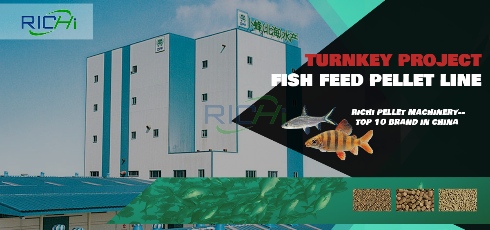
Rich in nutrition and easy to digest and absorb
Fish feed pellets are rich in protein, fat, carbohydrates, and a variety of vitamins and minerals. They can meet the various nutrients required for fish growth and development, provide balanced nutritional support for fish, thereby promoting healthy and high-quality growth of fish, improving the quality of fish meat, enhancing fish immunity, and improving the overall health of fish. In the small scale fish feed plant, the feed raw materials undergo physical and chemical changes under the action of high temperature and high pressure, making the nutrients easier for fish to digest and absorb. This not only improves the utilization rate of feed, reduces the waste of feed in water, but also reduces the risk of water pollution, which is conducive to maintaining a good breeding environment and further ensuring the healthy growth of fish.
Easy to store and transport
Fish feed pellets can be stored for two to three months under appropriate storage conditions, such as covered storage in a cool and dry place. Compared with some bulk or unprocessed feeds, its shelf life is significantly extended, reducing the waste caused by feed deterioration and reducing breeding costs. The granular feed has a regular shape, which is easy to stack and store, and can make full use of limited storage space. At the same time, its packaging is more standardized, easy to handle and manage, further improving the efficiency of storage and transportation, and reducing feed loss during storage and transportation.
Avoid animal picky eating
Because the fish feed pellets are uniform in size and the nutrients are evenly distributed, it can effectively avoid the situation of fish picky eating. This ensures that fish can take in balanced nutrition, promotes the uniform growth of the entire fish population, and improves the overall benefits of breeding. During the high temperature and high pressure processing, not only can the germs and pathogens in the feed raw materials be killed, the risk of disease transmission can be reduced, but also the nutrients in the raw materials can be better preserved. At the same time, this processing technology can also improve the stability and durability of the feed, making it less likely to disperse in the water, further improving the quality and performance of the feed.
Rich raw materials and broad market prospects
Small scale fish feed plant has strong raw material adaptability. It can be flexibly formulated according to a variety of raw materials such as fish meal, soybean meal, corn, rice bran, etc. available locally, which is convenient for production. This makes its production process very flexible. It can flexibly adjust the formula and production process according to the raw material supply and market demand in different regions to reduce production costs. With the continuous development of the aquaculture industry, the demand for high-quality fish feed continues to grow. Fish feed pellets have broad prospects and high profit returns in the market due to their many advantages. In addition, it can also be made into pellet feeds of different specifications and densities according to different growth stages and fish species to meet diverse market needs, further enhancing the market competitiveness and economic benefits of the product.
RICHI-MASCHINEN
Small Scale Fish Feed Plant Supporting Equipment
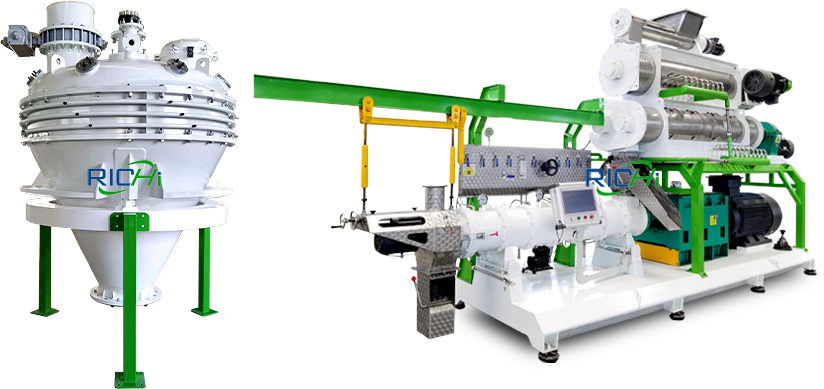
Small scale fish feed plant usually consists of a complete production system composed of multiple efficient supporting equipment working together. Each type of equipment performs its own duties and is closely linked to each other to jointly realize the whole process from raw material processing to finished feed packaging. Core equipment such as fish feed extruders and extruders play a key role in the fish feed molding process, while other supporting equipment such as crushing, mixing, cooling, drying, spraying and packaging equipment are also indispensable to fully guarantee production efficiency and feed quality.
Among them, fish feed extruders have a wide range of applicability and can process various types of floating, sinking and slow-sinking feed particles. They are suitable for the feed production of various aquatic animals such as fish, crabs, shrimps, etc., and are an indispensable part of small feed factory. In particular, twin-screw fish feed extruders have the characteristics of self-cleaning function, wide adaptability to materials, and convenient operation, and are most widely used in small fish feed plants.
In addition, in order to ensure the efficient operation of the entire production line and the stability of product quality, the small feed factory is usually equipped with feed crushers, mixers, coolers, dryers, pellet makers, sprayers and packaging machines. These equipments are responsible for the important functions of raw material pretreatment, ingredient mixing, pellet cooling and drying, surface spraying and final packaging, so as to build a small fish feed production line with complete functions and smooth operation. The following is a detailed introduction:
Einschnecken-Extruder für schwimmendes Fischfutter
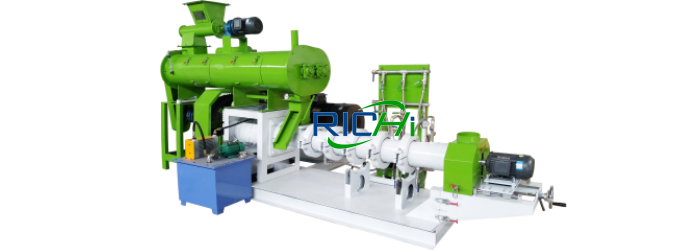
Die Einschnecken-Extrusionsmaschine ist ein Gerät, das speziell für die Herstellung von schwimmenden Fischfutterpellets verwendet wird. Sie extrudiert und pufft die Rohstoffe unter hoher Temperatur und hohem Druck durch eine rotierende Schnecke, so dass die Futterpellets auf der Wasseroberfläche schwimmen können und die Fütterung der Fische erleichtern. Seine Struktur ist relativ einfach, leicht zu warten, relativ kostengünstig und kann in kleinen und mittelgroßen Aquakulturbetrieben und Fischfutterfarmen weit verbreitet sein und eignet sich für die Herstellung von gewöhnlichem schwimmendem Fischfutter. Es wird in zwei Verfahren unterteilt: Trocken- und Nassverfahren:
Dry method
The raw materials need to be added with water, but no conditioning is required before entering the extrusion bin. The extrusion heat is completely generated by mechanical extrusion, and no steam system is required. The equipment is relatively simple, easy to operate and maintain, and low in cost, but the output is relatively limited, which is suitable for small and medium-sized users.
Wet method
The raw materials need to be pre-conditioned before entering the extrusion chamber. With the help of steam or water to increase the temperature, the starch is pre-gelatinized, the protein is denatured, and the raw materials are softened, which improves the extrusion quality. The produced feed particles are smoother and of better quality. It is suitable for large-scale production in medium and large feed processing plants and aquaculture farms.
Im Folgenden sind die spezifischen Parameter der beiden Verfahren aufgeführt:
| Parameter | Trockenextruder-Maschinen (DGP-Serie) | Nassextruder-Maschinen (DSP-Serie) |
| Modell | DGP-90B / DGP-120B / DGP-160B | DSP-90B / DSP-135B |
| Leistung des Hauptmotors (kW) | 37 / 55 / 90 | 37 / 75 |
| Vorschub Motorleistung (kW) | 0.75 / 2.2 / 3 | 7.5 / 7.5 |
| Leistung Schneidemotor (kW) | 0.55 / 1.1 / 1.5 | 1.1 / 1.5 |
| Aufbereitung Motorleistung (kW) | - (Keine Vorkonditionierung erforderlich) | 1.1 / 2.2 |
| Schraubendurchmesser (mm) | 90 / 120 / 160 | 90 / 135 |
| Gesamtabmessungen (mm) | 2100×1450×1350 / 2400×1950×1600 / 3100×2650×1800 | 2600×1600×1900 / 3750×1980×1950 |
| Leistung (Tonne/Stunde) | 0.2-0.4 / 0.5-0.6 / 0.8-1.0 | 0.5-0.6 / 0.8-1.0 |

Doppelschnecken-Extruder für schwimmendes Fischfutter
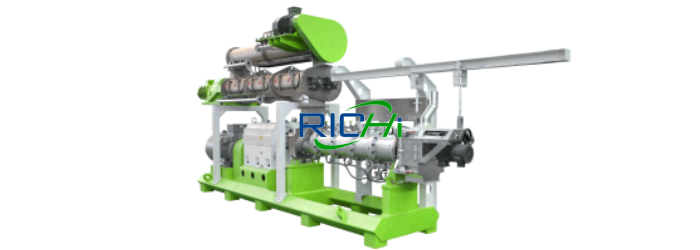
Die Fischfutter-Doppelschneckenextruder-Maschine ist eine hocheffiziente Granulieranlage, die üblicherweise für die Verarbeitung von Fischfutter verwendet wird. Ihr Arbeitsprinzip besteht darin, das Material durch zwei rotierende Schnecken von der Einfüllöffnung zur Auslassöffnung zu extrudieren und gleichzeitig das Material zu erhitzen und unter Druck zu setzen, um es in eine Flüssigkeit zu verwandeln. Diese Anlage ist in der Aquakultur und anderen Industrien wegen ihrer hohen Effizienz, Flexibilität und hochwertigen Produktionseigenschaften weit verbreitet und wird von verschiedenen Industrien sehr geschätzt.
Small floating fish feed machine has high capacity and low energy consumption. Fully kneaded screw technology is used to ensure uniform feed pellets and improve the granular curing effect with an efficient tempering device. The equipment operates stably and safely, has a low failure rate, and can also produce a variety of aquatic feed.
Im Folgenden werden die technischen Parameter im Einzelnen aufgeführt:
| Modell | SPHS75x2 | SPHS120*2 | SPHS150*2 | SPHS185*2 | |
| Leistung des Hauptmotors (kW) | 55 | 90 | 110 | 200 | 355 |
| Schraubendurchmesser (mm) | 75 | 120 | 120 | 150 | 185 |
| Einspeiseleistung (kW) | 1.5 | 1.5 | 1.5 | 1.5 | 2.2 |
| Aufbereiter Leistung (kW) | 7.5 | 11 | 11 | 11 | 11 |
| Spezifikation des Conditioners | DC400-244 | DC500-244 | DC500-244 | DC600-300 | DC600-300 |
| Differentialkonditionierer Leistung (kW) | 11 | 11 | 11 | 15 | 15 |
| Spezifikation des Differentialkonditionierers | DC400*300-244 | DC500*400-300 | DC500*400-300 | DC600*500-300 | DC600*500-300 |
| Produktionskapazität (T/H) | 0.5-1.0 | 1.5-2.0 | 3.0-4.0 | 5.0-6.0 | 10-12 |

Customizable Small Scale Fish Feed Plant
Different fish species—and even the same species at different growth stages—require specific nutrients to thrive. A customizable small scale fish feed mill plant from RICHI Machinery allows farmers to produce tailored feed formulas to meet these varying nutritional needs. By adjusting factors like pellet size, protein content, and additives, farmers can not only improve fish growth and health, but also manage fish feed mill plant cost more efficiently.
RICHI-MASCHINE
Andere Hilfsmittel of Small Scale Fish Feed Plant
In addition to the main production machines, a complete small scale fish feed plant also relies on a variety of auxiliary equipment to ensure smooth, efficient, and high-quality production. These supporting machines play vital roles in material preparation, processing, cooling, and final packaging. Below, we briefly introduce several commonly used auxiliary devices.
fish feed grinder
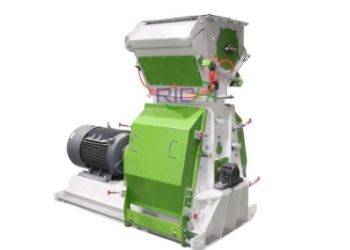
The feed grinder is suitable for crushing various feed raw materials, such as corn, wheat, beans, broken cakes, etc. It is widely used in large and medium-sized livestock and poultry and aquatic feed enterprises. In addition, the RICHI SFSP series water drop hammer mill adopts an advanced water drop crushing chamber design and a reasonable secondary crushing structure, which can efficiently crush aquatic feed raw materials.
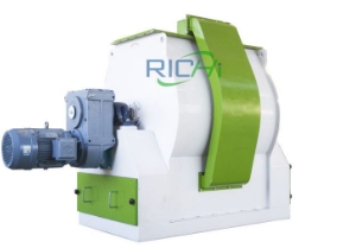
Futtermischwagen
The feed mixer is the core equipment of the feed processing plant. It is designed to solve the uniform mixing needs of the raw materials after crushing, and realizes the precise proportion of each component through the batching and mixing system. It adopts an innovative rotor structure, which has the dual advantages of mixing uniformity up to 97.7% and fast mixing in a short time. It can significantly improve the production efficiency of the feed factory and the stability of product quality. It is a key equipment to ensure the uniformity of the quality of the finished feed.
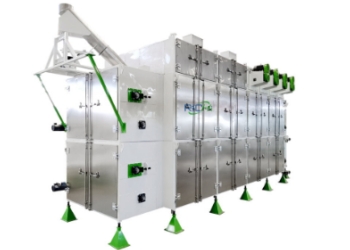
feed dryer
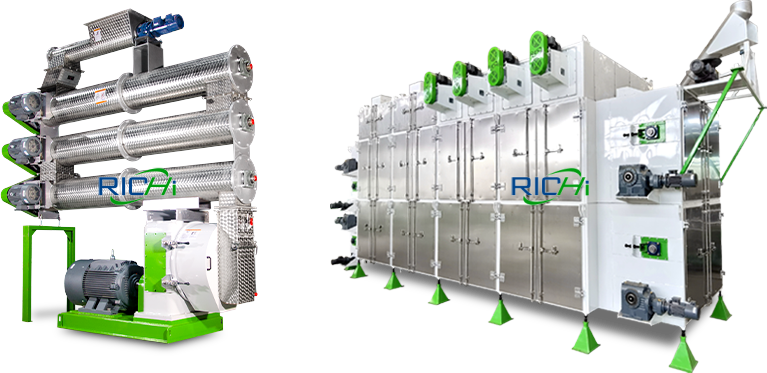
The new horizontal fish feed dryer launched by RICHI is an efficient and energy-saving equipment designed for extruded feed, which is widely used in the aquatic feed and pet food processing industries. It is not only suitable for fish feed, but also can be flexibly used as animal feed dryer, pet food dryer, dog food dryer, etc. It is a multifunctional and highly adaptable equipment.
The dryer adopts a horizontal structure, with high drying efficiency and stable operation. The whole machine design meets environmental protection and sanitation standards. Its heat source system supports steam and natural gas, which can be freely selected according to user needs. It saves energy and improves the drying effect. It is favored by the majority of puffed feed manufacturers.
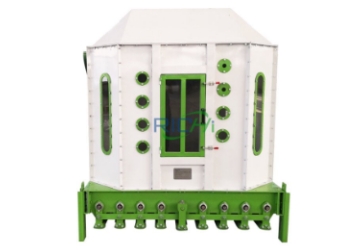
Feed cooler
The feed cooler is a key equipment in the cooling system of the feed production process. It is mainly used to gently cool the hot pellet feed that has just been extruded. By controlling the cooling rate, the surface cracking of the pellets due to sudden cooling is avoided, thereby protecting the integrity of the pellet structure and improving the feed quality. Taking the countercurrent pellet cooler designed and produced by Ruiqi as an example, it adopts advanced cooling technology to make the cooled pellets have a consistent appearance, no cracks and a smooth surface, which not only optimizes the product quality indicators, but also facilitates the sales, transportation and storage of feed. This equipment has been widely used in the cooling and processing of various pellet materials such as pellet feed, wood chip pellets, biomass pellets, organic fertilizer pellets, etc., and is an important equipment to ensure the quality of finished products in the modern pellet production process.
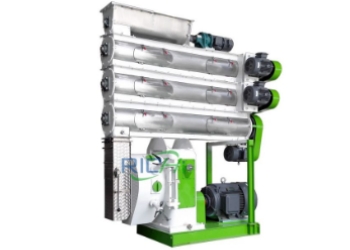
Fish feed pellet making machine
Die Maschine zur Herstellung von Fischfutterpellets is a kind of equipment specially used for producing pellet feed for aquaculture, and is the core part of the fish feed processing system. It uses a precise mechanical structure and control system to press various powdered raw materials into pellet feed with specific shape, density and nutritional composition to meet the feeding needs of fish of different species and growth stages.
According to the needs of different customers and the differences in aquaculture types, fish feed pellet machines can be divided into many types such as ring die pellet machines, single screw fish feed extruders and twin screw fish feed extruders. Each model is different in terms of output, pellet structure, applicable raw materials, etc., and can be flexibly selected according to actual conditions.
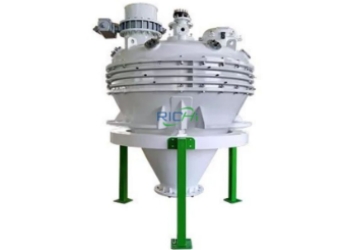
spraying machine
RICHI fish feed sprayer is a kind of equipment specially used for fish feed production. It is mainly used to spray oil or liquid additives evenly on the surface of fish feed particles. It adopts a drum structure, and the liquid is atomized by a high-pressure nozzle and evenly covered on the feed particles to ensure that each feed can be evenly coated with oil. The equipment is equipped with a computer control system, which can accurately control the spraying amount and has good spraying uniformity. It can effectively improve the nutritional value and palatability of the feed and is widely used in the aquaculture industry.
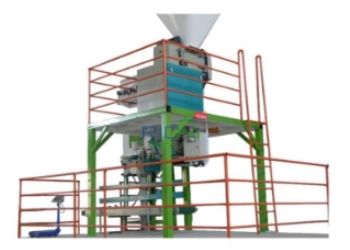
Automatic Bagging Machine
The automatic packaging machine is a quantitative packaging equipment designed for feed production enterprises. It is mainly used for the automatic weighing, bagging and packaging of finished feed (such as fish feed pellets). It can efficiently complete the whole process from feed pellets to finished product packaging, adapt to the needs of large-scale production, and realize automatic packaging with small weighing error and high production efficiency through high-precision control and intelligent systems. It is a key equipment to improve the efficiency of the feed production and packaging section.
Production process of Small Scale Fish Feed Plant
The main function of small scale fish feed plant equipment is to process various raw materials into feed suitable for fish through mixing, crushing, granulation and other processes. Below I will take 0.5 T/H small Produktionslinie für Fischfutter as an example to briefly introduce how to use the production process of this production line to make fish feed pellets. The following is a detailed production process flow:
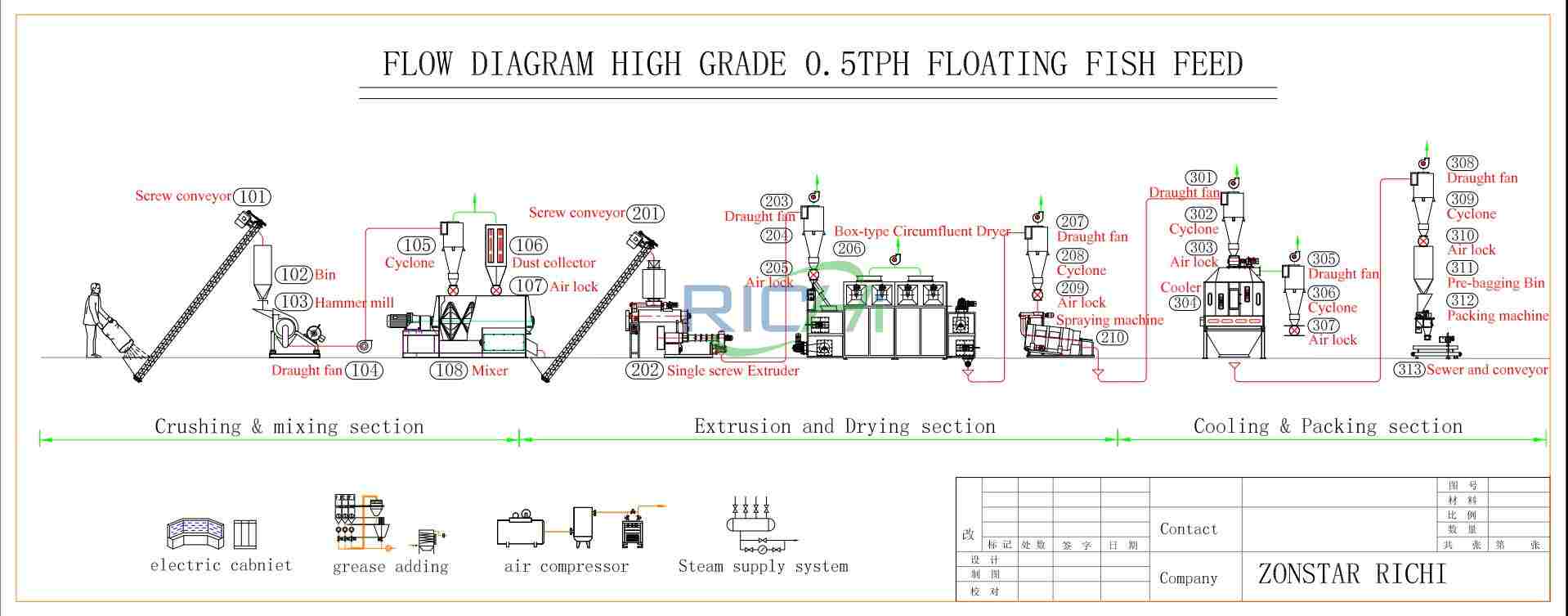
Im Folgenden wird der Produktionsprozess detailliert beschrieben:
01 Raw material storage and transportation system
Including raw material bin, conveyor belt, etc., used to store and transport various raw materials.
02 Annahme und Reinigung von Rohstoffen
Raw materials are mainly in the form of powder and granules. Powder can be directly put into the batching bin, and granules need to be coarsely crushed. The raw materials need to be cleaned to remove impurities to ensure the quality of the raw materials.
03 The first batching and mixing
The first batching is mainly the preparation of the materials with larger proportions in the formula, which is completed by the electronic batching scale. After batching, it enters the first mixing to reduce the variation range of the material particle size and improve the working condition of the grinder.
04 The second crushing
Due to the poor digestion ability of aquatic animals, the feed particle size is required to be very fine. After the second crushing process is completed, it enters the rotary grading screen to remove the crude fiber in the feed.
05 The second mixing
After the second batching, the raw materials enter the second mixer to add trace additives and liquid.
06 Conditioning and puffing
The materials are cooked under high temperature, high humidity and high pressure, and the physical and chemical properties change to form puffed feed. Puffed feed has the advantages of high starch gelatinization, easy protein digestion and good palatability.
07 Kühl-, Trocknungs- und Siebanlage
It is used to cool, screen and dry the pelletized feed to prevent the feed from deteriorating. The purpose of screening the feed is to remove unqualified particles and package them for easy storage and transportation.
08 Produktsortierung und Verpackung
The cooled materials are lifted, crushed and then enter the grading screen for grading. The final product goes directly into the finished product warehouse and is then weighed and packaged.

The following are related case projects of RICHI Machinery. I hope it will be helpful to you. If you are interested in our equipment, please leave a message and we will provide you with the best small fish feed production line solution.
Small Scale Fish Feed Plant Related Project Cases
In the field of aquaculture, small scale fish feed plant has diverse production needs and operation models. RICHI focuses on the engineering of fish feed production and processing plants. Its products have covered more than 150 countries and regions including Japan, Canada, Germany, Russia, the United Kingdom, Australia, Chile, etc., serving thousands of customers, and many cases have become local benchmark projects.
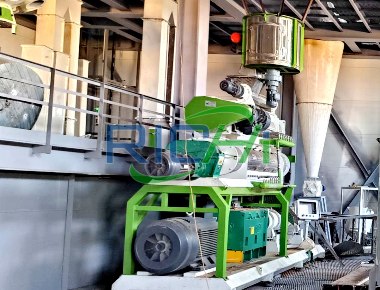
0.5T/H Small Fish Feed Production Line in Thailand
- Land: Thailand
- Production capacity: 0.5 tons/hour
- Applicable fish species: Tilapia, Pangasius, Catfish, Shrimp
- Particle type: Floating and sinking fish feed particles
- Particle size: 0.9-10mm adjustable
- Main raw materials: fish meal, rice bran, corn, soybean meal, palm meal
- Production process: raw material reception → crushing → mixing → puffing → drying → cooling → screening → packaging
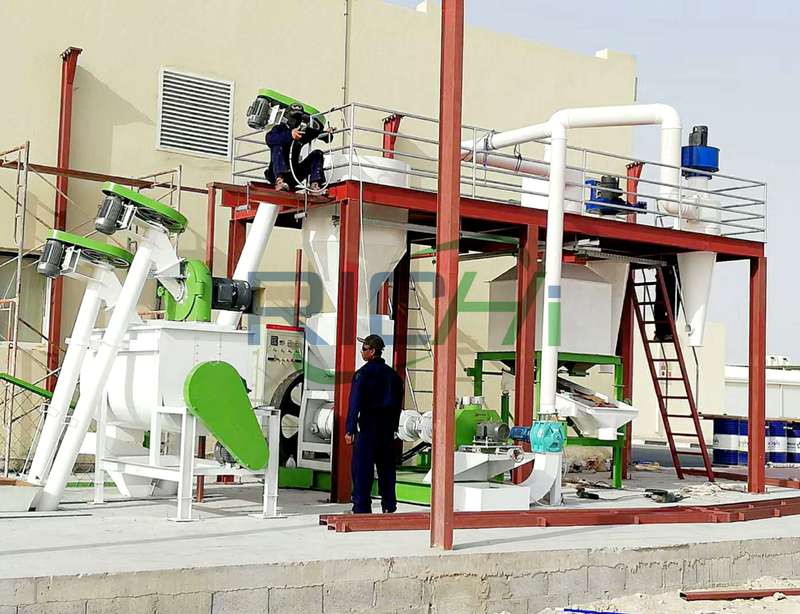
0.8T/H Small Scale Fish Feed Plant in Malaysia
- Land: Malaysia
- Production capacity: 0.8 tons/hour
- Applicable fish species: Tilapia, golden eye perch, carp, shrimp
- Particle type: mainly floating feed, support sinking feed switching
- Particle size: 1.5-8mm
- Main raw materials: wheat flour, corn protein, fish meal, coconut meal, soybean meal
- Production process: coarse crushing → batching → mixing → puffing → drying → cooling → screening → Packaging
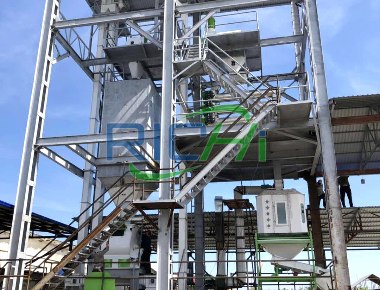
1T/H Small Fish Feed Production Line in Indonesia
- Land: Indonesien
- Production capacity: 1 ton/hour
- Applicable fish species: Tilapia, giant catfish, pangasius, goldfish
- Pellet type: floating and sinking fish feed pellets
- Pellet size: 1–9mm adjustable
- Main raw materials: corn, fish meal, soybean meal, coconut meal, wheat bran
- Production process: raw material crushing → ingredient mixing → conditioning → puffing → drying → cooling → screening → automatic packaging
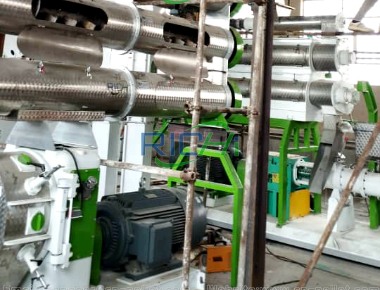
1.2T/H Small Fish Feed Production Line in Vietnam
- Land: Vietnam
- Production capacity: 1.2 tons/hour
- Applicable fish species: Tilapia, black carp, carp, white shrimp
- Pellet type: mainly floating fish feed, compatible with sinking switch
- Pellet size: 1–10mm
- Main raw materials: corn, rice bran, fish meal, rapeseed meal, beet pulp
- Production process: raw material pre-cleaning → coarse crushing → mixing → twin-screw puffing → multi-layer drying → cooling → screening → Packaging
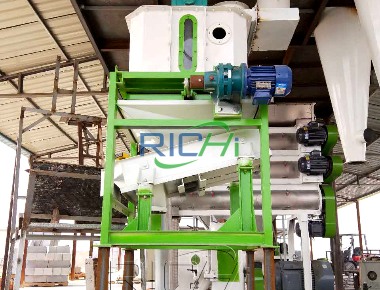
1.5T/H Small Fish Feed Production Line in Philippines
- Land: Philippinen
- Production capacity: 1.5 tons/hour
- Applicable fish species: Tilapia, loach, crucian carp, shrimp
- Pellet type: floating fish feed pellets
- Pellet size: 0.9-6mm
- Main raw materials: wheat bran, rice bran, soybean cake, fish meal, corn
- Production process: raw material storage → crushing → mixing → twin screw extruder → drying → screening → cooling → packaging
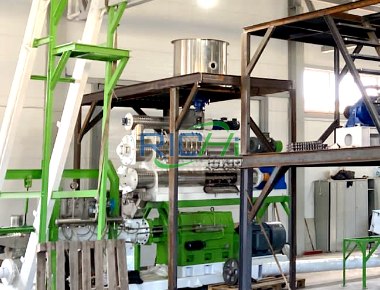
1.5T/H Small Fish Feed Plant in Bangladesh
- Land: Bangladesch
- Production capacity: 1.5 tons/hour
- Applicable fish species: catfish, tilapia, freshwater bass
- Pellet type: floating and slow sinking feed pellets
- Pellet size: 1-8mm
- Main raw materials: corn, wheat, fish meal, soybean meal, rice bran
- Production process: crushing → first mixing → micro-crushing → second mixing → extrusion → cooling → screening → Packaging
How to buy a satisfactory Small Scale Fish Feed Plant?
Bei der Vorbereitung eines Kaufs ist eine Kombination von Faktoren erforderlich, um sicherzustellen, dass die ausgewählte Ausrüstung den Produktionsanforderungen entspricht und hochwertiges Futter liefert. Hier sind einige Dinge, die bei der Auswahl zu beachten sind, ich hoffe, sie können Ihnen helfen.
Eigene Bedürfnisse klären
Zunächst müssen Sie den Zweck der Herstellung von Fischfutter bestimmen. Geht es darum, den Bedarf Ihrer eigenen Fischzucht zu decken? Wenn der Produktionsumfang groß ist, ist es empfehlenswert, eine Nassfutter-Extruder-Maschine zu wählen, weil sie eine hohe Effizienz und einen großen Ausstoß hat und qualitativ hochwertige Pellets produziert - ideal. Gleichzeitig ist es wichtig, die Fischfutter-Pelletiermaschine Preis hilft Ihnen, eine kosteneffiziente Entscheidung zu treffen, die auf Ihrem Budget und Ihren Produktionszielen basiert.
Wählen Sie die richtigen Rohstoffe
Unterschiedliche Rohstoffe erfordern unterschiedliche Verarbeitungsmaschinen. Sie können die richtige Maschine je nach Rohstoffquelle wählen. Wenn Ihre Hauptrohstoffe zum Beispiel Maismehl, Reiskleie usw. sind, können Sie eine Trocken- oder Nassextruder-Maschine verwenden.
Beachten Sie die Arten von Zuchtfischen
Verschiedene Fischarten haben unterschiedliche Ernährungsgewohnheiten und benötigen unterschiedliche Größen und Arten von Futterpellets. Tilapia zum Beispiel fressen am liebsten an der Wasseroberfläche, daher brauchen sie schwimmende Futterpellets in der geeigneten Größe von 2-3 mm.
Achten Sie auf die Qualität der Ausrüstung
Das Material und die Wartung der Maschine sind wichtige Faktoren für die Beurteilung der Qualität der Maschine. Hochwertige Fischfütterungsmaschinen sind in der Regel aus hochwertigem Edelstahl gefertigt, um Stabilität und Hygiene zu gewährleisten.
Wählen Sie einen professionellen Hersteller
Die Professionalität des Herstellers ist entscheidend. Es ist äußerst wichtig, eine Marke mit gutem Kundendienst und gutem Ruf zu wählen. RICHI Machinery kann nicht nur hochwertige Geräte liefern, sondern auch einen umfassenden Kundendienst und technische Unterstützung bieten.
Inspektion im Werk vor Ort
Wenn möglich, empfiehlt es sich, das Werk direkt vor Ort zu besuchen. Dies ermöglicht nicht nur ein intuitives Verständnis des Produktionsprozesses und der Qualität des Geräts, sondern auch eine persönliche Kommunikation mit den Ingenieuren, um sicherzustellen, dass das Gerät Ihre spezifischen Anforderungen erfüllt.
Häufig gestellte Fragen

What are the raw material formulas for fish feed?
The following fish feed formulas are provided for reference. Actual ingredients may vary based on fish species, growth stages, local raw material availability, and nutritional needs.
(1) Tilapia:
Basic raw materials: wheat bran (30%), soybean cake (35%), fish meal (15%), corn (5%), locust leaves (5%), barley (8.5%), growth hormone (1%), salt (0.5%), feed coefficient is about 2.03.
(2) Carp:
Basic raw materials: fish meal (10%), shrimp bran (20%), wheat bran (50%), corn (10%), sweet potato powder (10%), this is adult fish feed.
(3) Aquatic catfish:
Basic raw materials: soybean meal 24%, peanut residue 24%, fish meal 5.1%, rice bran 43%, bone meal 2%, crude protein 28%, feed coefficient is about 2.2.
(4) Grass carp:
Grass carp is a typical herbivorous fish. Adult fish mainly feed on aquatic plants. In the early stage of breeding, fry mainly feed on small protozoa, but they like to eat artificial concentrated feed at all growth stages.
Basic raw materials: 45% hay powder (peanut vines, sweet potato vines), 15% bean cake, 15% rice bran, 10% bran, 3.5% fish meal, 10% corn, 1% bone meal, 0.5% salt.
(5) Bream:
Bream has a wide range of diets, mainly submerged plants (Vallis, Hydrilla, Potamogeton, etc.) and terrestrial grasses and leaves.
Basic feed raw materials are: silkworm pupa powder (5%), rapeseed meal (20%), soybean (13%), cottonseed (5%), corn (10%), rice bran (10%), wheat bran (20%), grass powder (15%), crude protein (25%), and the feed coefficient is about 2.6.
I am a novice in fish farming. I want to build a Small Scale Fish Feed Plant to produce fish feed myself. Which machine should I use? Or how can I start producing fish feed myself?
If you are new to fish farming and want to make your own fish feed, we recommend starting with a small fish feed unit. The equipment is easy to operate and occupies a small area, which is very suitable for individuals or small-scale farmers. Common configurations include crushers, mixers, fish feed extruders (optional floating or sinking), drying equipment and packaging machines.
According to the fish species and production requirements you raise, we can recommend the right machine model for you, and provide formulas, operation videos and technical support to help you get started quickly. Welcome to contact us for free solutions and quotes!
Kann die Produktionskapazität der Anlage je nach Bedarf angepasst werden?
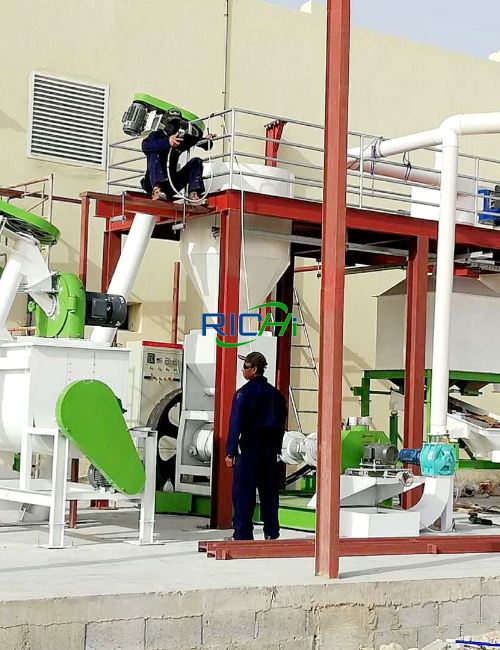
Of course. In the operation of small fish feed mill projects in different countries, RICHI Machinery fully considered the scalability of production capacity when designing according to customer demand for production. Customers can easily increase production capacity by adding equipment modules, upgrading key components, etc. according to actual production needs. For example, the number of batching scales can be increased, the capacity of the mixer can be expanded, the production efficiency of the fish feed pellet machine can be improved, etc., to meet the growing production needs of the enterprise. At the same time, our technical team will provide customers with professional capacity upgrade solutions and technical support to ensure that the upgrade process goes smoothly.
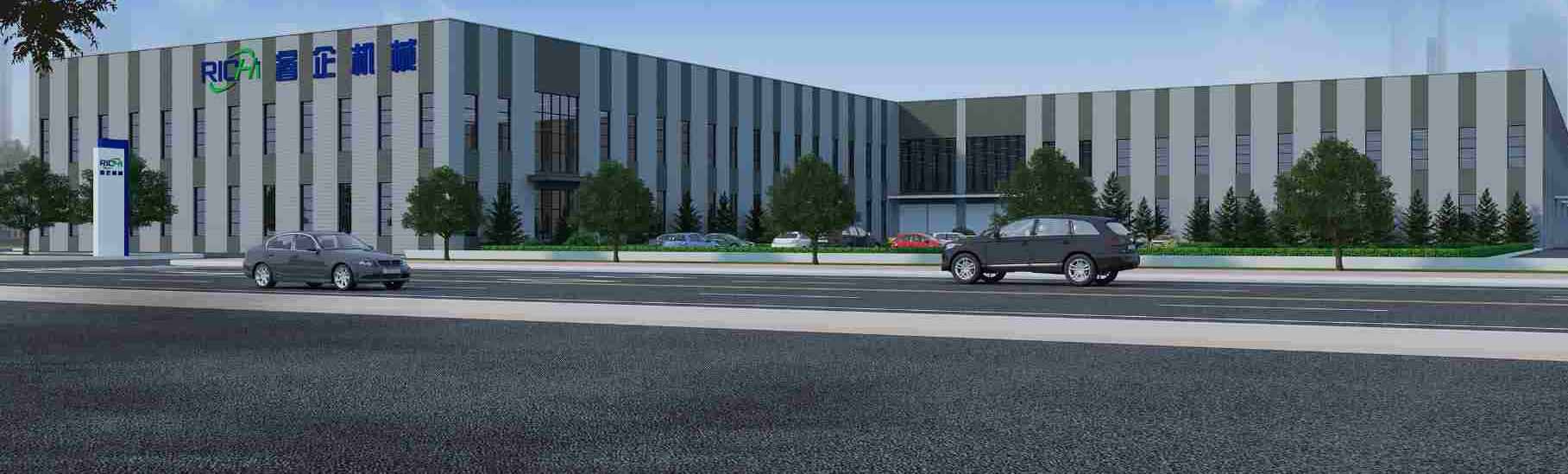
Warum RICHI Maschinen wählen
Verbesserte industrielle Kette
Als lokales Unternehmen, RICHI Maschinenpark hat ein eigenes F&E-, Produktions- und Vertriebssystem aufgebaut. Mehr als 30 Ausrüstungsmodelle decken verschiedene Bereiche wie Granulation, Mahlen und Trocknen ab. Das Unternehmen hat internationale Zertifizierungen wie ISO und CE erhalten. Das Unternehmen ist in mehr als 100 Ländern tätig und hat insgesamt 2.000 Kunden. Das Unternehmen verfügt über eine doppelte Garantie für Qualität und Lieferfähigkeit.
Umfassender und durchdachter Service
Das professionelle Team führt gründliche Untersuchungen über die Eigenschaften der Rohstoffe, die Ziele der Produktionskapazität und die Bedingungen vor Ort durch, vom Entwurf der Lösung bis zur Lieferung der Ausrüstung und der Anpassung an die Kundenbedürfnisse, passt sich den Bedürfnissen kleiner und mittelgroßer Zuchtbetriebe bis hin zu großen Fabriken an, weigert sich, zu viel zu konfigurieren und bietet kosteneffiziente “Präzisions”-Lösungen.
Garantierte Qualität
Strenge Umsetzung der ISO9001-Norm, Einführung von Qualitätsverantwortung und Produktionssicherheitsmanagement, vollständige Rückverfolgbarkeit des Prozesses vom Entwurf bis zur Fertigung durch Qualitätskontrolle, statistische Prozesskontrolle (SPC) und andere Mittel, Beseitigung versteckter Qualitätsrisiken und Gewährleistung der Langlebigkeit und Stabilität der Ausrüstung.
Zuverlässige Lieferung und schnelle Produktion
Nach dem vierfachen Inspektionsprozess “Auftragsprüfung → Qualitätsprüfung im Werk → erneute Inspektion der Boxen → wissenschaftliche Verpackung” leiten die Ingenieure die Infrastruktur, die Installation und die Inbetriebnahme vor Ort, bis die Produktionslinie den Normen entspricht und abgenommen wird, und verwenden standardisierte Verfahren, um die effiziente Durchführung des Projekts zu gewährleisten und den Produktionszyklus zu verkürzen.
Umfassendes Garantiesystem nach dem Verkauf
The technical team of nearly 100 people covers the entire process of consultation, design, installation and maintenance, provides customized technical solutions and operation training for the small scale fish feed plant, regularly reviews the equipment operation status after delivery, quickly responds to after-sales needs, and helps the production line to operate stably for a long-term and stable manner. You can find us on YouTube.
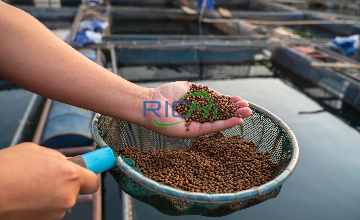
Fünf zentrale Vorteile von RICHI Machinery
Verbesserte industrielle Kette
Umfassender und durchdachter Service
Garantierte Qualität
Zuverlässige Lieferung und schnelle Produktion
Umfassendes Garantiesystem nach dem Verkauf