Usine flottante d'aliments pour poissons
Floating fish feed plant is suitable for fish farms, fish feed processing plants and pet food factories. This production line can be used to process various floating fish feed pellets, such as catfish, tilapia, shrimp, trout, turbot, cod, halibut, yellowtail, sea bass and bream, etc. It has a wide range of applications, covering almost all common aquaculture species.
- pellet size: 0.9mm~15mm
- Scope of application: catfish, tilapia, carp, goldfish, tropical fish, dogs, cats, birds, etc.
- Raw materials: grains, corn, wheat, barley flour, oilseed meal/cake, edible leaves, fish meal, bone meal, etc.
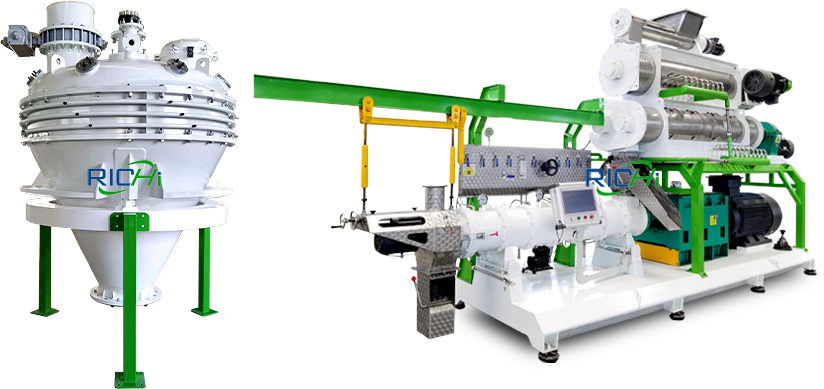
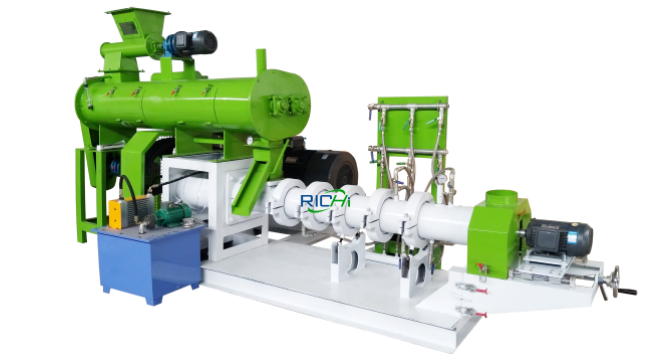
MACHINES RICHI
What is Floating Fish Feed Plant?
Floating fish feed plant is a modern factory dedicated to producing fish feed pellets floating on the water surface. This type of feed can float for a long time after being put into the water because of its low density, internal air sacs, and low water content, which makes it easy for breeders to observe the feeding situation of fish, and can also effectively reduce feed waste and water pollution.

Machine à fabriquer des granulés pour l'alimentation de la volaille
In a floating fish feed plant, nutrients such as protein, oil, and carbohydrates are scientifically balanced through advanced processing technologies and transformed into easily digestible, nutritionally complete pellet feed. These feeds are not only highly palatable but also feature excellent digestibility and absorption rates, helping fish grow faster and healthier—achieving the goal of efficiently converting feed into meat.
RICHI Machinery’s floating fish feed machine processing plant is equipped with a sophisticated system capable of flexibly adjusting pellet density and size to meet the dietary needs of both ornamental fish and various commercial fish species at different growth stages. The pellet diameter can be customized from 0.9mm to 15mm, offering great adaptability. Whether using a large-scale production line or a petite machine flottante pour l'alimentation des poissons for small-scale farms or hatcheries, the line ensures consistent quality. Thanks to efficient extrusion technology and a reliable steam conditioning system, the plant steadily produces high-quality floating pellets with excellent water stability and floatability.
At the same time, it can also support the processing of various raw material formulas and is suitable for a variety of breeding modes. Floating feed machine plant is a modern fish feed production plant that integrates nutritional science, efficient processing, intelligent control and environmental protection concepts. It is an important support for promoting the high-quality development of modern aquaculture.
After understanding the basic concept of floating fish pellets factory, let’s take a look at the main raw materials and ingredients that make up floating fish feed. Reasonable formula is the key to ensuring the quality and nutritional value of fish feed, and it also affects the healthy growth of fish and the breeding benefits.
MACHINES RICHI
The main raw material formula used in Floating Fish Feed Plant
The formula of floating fish feed usually contains fish meal, fish oil, DORB (shelled defatted soybeans), rice bran, de-oiled cake, minerals and vitamin premixes. Starch, protein, fat and crude fiber are the four core ingredients in fish feed, and the proportions of these ingredients will be adjusted for different fish and breeding environments.
In the production process of floating fish feed plant, the choice of raw materials directly affects the texture, uniformity, extrudability and nutritional quality of the final product, and of course, economic feasibility must be taken into account. The extrusion cooking process can transform wet powdered or granular raw materials into stable dough, gelatinize starch, absorb water and increase viscosity, thus forming ideal fish feed pellets. The following is a brief introduction to the functions of these main ingredients:
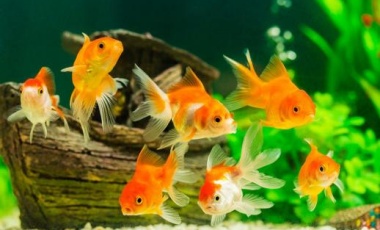
Starch
As the main carbohydrate in fish feed, starch is an important source of energy. It gelatinizes during the extrusion cooking process, becomes soluble and absorbs water, which not only helps the expansion of the pellets, but also enhances the adhesion between the pellets. The starch content in floating fish feed is usually not less than 20%.
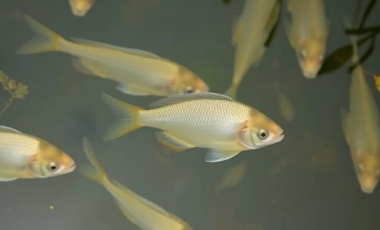
Protein
Protein is a key nutrient necessary for fish growth and the most expensive part of the feed. Different fish and their different growth stages have different protein requirements. The sources of protein include animal proteins such as fish meal, meat and bone meal, blood meal, and plant proteins. The reasonable ratio of protein not only ensures the growth rate of fish, but also optimizes feed conversion efficiency.
Fat
Fat is a high-energy nutrient that can provide abundant energy for fish, and can partially replace protein in feed to reduce feed costs. Fat usually accounts for 7%-15% of the total feed, and its sources are diverse, including vegetable oils, animal fats and marine oils. Fat also plays a role in transporting fat-soluble vitamins (such as vitamins A, D, and E).
Fiber
Crude fiber in fish feed mainly plays a role in increasing the volume of feed. Although fish cannot completely digest fiber, a proper amount of fiber is helpful for intestinal health. Raw materials with high protein content and low fiber content, such as fish meal, are usually more valuable, while straw and rice husks with high fiber content are less valuable.

In addition, trace ingredients such as vitamins are also indispensable in feed. Although some vitamins will be affected to a certain extent during the extrusion process, especially water-soluble vitamins, fat-soluble vitamins (such as A, D, and E) are relatively stable with only a small amount of loss.
In summary, floating fish feed plant can perfectly combine various raw materials and nutrients through scientific formulas and advanced equipment to produce high-quality, nutritionally balanced floating fish feeds to meet the needs of different fish species and breeding environments, and help the aquaculture industry achieve healthy and efficient development.
Advantages of fish feed produced by Floating Fish Feed Plant
Save feed and improve efficiency
Floating fish feed is fully matured during the puffing process, with a tighter structure, less powder, and almost no waste. Compared with traditional feed, this feed is easier for fish to eat and use, and generally saves 5% to 10% of the feeding amount. For farms with large daily usage, this can significantly reduce feed costs and improve overall economic benefits.
Easier to digest and absorb
This feed undergoes high temperature and high pressure during processing, the starch is fully gelatinized, and the fiber structure is also destroyed, making it easier for fish to digest and absorb the nutrients. Especially in young fish and high-density breeding environments, floating feed plays a very important role in promoting rapid growth and enhancing immunity.
Improve water quality management
Floating fish feed has good stability in water and can usually float on the water surface for up to 12 hours without dissolving. This feature not only makes it easier to observe the feeding situation of fish, but also significantly reduces the water pollution caused by the sinking and corruption of feed, helps to maintain a clean water quality environment, and improves the sustainability of breeding.
Convenient feeding and daily management
Because floating feed floats on the water surface, farmers can clearly see the feeding response of fish, which is convenient for timely adjustment of feeding amount. By observing the activeness of fish feeding, the health status and growth stage of fish can be quickly judged, so as to make more scientific breeding decisions and improve management efficiency.
Wide range of applications and flexible pellets
With the flexible extrusion function of the floating fish feed plant equipment, feed pellets of various diameters can be produced according to different fish species and growth stages, usually ranging from 0.9mm-15mm. This diversity makes floating feed almost adaptable to the breeding needs of various freshwater or marine fish.
MACHINES RICHI
Core equipment of Floating Fish Feed Plant
The floating fish feed extruder is one of the core equipment of the floating fish feed plant. It can produce high-quality feed pellets for various types of aquatic animals, such as fish feed pellets, catfish feed pellets, crab feed pellets, shrimp feed pellets, etc., and also includes various floating, sinking and slow-sinking aquatic feeds to meet the feeding needs of different fish.
There are many types of fish feed pellet making machines. At present, the twin-screw fish feed extruder is the most widely used, most convenient to use, and has a self-cleaning function, which is suitable for the extrusion processing of various materials. Therefore, the most common floating fish feed extruders can be divided into single-screw floating fish feed extruders and twin-screw floating fish feed extruders according to the number of screws. The following is a detailed introduction:
Machine d'extrusion d'aliments pour poissons flottants à vis unique
The Single screw floating fish feed extruder machine is a device specially used for producing floating fish feed pellets. It uses a rotating screw to extrude and expand the raw materials under high temperature and high pressure, so that the feed pellets can float on the water surface, which is convenient for fish to eat. Its structure is relatively simple, maintenance is convenient, and the cost is relatively low. It can be widely used in small and medium-sized aquaculture farms and fish feed farms, and is suitable for producing common floating fish feed. It is divided into two processes: dry method and wet method:
Méthode sèche
Les matières premières doivent être additionnées d'eau, mais aucun conditionnement n'est nécessaire avant d'entrer dans le bac d'extrusion. La chaleur d'extrusion est entièrement générée par l'extrusion mécanique et aucun système de vapeur n'est nécessaire. L'équipement est relativement simple, facile à utiliser et à entretenir, et peu coûteux, mais la production est relativement limitée, ce qui convient aux utilisateurs de petite et moyenne taille.
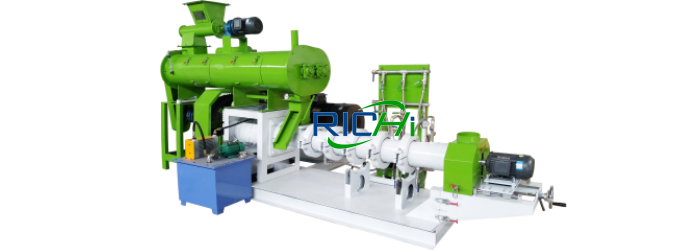
Méthode humide
Les matières premières doivent être préconditionnées avant d'entrer dans la chambre d'extrusion. Avec l'aide de la vapeur ou de l'eau pour augmenter la température, l'amidon est prégélatinisé, les protéines sont dénaturées et les matières premières sont ramollies, ce qui améliore la qualité de l'extrusion. Les particules d'aliments produites sont plus lisses et de meilleure qualité. Ce produit convient à la production à grande échelle dans les usines de transformation d'aliments pour animaux de taille moyenne et grande et dans les fermes aquacoles.
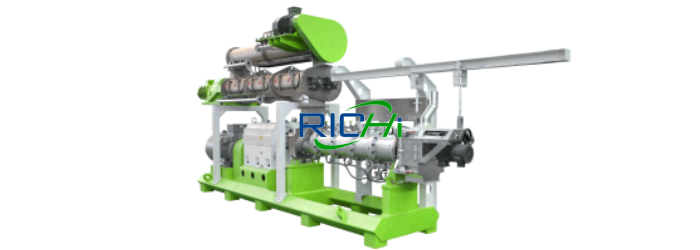
Les paramètres spécifiques des deux processus sont les suivants :
| Paramètres | Extrudeuses à sec (série DGP) | Machines d'extrusion par voie humide (série DSP) |
| Modèle | DGP-90B / DGP-120B / DGP-160B | DSP-90B / DSP-135B |
| Puissance du moteur principal (kW) | 37 / 55 / 90 | 37 / 75 |
| Puissance du moteur d'alimentation (kW) | 0.75 / 2.2 / 3 | 7.5 / 7.5 |
| Puissance du moteur de coupe (kW) | 0.55 / 1.1 / 1.5 | 1.1 / 1.5 |
| Puissance du moteur de conditionnement (kW) | - (Aucun pré-conditionnement n'est nécessaire) | 1.1 / 2.2 |
| Diamètre de la vis (mm) | 90 / 120 / 160 | 90 / 135 |
| Dimensions globales (mm) | 2100×1450×1350 / 2400×1950×1600 / 3100×2650×1800 | 2600×1600×1900 / 3750×1980×1950 |
| Rendement (tonne/heure) | 0.2-0.4 / 0.5-0.6 / 0.8-1.0 | 0.5-0.6 / 0.8-1.0 |

Extrudeuse flottante à double vis pour aliments pour poissons
L'extrudeuse à double vis pour aliments pour poissons est un équipement de granulation très efficace couramment utilisé pour traiter les aliments pour poissons. Son principe de fonctionnement consiste à extruder la matière de l'orifice d'alimentation à l'orifice de décharge par l'intermédiaire de deux vis rotatives, tout en chauffant et en pressurisant la matière pour la transformer en fluide. Cet équipement est largement utilisé dans l'aquaculture et d'autres industries en raison de sa grande efficacité, de sa flexibilité et de ses caractéristiques de production de haute qualité. Il est largement considéré et apprécié par diverses industries.
Machine d'extrusion d'aliments pour poissons flottants a une capacité élevée et une faible consommation d'énergie. La technologie de la vis entièrement malaxée est utilisée pour garantir l'uniformité des boulettes d'aliments et améliorer l'effet de durcissement des granulés grâce à un dispositif de tempérage efficace. L'équipement fonctionne de manière stable et sûre, présente un faible taux de défaillance et peut également produire une variété d'aliments pour animaux aquatiques.
Voici ses paramètres techniques détaillés :
| Modèle | SPHS75x2 | SPHS120*2 | SPHS150*2 | SPHS185*2 | |
| Puissance du moteur principal (kW) | 55 | 90 | 110 | 200 | 355 |
| Diamètre de la vis (mm) | 75 | 120 | 120 | 150 | 185 |
| Puissance de l'alimentation (kW) | 1.5 | 1.5 | 1.5 | 1.5 | 2.2 |
| Puissance du conditionneur (kW) | 7.5 | 11 | 11 | 11 | 11 |
| Spécification du conditionneur | DC400-244 | DC500-244 | DC500-244 | DC600-300 | DC600-300 |
| Puissance différentielle du conditionneur (kW) | 11 | 11 | 11 | 15 | 15 |
| Spécification du conditionneur différentiel | DC400*300-244 | DC500*400-300 | DC500*400-300 | DC600*500-300 | DC600*500-300 |
| Capacité de production (T/H) | 0.5-1.0 | 1.5-2.0 | 3.0-4.0 | 5.0-6.0 | 10-12 |

Customizable Floating Fish Feed Plant
In today’s aquaculture industry, flexibility and precision are key to meeting the diverse dietary needs of various fish species. A customizable floating fish feed mill plant provides the ability to produce specialized floating feed pellets tailored to different growth stages and fish types. Powered by advanced technology, this solution integrates the core functions of a modern usine de fabrication d'aliments pour poissons, enabling producers to adjust pellet size, formulation, and nutritional content with ease. Whether for tilapia, catfish, or marine species, such a plant empowers feed manufacturers and fish farmers to enhance feed efficiency, reduce waste, and maximize profitability.
RICHI MACHINE
How to use Floating Fish Feed Plant to produce fish feed pellets?
A complete floating fish feed plant usually consists of multiple continuous processes, each of which is closely linked and crucial. Starting from the initial crushing of raw materials, it gradually goes through mixing, extrusion, drying, spraying, cooling, screening, and finally packaging to produce high-quality fish feed pellets with stable quality, rich nutrition, and strong palatability. Each link in the ligne de production d'aliments pour poissons is not only related to the appearance of the feed, but also directly affects the feeding effect, growth rate, and feed conversion rate of fish. Therefore, understanding and mastering the key processes of each production stage is the prerequisite for achieving efficient production and quality assurance.
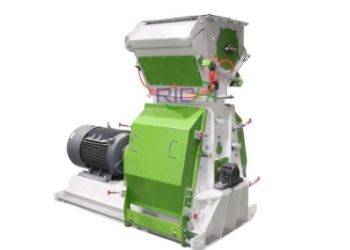
Material crushing → Feed grinder
In the production of fish feed, the first step is to crush the raw materials. Crushing large-pellet raw materials such as corn, soybean meal, and rice bran into fine powder suitable for mixing is helpful for subsequent mixing, conditioning and extrusion molding, and can also improve the digestibility and feed utilization rate of fish.
This production process uses the SFSP series water-drop feed grinder, equipped with a dust removal device, which can efficiently and evenly grind various feed raw materials into fine powder. The equipment has stable operation, low noise, and easy maintenance. It is an indispensable and important equipment in the fish feed production line.
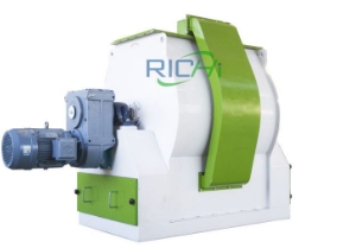
Material mixing → Feed mixer
The crushed raw materials need to be mixed evenly to ensure that each grain of feed contains various nutrients required by fish. The mixing process directly affects the quality of the feed and the growth effect of the fish, so it must be sufficient and uniform.
The horizontal mixer equipped in this process can quickly mix powdered or granular raw materials. The machine has high mixing accuracy, short mixing time, and low energy consumption. It is an ideal equipment for achieving nutritional balance and helps to improve the overall quality of fish feed.
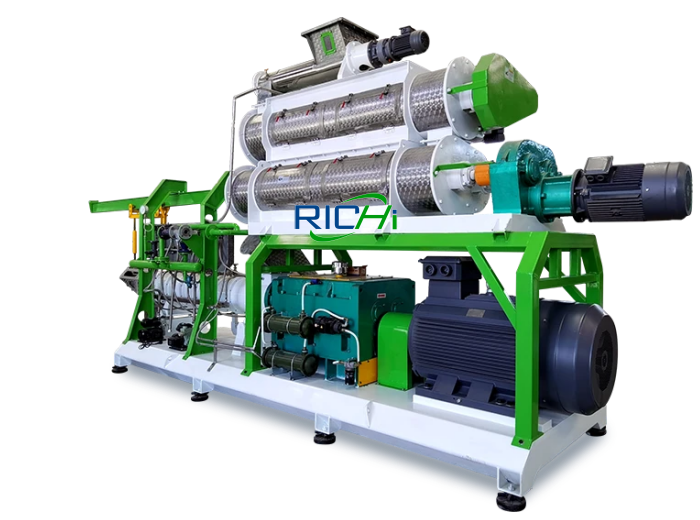
Pellet extrusion → Floating fish feed extruder machine
After conditioning, the mixed raw materials are sent to the pellet machine for extrusion and pelleting. Under high temperature and high pressure, the raw materials are cooked, extruded, and formed, and the puffing process is also completed. The pellet structure is more fluffy, which is conducive to fish feeding and digestion.
The floating fish feed extruder machine consists of three major systems: feeding, modulation, and puffing. After modulation, the raw materials enter the puffing chamber, are extruded and formed under high temperature and high pressure, and are cut into pellets by a cutter. Replacing the mold can produce pellets of different specifications, which is suitable for the production of a variety of aquatic animal feed.
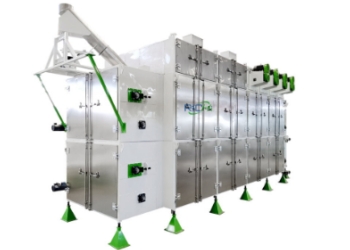
Pellet drying → Fish feed dryer
The freshly extruded feed pellets have a high moisture content and high temperature, and must be dried. The drying section can remove excess moisture from the pellets, extend the shelf life of the feed, and make the pellet structure more stable and less prone to deformation.
The fish feed dryer adopts a multi-layer belt drying structure, which is uniform and efficient. The equipment can adjust the temperature and time, and is suitable for different types of fish feed pellets to ensure that the pellets have a complete shape and stable moisture content.
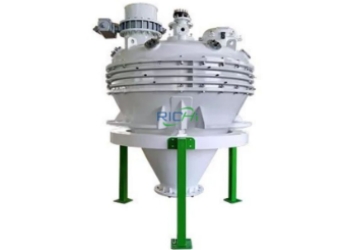
Spraying → Sprayer
Although the dried pellets are already nutritious, in order to improve palatability and increase energy content, they need to be sprayed with oil or attractants on the surface. This process can enhance the aroma of fish feed and increase the feeding enthusiasm of fish.
The RICHI sprayer uses high-speed rotating nozzle technology to evenly spray the atomized oil on the surface of the pellets. The equipment is equipped with an oil return filtration system to avoid waste, improve spraying accuracy, and ensure that each pellet has good flavor and attractant.
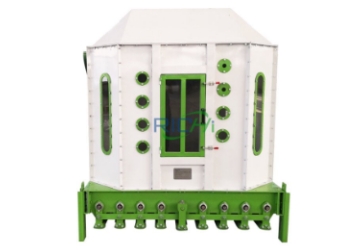
Pellet cooling → Pellet cooler
The feed pellets after spraying are still warm and soft, and must be cooled to reduce the temperature and harden the pellets, making them easier to store and package. Cooling can prevent the pellets from breaking in subsequent stages.
We use a countercurrent cooler for cooling. The equipment can quickly cool the pellets from above 80°C to room temperature, has a good cooling effect, and will not cause the pellets to rehydrate. It is a common and efficient cooling solution used in modern fish feed factories.
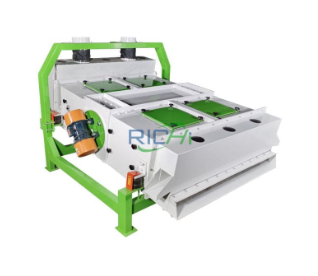
Finished product screening section → Vibration screening machine
The cooled pellets may contain some unqualified broken pellets or oversized pellets, so they need to be screened to ensure that the final product pellets are of uniform size and beautiful appearance, which is convenient for packaging and sales.
This section uses a vibration screening machine for screening. The equipment uses a vibration device to efficiently separate qualified pellets from unqualified pellets, and the screened materials can be refluxed and crushed for reprocessing, effectively improving the utilization rate of raw materials and reducing waste.
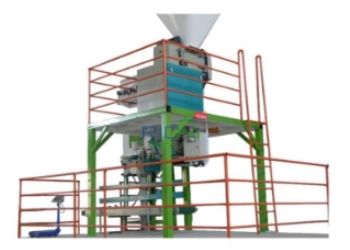
Fish feed pellet packaging → Automatic weighing and packaging machine
The screened finished pellets need to be packaged and preserved. Scientific packaging is not only convenient for transportation and sales, but also helps to maintain the quality of fish feed, prevent moisture and mildew, and extend the shelf life.
This section uses an automatic weighing and packaging machine, which can achieve fast weighing, automatic filling and bag sealing. The packaged products can be uniformly stacked and transported, which greatly improves the automation and production efficiency of the production line.
How to choose a high-quality Floating Fish Feed Plant?
When we are ready to buy a floating fish feed plant, we need to consider multiple factors to ensure that the selected equipment can meet production needs and provide high-quality feed. Here are some things to pay attention to when choosing, I hope it will be helpful to you.
Be clear about your own needs
First, you need to determine the purpose of producing fish feed. If the production scale is large, it is recommended to choose a wet fish feed extruder because it is efficient, has a large output, and produces high-quality pellets, which is suitable for you to sell fish feed or raise fish.
Choisir les bonnes matières premières
Different raw materials require different processing machines. You can choose the right machine according to your raw material source. For example, if your main raw materials are corn flour, rice bran, etc., you can consider using a dry or wet extruder.
Consider the type of farmed fish
Different types of fish have different eating habits and require feed pellets of different sizes and types. For example, tilapia likes to feed on the water surface, so it needs floating fish feed pellets with a suitable size of 2-3mm.
Attention à la qualité de l'équipement
The material and maintenance of the machine are important factors in judging the quality of the machine. High-quality fish feed machines are usually made of high-grade stainless steel to provide strength and maintain hygiene.
Choisir un fabricant professionnel
The professionalism of the manufacturer is crucial. It is extremely important to choose a brand with good after-sales service and reputation. RICHI Machinery can not only provide high-quality equipment, but also provide perfect after-sales service and technical support.
On-site inspection at the factory
If possible, it is recommended to go directly to the factory for an on-site inspection. This not only allows you to intuitively understand the production process and quality of the equipment, but also allows you to communicate face-to-face with engineers to ensure that the equipment can meet your specific needs.
MACHINES RICHI
Floating Fish Feed Plant Project Case
In the field of aquaculture, usine d'aliments pour poissons à petite échelle has diverse production needs and operation models. RICHI focuses on the engineering of fish feed production and processing plants. Its products have covered more than 150 countries and regions including Japan, Canada, Germany, Russia, the United Kingdom, Australia, Chile, etc., serving thousands of customers, and many cases have become local benchmark projects.

0.8T/H Floating Fish Feed Plant for sale Vietnam
- Pays : Vietnam
- Project capacity: 0.8T/H
- Application objects: Basa fish, tilapia, goldfish
- Main raw materials: corn flour, fish meal, rice bran, soybean meal, vitamin additives, etc.
- Core equipment: twin-screw extruder, mixer, crusher, sprayer, cooler, dryer, automatic packaging system
- pellet size: 1.2mm~4.0mm

Project features
The client is a fishery company in Ho Chi Minh City, focusing on inland fish farming, especially the feeding of export-grade Basa fish. The customer hopes to produce floating fish feed to replace imported products, reduce costs while ensuring nutrition and palatability. RICHI tailors a production line with a capacity of 1 ton/hour for it to enhance its competitiveness in the local market.

1T/H Floating Fish Feed Plant for sale India
- Pays : Inde
- Project capacity: 1T/H
- Application objects: carp, Indian catfish, grass carp
- Main raw materials: grains, defatted soybeans, rapeseed cake, fish meal, fish oil
- Core equipment: wet twin-screw extruder, conditioner, mixing system, hot air drying system, spraying system, automatic packaging system
- pellet specifications: 0.9mm~5mm
Project features
A large feed company in Andhra Pradesh, India, invested in the construction of a high-standard floating fish feed mill plant to meet the growing freshwater aquaculture market. Customers attach importance to the stability and floating time of feed pellets in water. The equipment provided by RICHI supports precise temperature control and moisture content adjustment, effectively improving the quality of pellets.

1.5T/H Floating Fish Feed Plant for sale Bangladesh
- Pays : Bangladesh
- Project capacity: 1.5T/H
- Application objects: Tilapia, dace, rohu, hybrid catfish
- Main raw materials: corn flour, rice bran, fish bone meal, oil, mineral premix
- Core equipment: dry extruder (single screw), horizontal mixer, pulverizer, countercurrent cooler, spraying system, packaging scale
- pellet size: 1.5mm~6.0mm
Project features
Bangladeshi customers originally used self-prepared powdered feed. In order to improve the problems of uneven growth of fish and feed waste, RICHI floating feed production line was introduced. The project has simple process, easy operation, energy saving and high efficiency, which is very suitable for the centralized procurement model of local small and medium-sized farmers.

2T/H Floating Fish Feed Plant for sale Indonesia
- Pays : Indonésie
- Project capacity: 2T/H
- Application objects: sea bass, golden eye perch, mandarin fish, ornamental fish
- Main raw materials: high-protein fish meal, shrimp shell meal, soybean meal, husk, wheat bran, etc.
- Core equipment: twin-screw extruder system, high-speed mixer, belt dryer, grease spraying system, cooling system, high-automatic packaging module
- pellet specifications: 0.9mm~3.5mm
Project features
Indonesian customers focus on exporting high-end ornamental fish and economic fish species, with refined feed requirements and complex formulas. RICHI provides them with a highly automated control system to achieve rapid switching of multiple formulas and precise control of pellet diameter. The project also meets local environmental protection and energy-saving standards, successfully helping customers expand into the international market.

Questions fréquemment posées
What are the main characteristics of floating fish feed pellets?
The main characteristic of floating fish feed pellets is floatability. The water stability of fish feed pellets refers to the performance of keeping its ingredients insoluble and indispersible after the fish feed is soaked in water for a certain period of time. Floatability mainly depends on the formula and pellets (especially starch content), binder/oil in the formula, pellet size, conditioning and gelatinization in the pre-treater, thermal shear and moisture during extrusion, buoyancy (combination of surface area), bulk density and water stability.
Can the capacity of the equipment be adjusted according to demand?
Of course. When designing our feed production line, we fully consider the scalability of production capacity. Customers can easily increase production capacity by adding equipment modules and upgrading key components according to actual production needs. For example, the number of batching scales can be increased, the capacity of the mixer can be expanded, and the production efficiency of the fish feed pelletizer can be improved to meet the growing production needs of the enterprise. At the same time, our technical team will provide customers with professional capacity upgrade solutions and technical support to ensure that the upgrade process goes smoothly.
Can you provide feed formula support?
We not only provide advanced floating fish pellets factory equipment, but also provide customers with professional feed formula support. We have a senior animal nutrition technical team with rich industry experience and expertise, who can tailor scientific and reasonable feed formulas for customers according to different animal species, growth stages, breeding environments and other factors. At the same time, we will continue to optimize and update feed formulas according to market demand and industry development trends to help customers improve the competitiveness of feed products.
Is the equipment difficult to maintain?
Our floating fish feed plant is designed with easy maintenance in mind, and key components are modularly designed for easy disassembly and replacement. At the same time, detailed operating manuals and maintenance guides are randomly provided to provide customers with comprehensive maintenance guidance. In addition, we have established a complete after-sales service system, regularly visit customers, and provide technical support and maintenance advice to customers. If the equipment fails, our after-sales team will respond in the shortest time, provide remote guidance or on-site repair services, ensure the normal operation of the equipment, and reduce downtime.
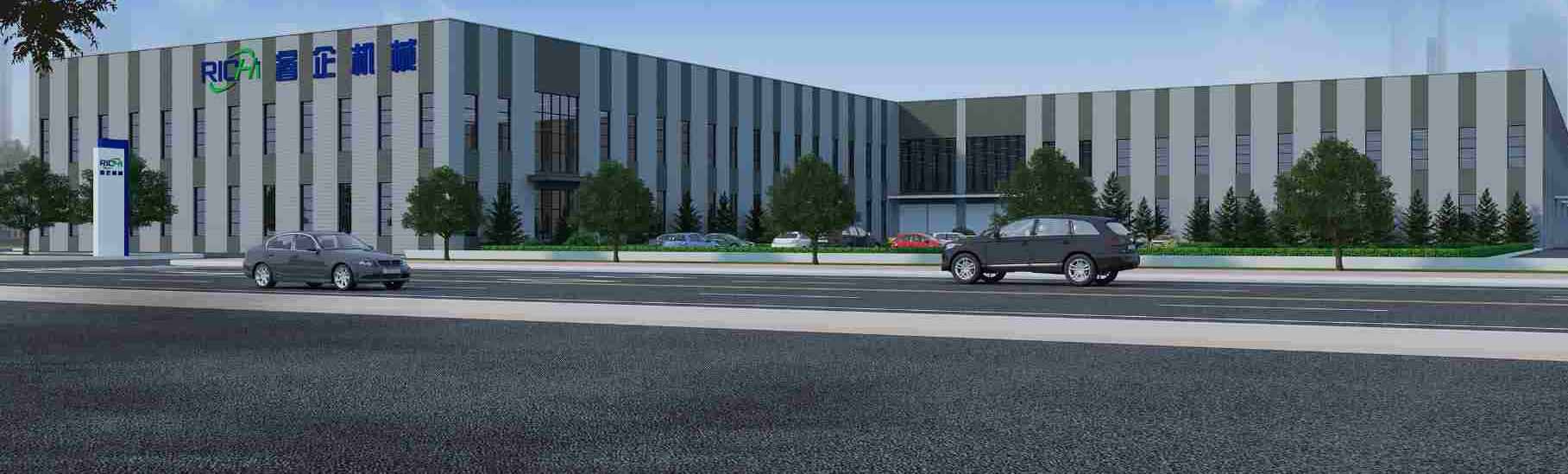
Pourquoi choisir RICHI Machinery
Amélioration de la chaîne industrielle
En tant qu'entreprise locale, Machines RICHI a mis en place son propre système de R&D, de production et de vente. Plus de 30 modèles d'équipements couvrent divers domaines tels que la granulation, le broyage et le séchage. L'entreprise a obtenu les certifications internationales ISO et CE. Ses activités couvrent plus de 100 pays et elle compte au total 2 000 clients. Elle offre une double garantie de qualité et de capacité de livraison.
Un service complet et attentionné
L'équipe de professionnels mène des recherches approfondies sur les caractéristiques des matières premières, les objectifs de capacité de production et les conditions du site, de la conception de la solution à la livraison de l'équipement et à la personnalisation, s'adapte aux besoins des petites et moyennes fermes d'élevage aux grandes usines, refuse de “surconfigurer” et fournit des solutions de “précision” rentables.
Qualité garantie
L'application stricte de la norme ISO9001, la mise en œuvre de la responsabilité en matière de qualité et de la gestion de la sécurité de la production, la traçabilité complète du processus, de la conception à la fabrication, par le biais du contrôle de la qualité QC, du contrôle statistique du processus SPC et d'autres moyens, permettent d'éliminer les dangers cachés liés à la qualité et de garantir la durabilité et la stabilité de l'équipement.
Livraison fiable et production rapide
Suivant le processus d'inspection quadruple “vérification de la commande → inspection de la qualité en usine → réinspection de la mise en boîte → conditionnement scientifique”, les ingénieurs guident l'infrastructure, l'installation et la mise en service sur le site jusqu'à ce que la ligne de production réponde aux normes et soit acceptée, et utilisent des processus normalisés pour garantir la mise en œuvre efficace du projet et raccourcir le cycle de production.
Système complet de garantie après-vente
L'équipe technique de près de 100 personnes couvre l'ensemble du processus de consultation, de conception, d'installation et de maintenance, fournit des solutions techniques personnalisées et une formation au fonctionnement de l'usine d'aliments pour poissons à petite échelle, examine régulièrement l'état de fonctionnement de l'équipement après la livraison, répond rapidement aux besoins après-vente et aide la ligne de production à fonctionner de manière stable et à long terme. Vous pouvez nous trouver sur YouTube.
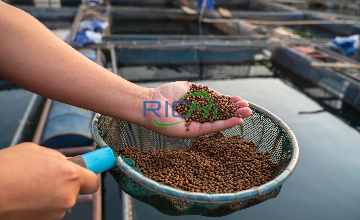
Cinq avantages fondamentaux de RICHI Machinery
Amélioration de la chaîne industrielle
Un service complet et attentionné
Qualité garantie
Livraison fiable et production rapide
Système complet de garantie après-vente