
Impianto di produzione di mangimi per pesci
The fish feed manufacturing plant is a complete system that processes various raw materials into high-quality fish feed. It includes multiple machines and manufacturing steps, ensuring efficient and energy-saving production that supports the development of modern aquaculture and aligns with green energy goals.
RICHI Machinery specializes in complete fish feed production solutions, offering customized equipment and processes to meet different pellet size and nutrition needs. Our feed lines play a key role in improving fish growth, promoting sustainable aquaculture, and advancing industry development.
What is a Fish Feed Manufacturing Plant?
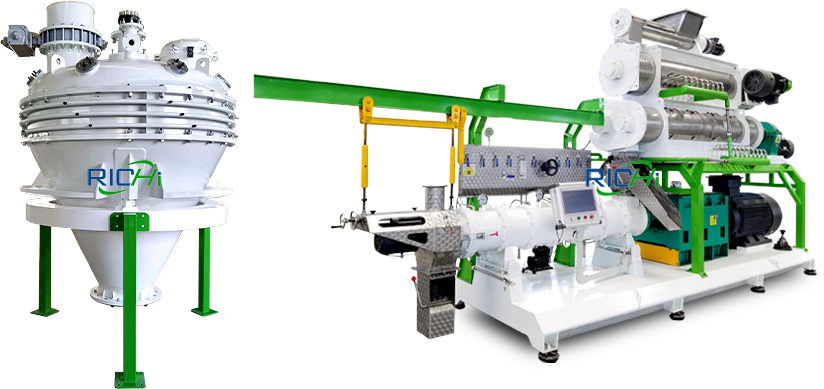
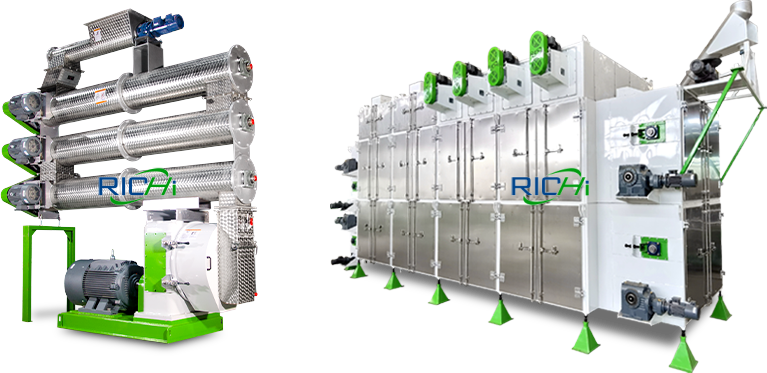
Il linea di produzione di mangimi per pesci is a modern production equipment used to produce various fish feed, pet feed and shrimp feed. The production line can efficiently produce high-energy fish feed. It has intelligent and highly configured production equipment and manufacturing processes, consisting of a receiving system, crushing system, mixing system, granulation system, drying system, cooling system, screening system, and automatic packaging system. This production line is conducive to precisely controlling the size and quality of fish feed pellets, better controlling maturity, improving maturity, and thus improving the digestion and absorption rate of aquatic animals.
What is the fish feed manufacturing plant used for?
- Richi Machinery -
The fish feed production plant is widely used in aquaculture. The production line can be used in freshwater fish, seawater fish and shrimp breeding fields, as well as the production of floating fish feed, sinking fish feed, and shrimp feed. The following briefly lists the common application areas:
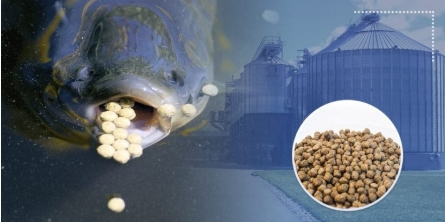
Floating Fish Feed
It is mainly suitable for some fish that move in the middle and upper layers, such as common grass carp and bream. These fish usually feed in the upper and middle layers of the water body, and floating feed can facilitate them to find and ingest food in time. Moreover, farmers can visually see the feeding status of the fish, reasonably adjust the feeding amount, and avoid feed waste.
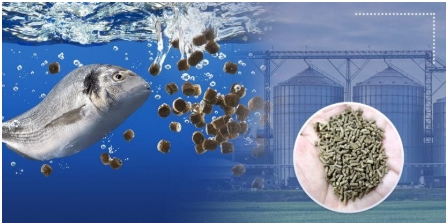
Sinking Fish Feed
Suitable for fish living at the bottom of the water body, such as carp, black carp, etc. They are used to looking for food at the bottom of the water. Sinking feed can meet their feeding habits, ensure that the feed can reach their activity area, ensure nutrient intake, and also reduce the loss of feed in the upper and middle layers of the water body.
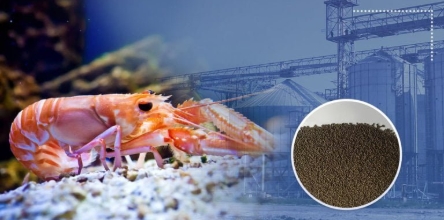
Shrimp Feed
Suitable for a variety of shrimps, such as white shrimp, crayfish, etc. Shrimp feeding methods are different from fish. Shrimp feed will specifically add substances needed for shrimp growth in terms of nutrients, such as astaxanthin, etc., to meet the physiological needs of shrimp, help shrimp grow healthily, shed shells, etc., and improve breeding efficiency.
MACCHINARI RICHI
Vantaggi dei pellet per pesci
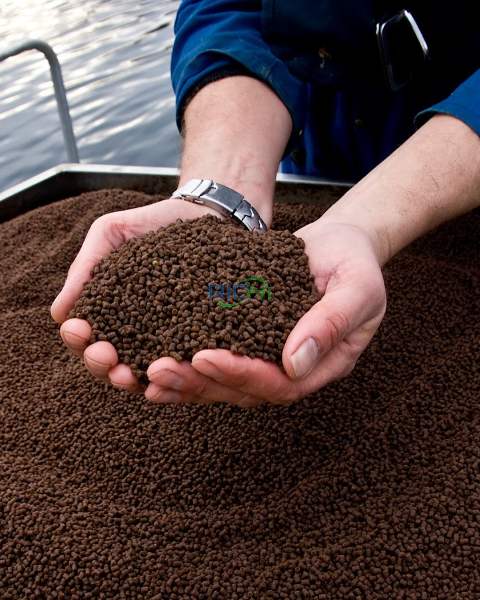
Fish feed pellets processed through the fish feed manufacturing unit have a variety of benefits. For example, fish feed pellets are nutritious, easy to digest and absorb, and can promote the healthy and high-quality growth of fish. Let’s take a look at what benefits it has.

Fish feed pellets are high in energy and rich in protein, fat, and carbohydrates. This balanced nutrition improves fish meat quality, strengthens immunity, and promotes healthy, efficient growth. The pellets are also fully cooked under high temperature and pressure, making nutrients easier to digest and absorb while reducing feed waste.

Compared to other feed types, pellets have a compact and uniform shape, allowing for efficient storage and transportation. When kept in a cool, dry, and covered space, they can be stored safely for 2 to 3 months, significantly reducing feed spoilage and loss.

The high-temperature, high-pressure manufacturing process helps eliminate harmful bacteria and pathogens present in raw materials, ensuring safer and more hygienic feed for aquatic animals.

Fish feed pellets can be made from a wide variety of raw materials and customized in different sizes and densities to suit various species and growth stages. Their wide application, ease of production, and profitability make them highly attractive in both local and international aquaculture markets.
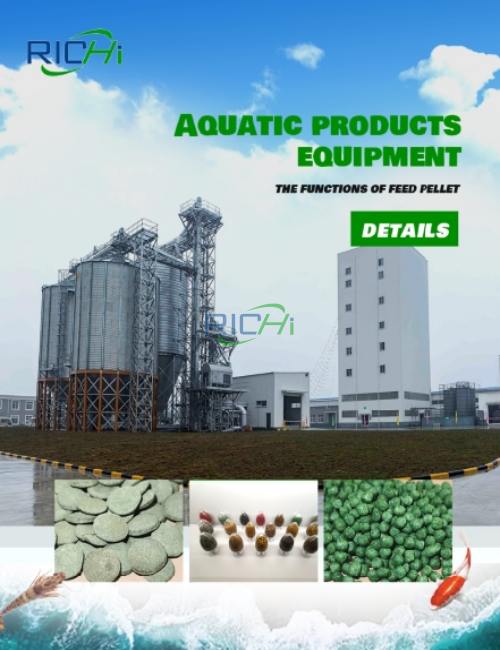
Characteristics of fish feed manufacturing plant
The main function of the fish feed production plant equipment is to process various raw materials into feed suitable for fish feed through mixing, crushing, granulation and other processes.
(1) The production line adopts fully automated control and variable frequency speed control system. The production speed can be adjusted according to the user’s own production needs. It can produce feed continuously and stably, greatly improving production efficiency.
(2) RICHI Machinery will provide a complete set of fish feed pellet production procedures, adopting advanced technology, and the production capacity of the production line can range from 1 to 60 tons/hour according to customer needs. The design is designed with energy saving in mind and optimized energy use. It has the advantages of high production capacity, low noise, and low energy consumption, which helps to reduce operating costs.
(3) Raw materials are widely applicable, and can process a variety of feed raw materials to produce various animal feed pellets, such as shrimp feed pellets, crab feed pellets, fish feed pellets, etc. Processed fish feed pellets have high hardness, smooth surface and internal maturation, which can improve the digestion and absorption of nutrients, achieve optimal digestion and reduce waste.
(4) Fish feed mill plant has high production efficiency, high power strength, and a long service life. In terms of design, we pay attention to the hygiene of raw materials and the sealing nature of the processing process to ensure that the feed is not contaminated and ensure the health of fish.
MACCHINARI RICHI
Introduction to the main equipment of fish feed manufacturing plant
Macchina estrusore di mangimi per pesci galleggianti is one of the core equipment of the fish feed manufacturing unit. It can produce high-quality feed pellets for a variety of types of aquatic animals, such as fish feed pellets, catfish feed pellets, crab feed pellets, shrimp feed pellets, etc., and also includes various floating, sinking and slow-sinking aquatic feeds to meet the feeding needs of different fish.
There are many types of fish feed pellet making machines. At present, twin-screw fish feed extruder machine is the most widely used, most convenient to use, and has self-cleaning function, suitable for extrusion processing of various materials. Therefore, the most common floating fish feed extruder machines can be divided into single-screw floating fish feed extruder machines and twin-screw floating fish feed extruder machines according to the number of screws. The following is its detailed introduction:
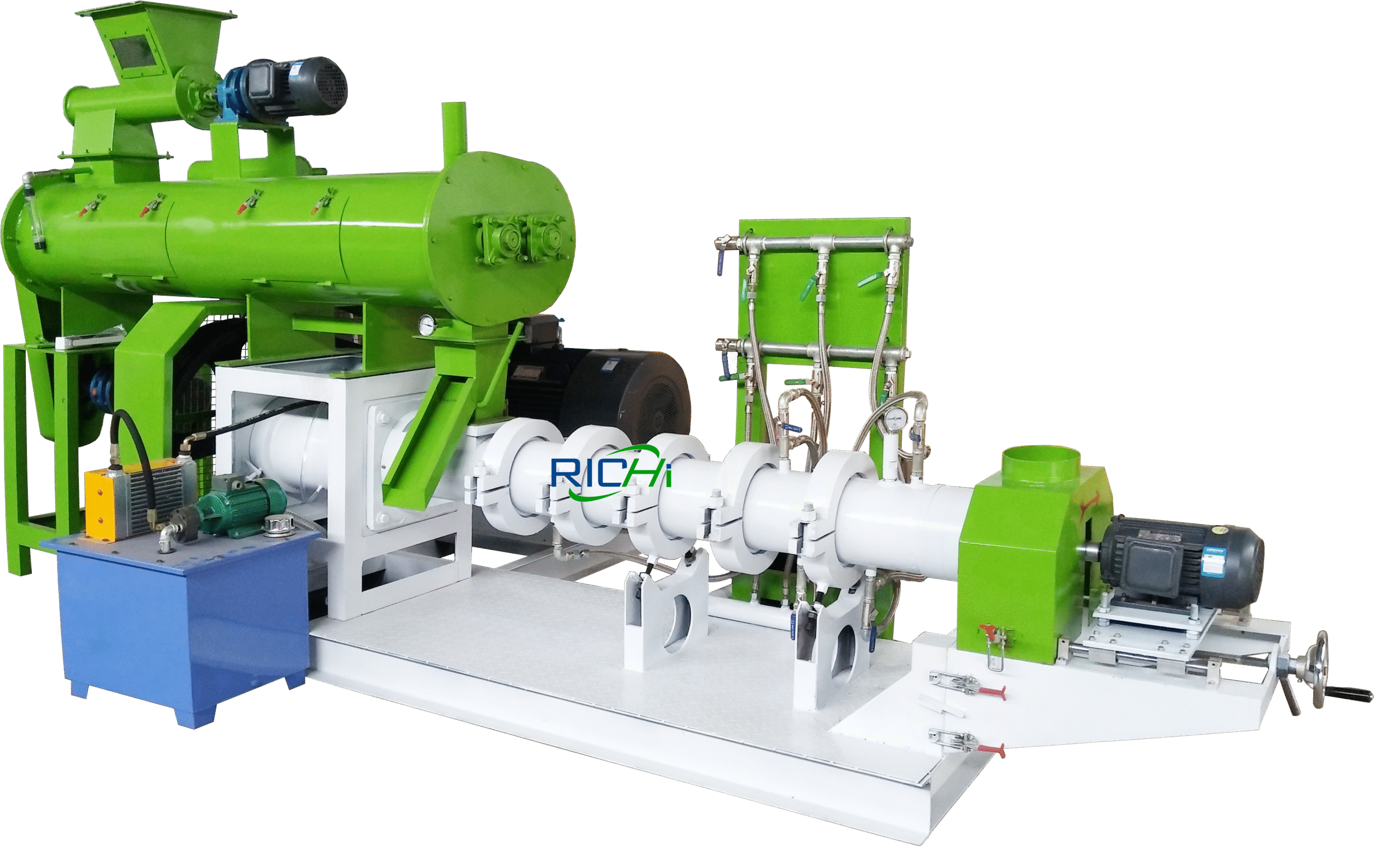
Macchina estrusore di mangimi per pesci galleggianti a vite singola
La macchina estrusore monovite è un dispositivo appositamente utilizzato per la produzione di pellet galleggianti per pesci. Estrude e soffia le materie prime ad alta temperatura e ad alta pressione attraverso una vite rotante, in modo che i pellet di mangime possano galleggiare sulla superficie dell'acqua e facilitare l'alimentazione dei pesci. La sua struttura è relativamente semplice, facile da mantenere, relativamente a basso costo, e può essere ampiamente utilizzata negli allevamenti di acquacoltura di piccole e medie dimensioni e negli allevamenti di mangimi per pesci, adatti alla produzione di comuni mangimi galleggianti per pesci. Si divide in due processi: metodo a secco e metodo a umido:
Metodo a secco: Le materie prime devono essere addizionate di acqua, ma non è necessario alcun condizionamento prima di entrare nel contenitore dell'estrusore. Il calore dell'estrusore è completamente generato dall'estrusione meccanica e non è necessario un sistema a vapore. L'apparecchiatura è relativamente semplice, il funzionamento e la manutenzione sono relativamente convenienti, il costo è basso, ma la produzione è relativamente limitata, adatta a utenti di piccole e medie dimensioni.
Metodo a umido: Le materie prime devono essere pre-condizionate prima di entrare nel contenitore dell'estrusore. Con l'aiuto di vapore o acqua per aumentare la temperatura, l'amido viene pregelatinizzato, le proteine denaturate e le materie prime ammorbidite, il che migliora la qualità dell'estrusione. Le particelle di alimento prodotte sono più lisce e di migliore qualità. È adatto alla produzione su larga scala di impianti di trasformazione di mangimi di medie e grandi dimensioni e di allevamenti di acquacoltura.
Di seguito sono riportati i parametri specifici dei due processi:
| Parametri | Estrusori a secco (serie DGP) | Estrusori a umido (serie DSP) |
| Modello | DGP-90B / DGP-120B / DGP-160B | DSP-90B / DSP-135B |
| Potenza del motore principale (kW) | 37 / 55 / 90 | 37 / 75 |
| Potenza del motore di alimentazione (kW) | 0.75 / 2.2 / 3 | 7.5 / 7.5 |
| Potenza del motore di taglio (kW) | 0.55 / 1.1 / 1.5 | 1.1 / 1.5 |
| Potenza del motore di condizionamento (kW) | - (Non è necessario il precondizionamento) | 1.1 / 2.2 |
| Diametro della vite (mm) | 90 / 120 / 160 | 90 / 135 |
| Dimensioni complessive (mm) | 2100×1450×1350 / 2400×1950×1600 / 3100×2650×1800 | 2600×1600×1900 / 3750×1980×1950 |
| Produzione (tonnellate/ora) | 0.2-0.4 / 0.5-0.6 / 0.8-1.0 | 0.5-0.6 / 0.8-1.0 |

Macchina estrusore di mangimi per pesci galleggianti a doppia vite
La macchina estrusore a doppia vite per mangimi per pesci è un'apparecchiatura di granulazione altamente efficiente, comunemente utilizzata per la lavorazione dei mangimi per pesci. Il suo principio di funzionamento consiste nell'estrudere il materiale dalla porta di alimentazione alla porta di scarico attraverso due viti rotanti e, allo stesso tempo, riscaldare e pressurizzare il materiale per trasformarlo in fluido. Questa apparecchiatura è ampiamente utilizzata nell'acquacoltura e in altri settori grazie alla sua elevata efficienza, flessibilità e caratteristiche di produzione di alta qualità, ed è ampiamente interessata e apprezzata da vari settori.
Floating fish feed extruder has high capacity and low energy consumption. Fully kneaded screw technology is used to ensure uniform feed pellets and improve the granular curing effect with an efficient tempering device. The equipment operates stably and safely, has a low failure rate, and can also produce a variety of aquatic feed.
Di seguito sono riportati i parametri tecnici dettagliati:
| Modello | Production Capacity (tons/hour) | Main Motor Power (KW) | Diametro della vite (mm) | Matching Differential Speed Regulator Model Power |
| RCPH120*2 | 1 – 2 | 75 | 120 | DDC40×30 – 244 11 kW |
| RCPH120*2 | 3 – 4 | 90 | 120 | DDC40×30 – 244 11 kW |
| RCPH150*2 | 4 – 5 | 160 | 150 | DDC50×30 – 244 11 kW |
| RCPH150*2 | 6 – 7 | 200 | 150 | DDC50×30 – 244 11 kW |
| RCPH185*2 | 8 - 10 | 315 | 185 | DDC50×30 – 300 15 kW |
| RCPH185*2 | 10 – 12 | 355 | 185 | DDC50×30 – 300 15 kW |
Altre attrezzature ausiliarie of fish feed manufacturing plant
In addition to the main production machines, a complete fish feed manufacturing plant also relies on a variety of auxiliary equipment to ensure smooth, efficient, and high-quality production. These supporting machines play vital roles in material preparation, processing, cooling, and final packaging. Below, we briefly introduce several commonly used auxiliary devices.
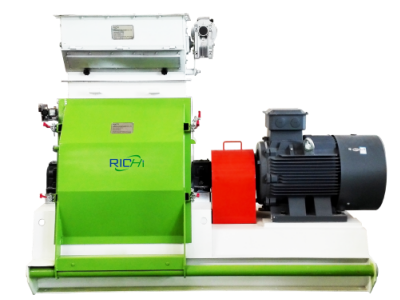
Feed crusher
Feed crusher is suitable for crushing various feed raw materials, such as corn, wheat, beans, crushed cakes, etc. Widely applicable to large and medium-sized livestock and poultry and aquatic feed enterprises. In addition, the RICHI SFSP series water drop hammer crusher adopts an advanced water drop crushing chamber design, a reasonable secondary crushing structure, and can efficiently crush aquatic feed raw materials.
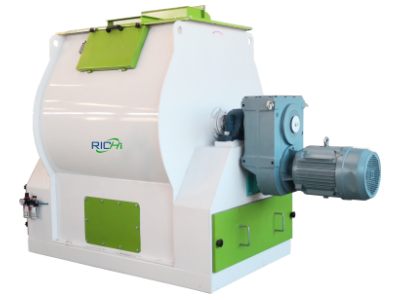
Miscelatore di alimentazione
The feed mixer is used to evenly mix the crushed raw materials to ensure uniform proportions of each component. Moreover, the RICHI mixer adopts a novel rotor structure, with a mixing uniformity of up to 97.7%, and a short mixing time.
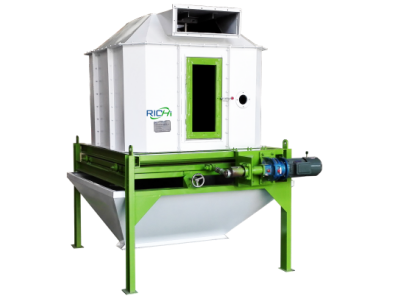
Feed Cooler
The feed cooler mainly cools the newly extruded hot pellets to avoid cracking of the pellets due to quenching. In this way, it can effectively protect the structure of feed pellets and improve the quality of feed.
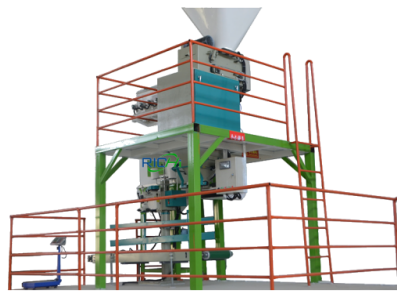
Feed packaging machine
The feed packaging machine automatically completes the packaging of feed pellets, which is highly automated and adapts to the needs of large-scale production, and has attracted the attention and love of many fish feed factories.
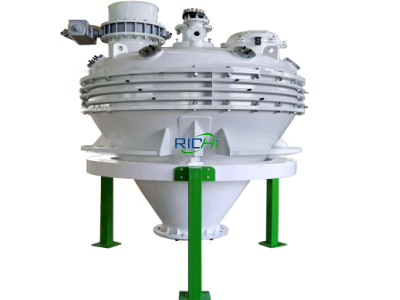
Vacuum spraying
Vacuum spraying equipment is mainly used to spray nutrients such as oil, enzyme preparations, etc. on the surface of fish feed particles. The equipment adopts a sealed design and operates under a negative pressure environment, so that the spraying liquid can penetrate into the particles, spray more evenly, and adsorb more firmly. Compared with traditional spraying methods, vacuum spraying can greatly improve the nutrient preservation rate and particle quality, and is an important part of fish feed production.

Feed dryer machine
Fish feed dryer machine is an indispensable and important equipment in the fish feed production line. It is mainly used to quickly and evenly dry the high-temperature and moist feed pellets that have just been extruded. Through drying, the moisture content of the pellets can be effectively reduced, the storage stability and transportation adaptability of the pellets can be improved, and mold and deterioration can be prevented.
Production technology of fish feed manufacturing plant
The main function of the fish feed manufacturing unit equipment is to process various raw materials into feed suitable for fish feed through mixing, crushing, granulation and other processes. Next, I will take the 5T/H floating fish feed production line as an example to briefly introduce how to use the production process of this production line to make fish feed pellets.
Fish feed manufacturing plant process flow: receiving part → crushing part → ingredients and mixing part → micro-pulverizing part → mixing part → extruder and drying part → packaging part
Equipment configuration of this feed production line: Feed crusher → bucket elevator → feed mixer → ultra-micro crusher → floating fish feed machine → dryer → sprayer → countercurrent cooler → screening → packaging machine
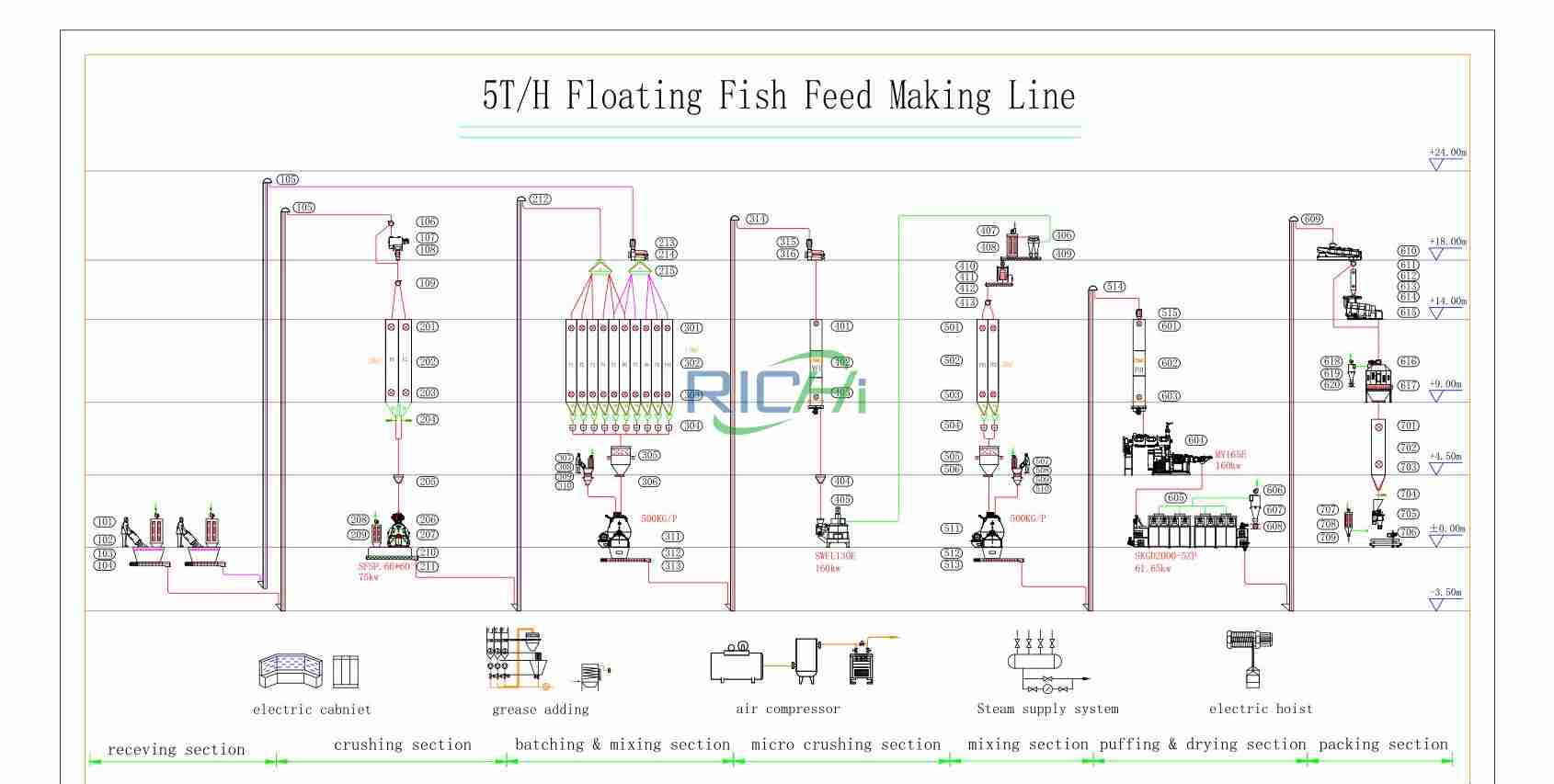
Di seguito viene illustrato il processo di produzione dettagliato:
01 Raw material storage and conveying system
Including raw material silos, conveyor belts, etc., used to store and convey various raw materials.
02 Ricezione e pulizia delle materie prime
The raw materials mainly include two forms: powder and pellets. The powder can directly enter the dosing silo, and the pellets need to be coarsely crushed. The raw materials need to be removed through cleaning equipment to ensure the quality of the raw materials.
03 First ingredients and mixing
The first ingredients are mainly the preparation of materials with relatively large amounts in the formula, and are completed by electronic ingredients scales. After batching, enter the first mixing, reduce the range of variation in material pellet size and improve the working condition of the crusher.
04 Second crushing
Due to the poor digestibility of aquatic animals, the feed crushing pellet size is required to be very fine. After the second crushing process is completed, enter the rotary grading screen to remove the crude fibers from the feed.
05 Second mixing
After passing through the second batching, each raw material enters the second mixer, and adds trace additives and liquids.
06 Conditioning and extruder
The material is steamed and cooked under high temperature, high humidity and high pressure, and changes in physical and chemical properties occur, forming puffed feed. Puffed feed has the advantages of high gelatinization of starch, easy to digest protein, and good palatability.
07 Sistema di raffreddamento, asciugatura e vagliatura
Used to cool, screen and dry the granulated feed to prevent the feed from deteriorating. The feed is screened to remove unqualified pellets and package them for easy storage and transportation.
08 Classificazione e confezionamento dei prodotti
The cooled material is lifted, broken and then entered into a grading screen for grading. The final product directly enters the finished product warehouse and then weighs and packages.

The following are related case projects of RICHI Machinery. I hope it will be helpful to you. If you are interested in our equipment, please leave a message and we will provide you with the best fish feed production line solution.
Related case projects of fish feed manufacturing plant
In the field of aquaculture, fish feed factories of different sizes have diverse production needs and operation models. RICHI focuses on fish feed production plant engineering, offering not only advanced equipment but also competitive solutions tailored to local markets. With a strong reputation for quality and reasonable prezzo della macchina galleggiante per l'alimentazione dei pesci, RICHI’s products have been exported to more than 150 countries and regions including Japan, Canada, Germany, Russia, the United Kingdom, Australia, and Chile, serving thousands of customers. Many of these projects have become benchmark cases in their respective regions.

1-2T/H fish feed processing line in Russia
- Paese: Russia
- Date: July 28, 2021
- Production capacity: 1-2T/H
- Main equipment of this line: fish feed hammer mill, fish feed mixer, fish feed extruder machine, dryer, packaging machine and other auxiliary equipment
- Main raw materials: soybean meal, corn, rice bran, fish meal, etc.
- Installation period: 10-15 days
- Number of auxiliary installation engineers: 8-10 people
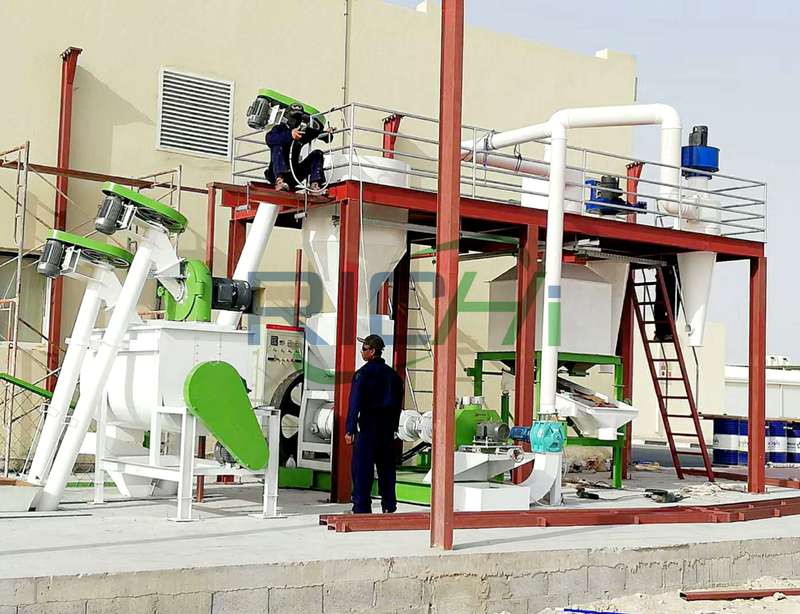
1-1.5T/H floating fish feed manufacturing plant and 2TPH fish feed pellet line
- Paese: Uzbekistan
- Production capacity: 1-1.5T/H
- The bank’s main equipment: high-quality fish feed hammer mill, feed mixer, fish feed extruder machine, oven, spraying equipment, packaging machine and other auxiliary equipment
- Main raw materials: corn, wheat, soybean meal, fish meal, black meal and other grains.
- Installation period: 5-10 days
- Number of auxiliary installation engineers: 5-10 people
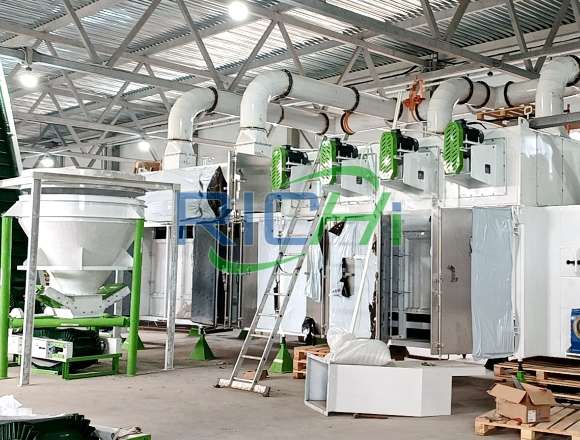
2T/H fish feed manufacturing plant for sale in Chile
- Country: Chile
- Date: September 17, 2024
- Production capacity: 5T/H
- Main equipment of this line: high-quality fish feed hammer mill, feed mixer, fish feed extruder machine, dryer, spraying equipment, packaging machine and other auxiliary equipment
- Main raw materials: corn, soybean meal, fish meal, wheat flour and other conventional feed grains
- Installation period: 12-15 days
- Number of auxiliary installation engineers: 10-15 people
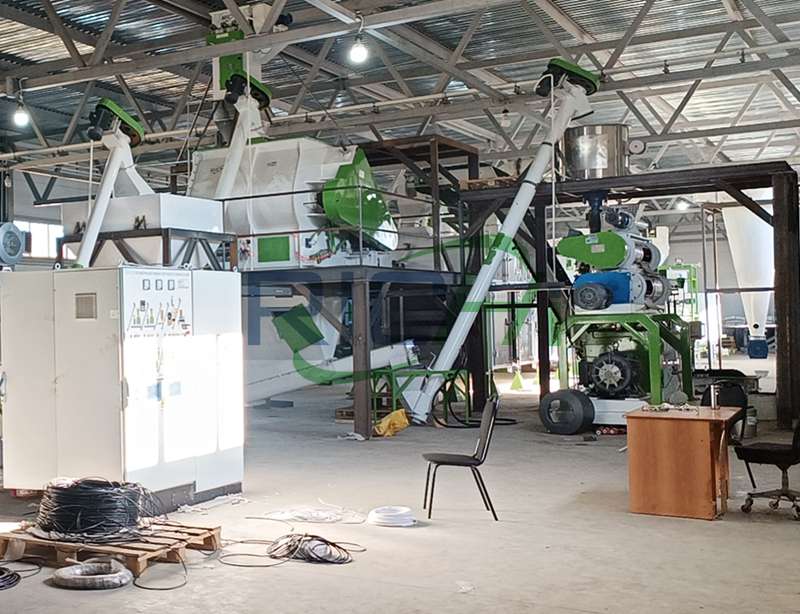
Bangladesh 5T/H floating fish feed manufacturing plant
- Paese: Bangladesh
- Production capacity: 5T/H
- The main equipment of this line: fish feed hammer mill, high-efficiency feed mixer, floating fish feed pellet extruder machine, dryer, sprayer and other auxiliary equipment.
- Main raw materials: corn, soybean meal, fish meal, black powder and other grains
- Installation period: 10-15 days
- Number of auxiliary installation engineers: 10-15 people




How to buy a satisfactory fish feed manufacturing plant?
Quando ci prepariamo per un acquisto, è necessaria una combinazione di fattori per garantire che l'apparecchiatura selezionata soddisfi le esigenze di produzione e fornisca mangimi di alta qualità. Ecco alcuni elementi da tenere presenti al momento della scelta, che spero possano aiutarvi.
Chiarire le proprie esigenze
Innanzitutto, è necessario determinare lo scopo della produzione di mangimi per pesci. Si tratta di soddisfare le esigenze del proprio allevamento ittico? Se la scala di produzione è grande, si consiglia di scegliere una macchina estrusore per mangimi per pesci bagnati, perché ha un'alta efficienza, una grande produzione e produce pellet di alta qualità, ideali. Allo stesso tempo, la comprensione del prezzo della macchina per la produzione di pellet per pesci vi aiuterà a prendere una decisione conveniente in base al vostro budget e ai vostri obiettivi di produzione.
Scegliere le materie prime giuste
Materie prime diverse richiedono macchine di lavorazione diverse. È possibile scegliere la macchina giusta in base alla provenienza delle materie prime. Ad esempio, se le vostre materie prime principali sono la farina di mais, la crusca di riso e così via, potete considerare l'utilizzo di un estrusore a secco o a umido.
Considerare i tipi di pesce d'allevamento
I diversi tipi di pesce hanno abitudini alimentari diverse e richiedono pellet di dimensioni e tipi diversi. Ad esempio, le tilapie preferiscono nutrirsi sulla superficie dell'acqua, quindi hanno bisogno di mangimi galleggianti, di dimensioni adeguate di 2-3 mm.
Attenzione alla qualità dell'attrezzatura
Il materiale e la manutenzione della macchina sono fattori importanti per giudicare la qualità della macchina. Le macchine per l'alimentazione dei pesci di qualità sono solitamente realizzate in acciaio inossidabile di alta qualità per garantire la resistenza e l'igiene.
Scegliere un produttore professionale
La professionalità del produttore è fondamentale. È estremamente importante scegliere un marchio con un buon servizio post-vendita e una buona reputazione. RICHI Machinery non solo è in grado di fornire attrezzature di alta qualità, ma anche di fornire un servizio completo di assistenza post-vendita e supporto tecnico.
Andare in fabbrica per l'ispezione sul campo
Se possibile, si consiglia di recarsi direttamente in fabbrica per un'ispezione sul campo. Questo non solo permette di comprendere intuitivamente il processo di produzione e la qualità dell'apparecchiatura, ma consente anche di comunicare faccia a faccia con gli ingegneri per garantire che l'apparecchiatura possa soddisfare le vostre esigenze specifiche.
FAQs

What raw materials can be used in the fish feed manufacturing plant?
The raw material selection of fish feed manufacturing units is very important. It will affect the nutritional value of the feed and the growth effect of fish. So which raw materials can we choose as raw materials for making fish feed pellets?
(1) Choose some protein raw materials, such as fish meal and soybean meal. They are rich in protein, are one of the important nutrients in fish feed, and are relatively low in price. They are common protein supplements in fish feed.
(2) Some staple food raw materials rich in energy are also extremely important. These energy raw materials mainly provide the energy required for fish growth. Corn is rich in starch and is the most commonly used energy source in fish feed; wheat provides carbohydrates to help fish metabolism; wheat bran is rich in fiber, which helps digestion; rice bran provides energy and fiber, which helps fish grow strongly.
(3) Fats and oils are important sources of fish energy, including fish oil, which is rich in unsaturated fatty acids and helps fish growth and health.
(4) Minerals are crucial to the health and growth of fish, such as calcium, phosphorus, iron, zinc, etc., which help fish bone development and metabolism.
Nutritional characteristics of fish feed pellets
(1)The effective energy value of fish feed pellets is high, so it is easy to prepare high-quality fish feed using various materials as raw materials.
(2)Fish feed pellets are rich in vitamins, among which vitamin B12 and vitamin B2 are very high. It also contains fat-soluble vitamins such as vitamins A, D, and vitamin E.
(3)Fish feed pellets are a good source of minerals, with high calcium and phosphorus content and appropriate proportions. In addition, the selenium content of fish meal is also very high.
What is the application prospect of fish feed production plant equipment in modern aquaculture?
With the continuous advancement of science and technology, fish feed manufacturing unit equipment is becoming more and more widely used in aquaculture. By adopting advanced production line equipment, farmers can realize the automation and intelligence of feed production, improve feed quality and production efficiency, and thus increase breeding benefits. At the same time, production line equipment can also produce feed of different specifications and nutritional components according to different stages of fish growth and nutritional needs, providing strong guarantees for the healthy growth of fish.
As an important part of the aquaculture industry, fish feed manufacturing unit equipment is of great significance to improving feed quality and production efficiency and promoting the healthy development of the aquaculture industry. With the continuous advancement of technology and the continuous expansion of application fields, feed production line equipment will play a more important role in the future.
Is the installation and debugging of the equipment complicated?
We have a professional technical team to provide customers with a comprehensive installation and debugging service.Before the equipment is shipped, technicians will conduct comprehensive pre-installation and commissioning of the equipment to ensure that the equipment is not damaged during transportation and can be installed and in place quickly after arriving at the customer’s site.After arriving at the site, technicians will install and fine debugging of the equipment according to the customer’s site conditions and production needs, and at the same time provide detailed training to the customer’s operators to ensure that they are proficient in the operation and maintenance skills of the equipment.We will follow up the entire installation and debugging process to ensure that the equipment is put into production smoothly.
Is the maintenance of equipment difficult?
Our feed production line design focuses on ease of maintenance, and key components are modularly designed for easy disassembly and replacement.At the same time, detailed operating manuals and maintenance guides are randomly equipped to provide customers with comprehensive maintenance guidance.In addition, we have established a complete after-sales service system, regularly visit customers, and provide customers with technical support and maintenance suggestions.If the equipment fails, our after-sales team will respond in the shortest time, providing remote guidance or on-site repair services to ensure the equipment is operating normally and reduce downtime.
La capacità produttiva dell'apparecchiatura può essere regolata in base alla domanda?
Sure.When designing our feed production line, we fully consider the scalability of production capacity. Customers can easily achieve capacity improvement by adding equipment modules and upgrading key components according to actual production needs.For example, the number of ingredients scales can be increased, the capacity of the mixer can be expanded, the production efficiency of fish feed pelletizers can be improved, etc., to meet the company’s growing production needs.At the same time, our technical team will provide customers with professional capacity upgrade solutions and technical support to ensure the smooth progress of the upgrade process.
Can feed formula support be provided?
We not only provide advanced fish feed pellet production line equipment, but also provide customers with professional feed formula support.We have a senior animal nutrition technical team. They have rich industry experience and professional knowledge and can tailor scientific and reasonable feed formulas for customers based on the breed, growth stage, breeding environment and other factors of different animals.At the same time, we will continue to optimize and update feed formulas based on market demand and industry development trends to help customers improve the competitiveness of feed products.The following is a detailed introduction to the floating feed formula and sinking feed formula. This feed formula is for reference only:
(1) Floating feed formula
Raw materials: 15% fish meal, 38% soybean meal, 25% wheat flour, 12% rice bran, 3% fish oil, 2% calcium dihydrogen phosphate, 3% premix (including vitamins, minerals, etc.).
(2) Sinking feed formula
Raw materials: 12% fish meal, 35% soybean meal, 22% corn meal, 18% bran, 5% meat and bone meal, 2% vegetable oil, 3% calcium hydrogen phosphate, premix (including vitamins, minerals, etc.).
Perché scegliere RICHI Machinery
Miglioramento della catena industriale
Come impresa locale, Macchinario RICHI ha costruito un proprio sistema di R&S, produzione e vendita. Gli oltre 30 modelli di apparecchiature coprono vari settori come la granulazione, la macinazione e l'essiccazione. Ha superato certificazioni internazionali come ISO e CE. L'azienda opera in oltre 100 Paesi e ha un totale di 2.000 clienti. Ha una doppia garanzia di qualità e capacità di consegna.
Un servizio completo e attento
Il team di professionisti conduce ricerche approfondite sulle caratteristiche delle materie prime, sugli obiettivi di capacità produttiva e sulle condizioni del sito, dalla progettazione delle soluzioni alla consegna delle attrezzature e alla personalizzazione, adattandosi alle esigenze degli allevamenti di piccole e medie dimensioni e delle grandi fabbriche, rifiutando di “sovraconfigurare” e fornendo soluzioni di “precisione” economicamente vantaggiose.
Qualità garantita
Attuare rigorosamente lo standard ISO9001, implementare la responsabilità della qualità e la gestione della sicurezza della produzione e raggiungere la piena tracciabilità del processo dalla progettazione alla produzione attraverso il controllo di qualità QC, il controllo statistico del processo SPC e altri mezzi, eliminare i pericoli nascosti della qualità e garantire la durata e la stabilità delle apparecchiature.
Consegna affidabile e produzione rapida
Seguendo il quadruplice processo di ispezione “verifica dell'ordine → ispezione della qualità in fabbrica → reispezione dell'imballaggio scientifico”, gli ingegneri guidano l'infrastruttura, l'installazione e la messa in servizio in loco fino a quando la linea di produzione soddisfa gli standard e viene accettata, e utilizzano processi standardizzati per garantire l'implementazione efficiente del progetto e abbreviare il ciclo di produzione.
Sistema completo di garanzia post-vendita
The technical team of nearly 100 people covers the entire process of consultation, design, installation and maintenance, provides customized technical solutions and operation training for the fish feed manufacturing plant, regularly reviews the equipment operation status after delivery, quickly responds to after-sales needs, and helps the production line to operate stably for a long-term and stable manner. You can find us on YouTube.
Cinque vantaggi fondamentali di RICHI Machinery
Miglioramento della catena industriale
Un servizio completo e attento
Qualità garantita
Consegna affidabile e produzione rapida
Sistema completo di garanzia post-vendita